When planning a project, most teams focus on timelines, labor, and materials. Equipment rental costs often get treated as a fixed line item — but they shouldn’t be.
The difference between standard book rates and contracted rates can significantly impact your total project spend, especially across multiple jobs, locations, or departments.
Understanding how these pricing structures work can help you forecast more accurately, control costs, and avoid budget surprises.
What Are Standard Book Rates?
Standard book rates (sometimes called list rates) are the baseline prices equipment rental providers publish for their equipment. These are the “default” rates applied when no special pricing agreement is in place.
They typically:
- Vary by market and availability
- Fluctuate during peak demand seasons
- Include built-in margin to allow for negotiation
- Apply to one-off or infrequent renters
For companies renting equipment occasionally or without a centralized procurement strategy, book rates often become the norm — and that can quietly drive up project costs.
What Are Contracted Rates?
Contracted rates are pre-negotiated pricing agreements between a company and a rental provider. These rates are typically secured through a master service agreement (MSA) or enterprise account structure.
They usually offer:
- Discounted pricing compared to book rates
- Rate consistency across regions, equipment types, and projects
- Locked-in pricing for a defined period
- Simplified billing and reporting
For organizations managing multiple projects or locations, contracted rates create predictability — and that predictability directly supports better budgeting.
The Budget Impact: Why This Difference Matters
At first glance, the gap between book and contracted rates may seem small on a single rental. But across an entire project — or a full year — the difference adds up fast.
Example Scenario
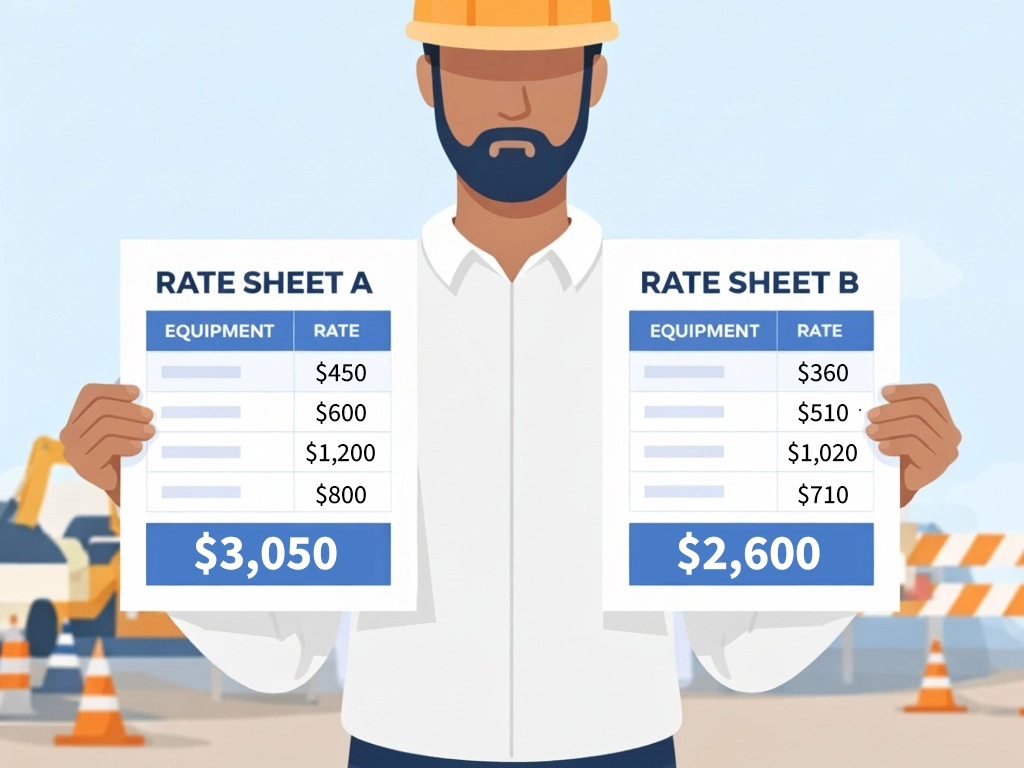
| Equipment | Book Rate (Weekly) | Contracted Rate (Weekly) | Savings |
|---|---|---|---|
| Scissor Lift | $450 | $360 | $90 |
| Forklift | $600 | $510 | $90 |
| Boom Lift | $1,200 | $1,020 | $180 |
On just three pieces of equipment, that’s $360 saved per week. Stretch that across:
- 12 weeks
- 5 similar job sites
- Multiple departments
Suddenly you’re looking at tens of thousands of dollars in preventable spend.
Hidden Costs of Relying on Book Rates
Beyond higher base pricing, book-rate rentals often come with additional budget risks:
1. Price Variability
Rates can spike during busy seasons or after natural disasters when demand surges.
2. Decentralized Booking
When individual teams book independently, pricing varies widely and spend becomes harder to track.
3. Limited Visibility
Without centralized agreements, finance teams often struggle to forecast true equipment costs across projects.
Why Contracted Rates Improve Budget Control
Moving to contracted rates isn’t just about discounts — it’s about financial predictability.
More Accurate Forecasting: With known rate structures, project managers can build equipment costs into budgets with confidence.
Spend Standardization: All branches, sites, or departments operate under the same pricing framework.
Reduced Administrative Time: Centralized billing and reporting cut down on invoice discrepancies and reconciliation work.
Stronger Vendor Partnerships: Volume commitments often lead to better service, priority fulfillment, and fewer last-minute sourcing headaches.
When Should You Pursue Contracted Rates?
If your organization:
- Rents equipment more than a few times per year
- Operates across multiple job sites or regions
- Struggles with inconsistent rental pricing
- Wants better cost tracking and reporting
…then relying on standard book rates is likely costing more than you realize.
Final Takeaway
Standard book rates are built for occasional renters. Contracted rates are built for organizations that want cost control, consistency, and scalability.
The companies that treat equipment rental as a strategic spend category, not just an operational necessity, are the ones that protect their margins and keep projects on budget.
Build a Contracted Rate Program with BigRentz+
BigRentz is a marketplace leader in equipment rental. We’re known for simplifying the procurement process—something that’s often tricky, especially when you’re dealing with multiple suppliers. Collaborating with BigRentz as a solutions and integrations partner not only gives you easy access to a wide range of high-quality heavy equipment but also helps you initiate and build strong relationships with our network of vetted vendors.