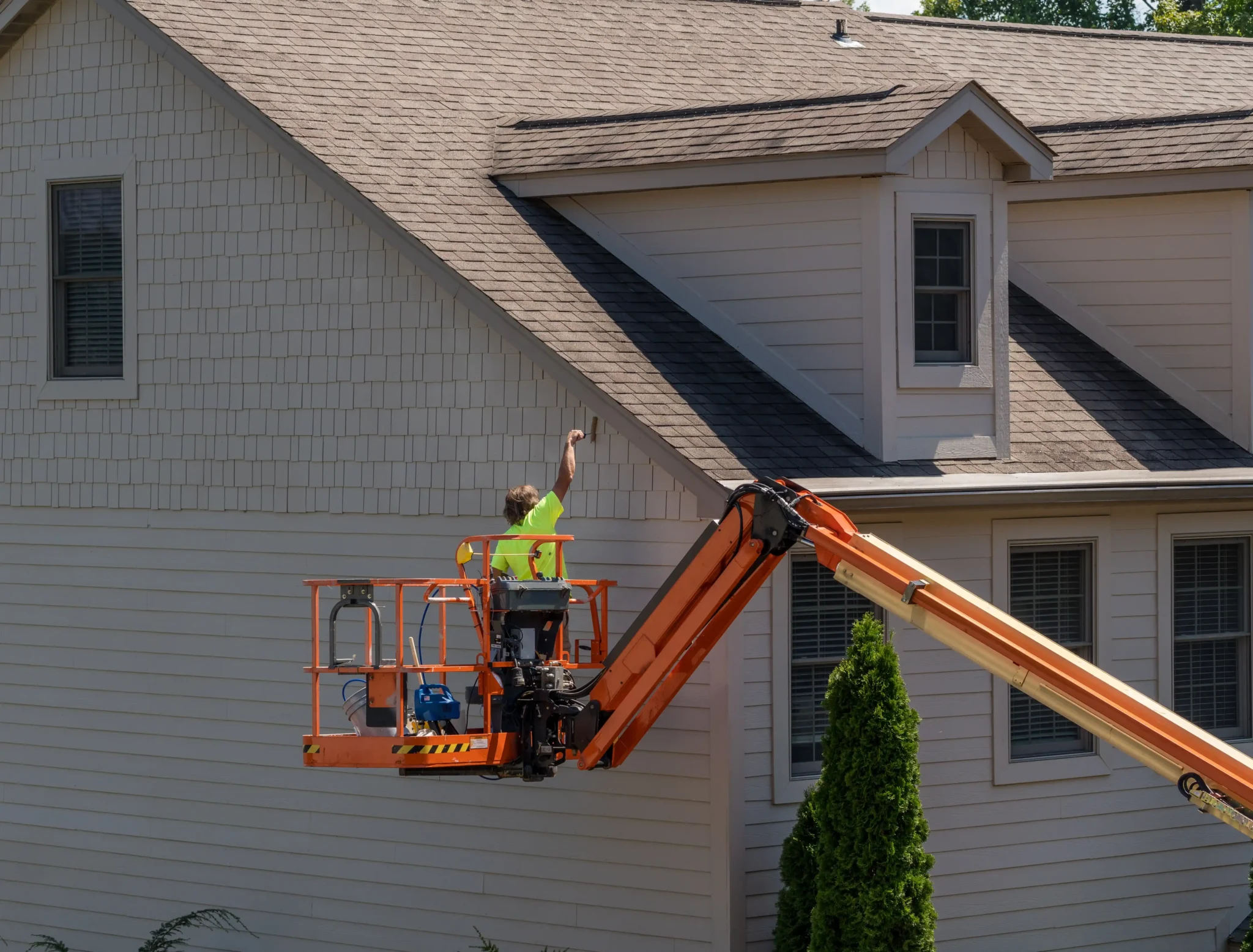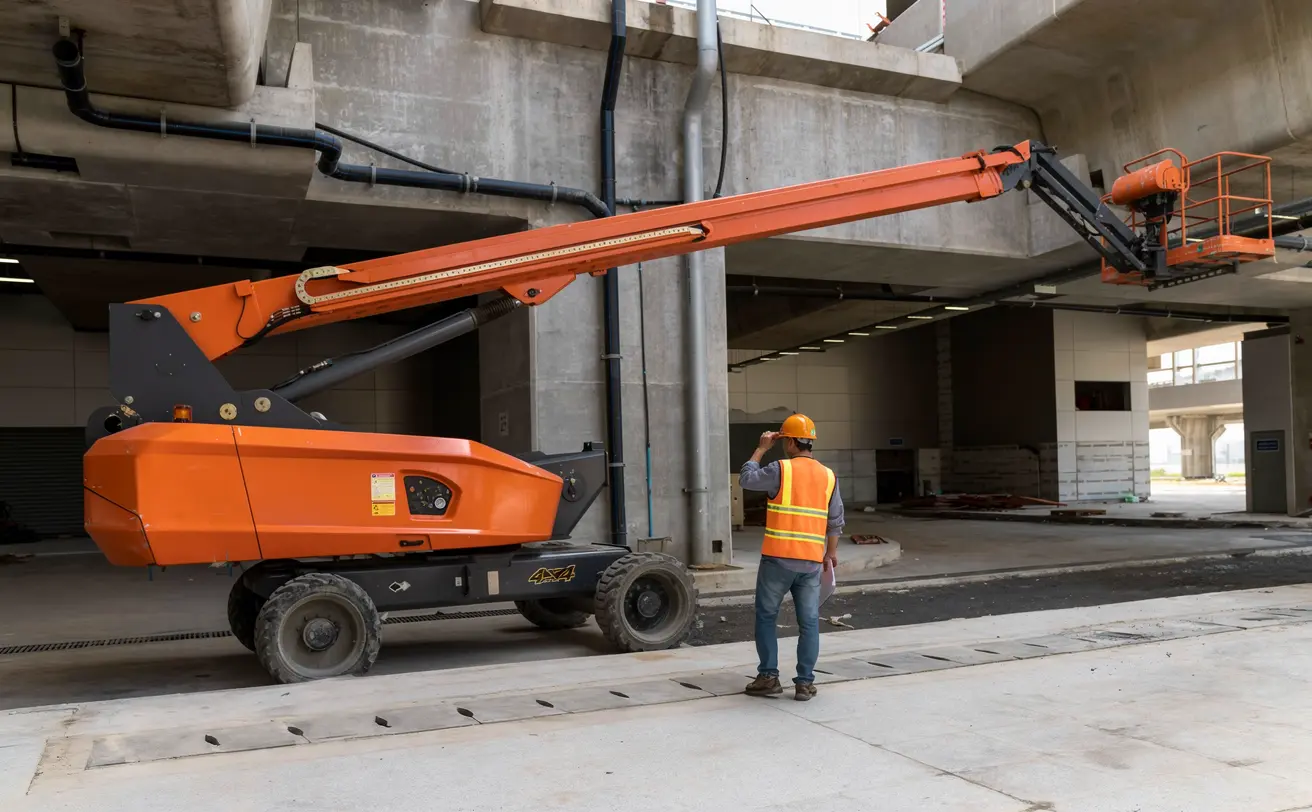
A boom lift may appear fully operational, but hidden issues left unaddressed, such as a slow hydraulic leak, damaged ground controls, worn tires, or malfunctioning safety sensors, can create risks. When an operator is working 80 feet in the air, daily boom lift inspections are a critical part of maintaining safety during aerial work platform operation. These checks are critical, as they can help prevent accidents before the machine ever leaves the ground.
The American National Standards Institute (ANSI) A92.5 standard establishes the safety requirements for boom-supported elevating work platforms. Under these guidelines, operators must perform pre-start and workplace inspections before using any equipment.
Implementing a standardized boom lift inspection checklist ensures operators evaluate every critical system, keeping jobsites compliant and productive.
Why Daily Boom Lift Inspections Matter
Skipping a daily inspection to save time can result in catastrophic equipment failure, severe injuries, and extensive project delays. By consistently performing inspections, operations can benefit from:
- Injury Prevention: Identifying compromised fall protection systems or faulty emergency controls can protect operators and ground personnel from preventable accidents.
- Equipment Reliability: Catching minor issues early prevents them from developing into major mechanical failures.
- Reduced Downtime: Planned maintenance based on inspection findings is significantly faster and cheaper than emergency repairs in the middle of a project.
- Compliance Obligations: OSHA and ANSI require documented pre-shift inspections. Failing to produce these records during an audit or post-incident investigation can result in liabilities.
- Worker Protection: A machine that loses stability due to tire failure or hydraulic pressure loss endangers everyone within the drop zone.
Understanding ANSI A92.5 Inspection Requirements
ANSI A92.5 outlines the responsibilities of owners and operators regarding boom lift safety. The standard mandates two distinct evaluations:
- The pre-start inspection focuses on the machine’s mechanical, electrical, and structural integrity.
- The workplace inspection evaluates the environment where the machine will operate.
To ensure compliance and safety, site supervisors should integrate these requirements into daily operational workflows.
Operators are responsible for completing these checks and documenting the results. If an operator discovers any damage or malfunction, ANSI guidelines require the immediate removal of the equipment from service until a qualified mechanic resolves the issue.
When Should a Boom Lift Inspection Be Performed?
Inspection frequency depends on equipment usage, operator changes, and environmental factors. A thorough boom lift inspection must occur under the following conditions:
- At the beginning of every shift, before the machine is powered on
- When a different operator takes over the machine mid-shift
- During delivery, when receiving a machine from a rental provider
- After a mechanic services the machine, before it can be returned to active duty
- Following incidents, such as sudden jolts, collisions, or extreme weather events, which require checking for structural damage
- After several days of inactivity, to check for fluid leaks, battery drain, or environmental wear
Boom Lift Daily Inspection Checklist
This boom lift daily inspection checklist breaks down the machine into specific categories. Operators should follow a systematic path around the equipment, checking each component for wear, damage, and proper functionality.
Documentation and Manuals
Before inspecting the physical machine, verify that all required documentation is present and legible.
- Operator Manuals: Boom lift manuals must be stored in the weather-resistant compartment on the platform.
- Safety Decals: All warning labels, capacity charts, and operational instructions must be visible and undamaged.
- Inspection Records: The annual inspection documentation must be up to date.
Structural Components
Walk around the machine and inspect the structural integrity of the chassis and lifting mechanism.
- Boom Sections: Look for dents, cracks, or warping in the metal.
- Platform Structure: Check the floor for damage and ensure the toe boards are intact.
- Guardrails: Verify that rails are straight, secure, and free of structural damage.
- Chassis: Inspect the main body for signs of impact or stress fractures.
- Welds: Look for hairline cracks or rust lines around major weld points, as these can indicate structural fatigue.
- Pins and Fasteners: Ensure all pivot pins are secure and retaining rings are in place.
Hydraulic System
Hydraulic issues are among the most common inspection findings and can lead to a sudden loss of boom control.
- Hoses: Check for chafing, bulging, or dry rot on the rubber casing.
- Fittings: Inspect connections for weeping fluid or loose threads.
- Cylinders: Look for scoring on the chrome rods and check the seals for leaks.
- Fluid Leaks: Check the ground beneath the machine for fresh hydraulic oil.
- Reservoir Levels: Verify the hydraulic fluid is at the manufacturer’s recommended level.
Tires and Wheels
Tire condition directly affects the machine’s stability and load-bearing capacity.
- Condition: Look for deep cuts, missing chunks of rubber, or uneven wear patterns.
- Lug Nuts: Ensure all lug nuts are present and properly torqued.
- Damage: Inspect the rims for bends, cracks, or rust.
- Inflation: For pneumatic tires, verify the pressure matches the specification on the sidewall.
Electrical Components
Electrical failures can disable safety sensors or leave an operator stranded in the air.
- Wiring: Look for frayed insulation, exposed copper, or loose connections.
- Battery: Check for corrosion on the terminals and ensure the hold-down brackets are secure.
- Connections: Verify that all plug-in cables are tight and undamaged.
- Control Panel: Ensure all buttons, switches, and joysticks move freely and return to neutral automatically.
Controls and Safety Devices
Test all operational controls from both the ground and the platform.
- Ground Controls: Verify that the base controls override the platform controls.
- Platform Controls: Test all directional movements, including lift, drive, and swing, for smooth operation.
- Emergency Stop Systems: Engage the E-stop at both control stations to ensure it immediately cuts power.
- Emergency Lowering Functions: Test the auxiliary power or manual descent system.
- Alarms: Verify that the tilt alarm, descent alarm, and horn function clearly.
- Sensors: Check the pothole protection system and limit switches for proper engagement.
Platform and Fall Protection Systems
These components directly secure the operator while working at height.
- Gates: Ensure the entry gate closes and latches automatically.
- Entry Chains: If equipped with chains instead of a gate, verify they are present and clip securely.
- Anchor Points: Inspect the designated lanyard attachment points for wear or damage.
- Guardrails: Confirm that the top rail, mid-rail, and toe boards are secure.
Fluids and Engine Components
For diesel or dual-fuel machines, inspect the power plant.
- Fuel Levels: Ensure adequate fuel for the shift.
- Oil Levels: Check the engine oil dipstick.
- Coolant: Verify the radiator overflow tank has sufficient coolant.
- Visible Leaks: Look for oil, fuel, or coolant pooling under the engine compartment.
- Belt Condition: Inspect the fan and alternator belts for cracking or excessive slack.
Workplace Inspection Requirements Before Operation
A perfectly maintained machine can still tip over if the operating environment is unsafe. ANSI A92.5 requires operators to evaluate the jobsite before moving the boom lift into position.
Operators must assess surface conditions:
- Look for uncompacted soil, hidden trenches, or debris that could destabilize the machine.
- Measure slopes and grades to ensure they do not exceed the manufacturer’s maximum incline rating.
- Ensure drop-offs, curbs, and floor openings have physical barriers or strict avoidance zones.
Overhead obstructions present a severe crushing hazard. Operators must map out structural beams, ceiling installations, and doorways. Power lines require strict adherence to Minimum Approach Distances (MAD) to prevent arc flashes and electrocution.
Additionally, operators must account for traffic hazards from other heavy equipment or pedestrians. Establish clear exclusion zones around the work area.
Finally, weather conditions can impact outdoor operational safety. Operators must monitor wind speeds and cease operations if gusts exceed the machine’s rated capacity.
Common Boom Lift Inspection Failures
Understanding frequent failure points helps operators know exactly what to look for during their daily walkaround.
| Common Failure | Required Action | |
|---|---|---|
| Hydraulics | Weeping seals or cracked hoses | Tag out of service immediately. Hydraulic pressure loss causes boom drops. |
| Tires | Missing chunks of foam-filled rubber | Evaluate against manufacturer limits. Excessive damage can impact machine stability. |
| Safety Alarms | Non-functional tilt or descent alarm | Tag out of service. Alarms are mandatory for operator and bystander safety. |
| Decals | Faded or missing capacity charts | Order replacement decals. Do not operate without visible load limits. |
| Guardrails | Bent rails or broken gate latches | Tag out of service. Compromised rails violate fall protection standards. |
| Controls | Joysticks sticking or lacking rubber boots | Tag out of service. Sticking controls cause unintended machine movement. |
What Happens if a Boom Lift Fails Inspection?
If an inspection reveals a safety defect, the operator must immediately remove the machine from service. Operating a compromised lift violates OSHA regulations and puts the entire jobsite at risk.
The operator must apply a Lockout/Tagout device or place a highly visible “Out of Service” tag on the control panels. Next, they must report the specific issue to the site supervisor and the maintenance department. The machine cannot return to operation until a qualified mechanic repairs the defect and signs off on the maintenance log. Following repairs, the operator should complete a new pre-start inspection.
Inspection Best Practices for Rental Equipment
Renting equipment introduces a different dynamic to the inspection process. While reputable rental providers maintain their fleets to high standards, the renter assumes liability once the machine arrives on site.
Some best practices after receiving rental equipment:
- Inspect the equipment immediately upon delivery, before the delivery driver leaves.
- Verify the machine’s condition against the rental contract and document any existing cosmetic damage with photographs.
- Review the service records or the annual inspection decal to ensure the machine is compliant.
If you find a functional defect during inspection, refuse the delivery or immediately contact the rental provider’s service department for a replacement.
Digital vs. Paper Inspection Checklists
The construction industry is transitioning from traditional clipboards to digital fleet management tools. Both methods serve the same compliance purpose, but they offer different operational advantages.
| Paper Checklists | Digital Inspection Apps | |
|---|---|---|
| Accessibility | Requires physical storage on the machine | Accessible from any mobile device |
| Record Retention | Vulnerable to weather, loss, or damage | Stored securely in the cloud for easy auditing |
| Issue Reporting | Requires manual handoff to maintenance | Instantly alerts mechanics and supervisors |
| Photo Evidence | Not possible | Allows operators to attach photos of defects |
| Cost | Low initial cost (printing) | Requires software subscription and devices |
Building a Consistent Inspection Culture
A checklist is only effective if the workforce actually uses it. Building a strong safety culture requires moving beyond compliance and focusing on accountability:
- Provide hands-on operator training to demonstrate how to check each component.
- Conduct random audits to verify that inspections are happening before shifts begin.
- Respond promptly to reported defects. If operators feel their reports are ignored, they may stop performing thorough inspections.
Downloadable Boom Lift Inspection Checklist
Using a standardized boom lift inspection checklist helps maintain consistency across your entire fleet and ensures no critical components are missed during the morning walkaround.
Site supervisors should print these guides and store them in the weather-resistant manual box on every machine. Operators must complete the inspection checklist form at the start of every shift, signing and dating the document. Completed checklists should be collected weekly and stored in the site safety file to maintain a clear record of ANSI and OSHA compliance.
For more resources on operating boom lifts safely, you can browse our boom lift rental guide.
Find Reliable Boom Lift Rentals at BigRentz
Daily inspections are a critical safety process, and ANSI A92.5 establishes clear expectations for evaluating the machine and the workplace before operation. By implementing a strict boom lift inspection program, contractors can identify issues before they result in liabilities for your business.
Whether you need an articulating boom lift for tight indoor spaces or a telescopic boom lift for maximum reach, BigRentz has the job-ready equipment you need. Browse our available boom lift rentals, or request a quote by speaking with a rental specialist about your project’s needs.
Frequently Asked Questions
What is included in a boom lift inspection?
A comprehensive inspection includes checking structural components, hydraulic systems, tires, electrical wiring, ground and platform controls, safety alarms, fall protection anchor points, and fluid levels. It also requires verifying that the operator manual and safety decals are present and legible.
How often should a boom lift be inspected?
ANSI A92.5 requires a pre-start inspection at the beginning of every shift. Additional inspections are required during handoff with a new operator, after the machine is delivered from a rental company, after any repairs, or after a long period of inactivity.
What does ANSI A92.5 require for inspections?
The standard mandates a pre-start inspection of the machine’s mechanical and electrical systems, and a workplace inspection to identify environmental hazards, such as uneven terrain, high winds, or overhead power lines.
Who is responsible for completing a boom lift inspection?
The qualified equipment operator assigned to use the machine is responsible for performing the daily inspections. Site supervisors are responsible for ensuring the operator completes and documents the process.
Can a boom lift be operated if it fails inspection?
No. If any component fails inspection, the operator must immediately tag the machine out of service. It cannot be operated until a qualified mechanic repairs the defect and a new inspection is completed.
What are the most common boom lift inspection failures?
Frequent failure points include hydraulic fluid leaks, worn or damaged tires, malfunctioning tilt or descent alarms, missing safety decals, and damaged guardrails or entry gates.
Should rental boom lifts be inspected before use?
Yes. Renters should perform a thorough inspection immediately upon delivery. This ensures the machine is safe to operate and documents any pre-existing cosmetic damage before the renter assumes liability for the equipment.