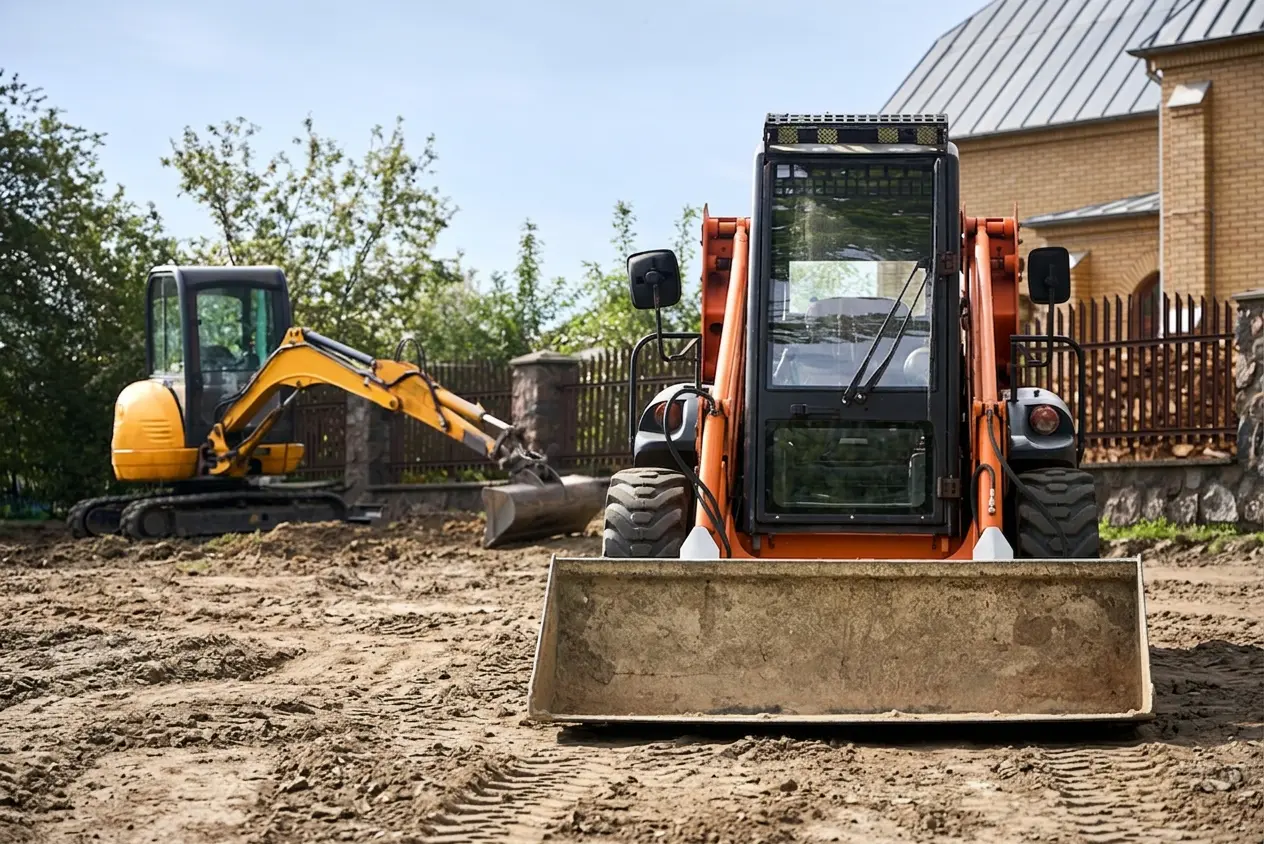
Skid steers and mini excavators are often lumped together because they’re both compact machines commonly found on jobsites. Either one can be fitted with attachments that expand their capabilities, from digging trenches and moving aggregate to clearing sites and grading surfaces.
While skid steers and excavators share similarities, they’re designed for different primary functions and excel at different types of work. They’re not interchangeable and picking the wrong one for the job can mean added labor hours, longer timelines and, as a result, higher rental costs.
To help ensure you rent the right machine, this guide will go over the factors that should guide your choice, including the job’s primary tasks, site conditions, attachment needs, and how the machine will be used.
Start With the Job, Not the Machine
Some people make the mistake of choosing equipment because it’s familiar or because it worked well on a previous project. But every jobsite has its own conditions, and the machine that proved effective last time might not be the right fit this time around.
Before choosing between a skid steer vs. a mini excavator, evaluate your project’s details. This will help you determine which functionalities and features you need for the work ahead.
- Primary Project Task: Does the project require digging, material handling, or a combination of both?
- Soil Conditions: Soft, moist ground calls for equipment with good traction and lower ground pressure to avoid sinking into the muck and getting stuck. A wheeled machine, by contrast, performs best on stable, compacted surfaces.
- Available Working Space: A boxed-in site, limited by fences, structures, or landscaping, narrows your equipment options more than an open one.
- Material Handling Requirements: Loading trucks, moving pallets, and clearing debris each place different demands on a machine.
- Digging Depth: Shallow grading and deep trenching draw on different capabilities, so the required depth will directly influence your decision.
- Lift Requirements: Pallets, general materials, and heavier loads each call for a different lift capacity.
- Attachment Needs: Some jobs only need a single attachment, while others require several throughout the project.
- Project Duration: A single-day task carries fewer variables than a multi-week job, where demands can shift as the work progresses.
- Production Demands: The total volume of dirt, gravel, or debris that needs handling each day determines the output capacity required from the machine.
Determining what your project needs from the equipment you’re renting helps you avoid two costly outcomes: sticking with the wrong machine and working more slowly and inefficiently, or swapping it out mid-project and paying for equipment twice.
Where a Skid Steer Delivers Greater Productivity
Skid steers use a rigid design that anchors the lift arms directly to the chassis. When you drive into a pile of dirt or gravel, the entire weight of the machine forces the bucket forward. This setup gives you excellent leverage for heavy scooping and earthmoving.
Because you steer by braking one side while powering the other, the machine can turn quickly without needing a wide radius. This eliminates long backing maneuvers and significantly reduces your cycle times. You can transport high volumes of material across a site much faster than with a tracking machine.
You will get the highest daily production out of a skid steer during these specific operations:
- Bulk Material Handling: Moving heavy pallets with forks, spreading bedding gravel, or transferring topsoil piles across a wide layout.
- Debris Cleanup: Scraping packed mud from hard surfaces and gathering scattered construction waste into dumpsters.
- Forward Grading: Spreading topsoil evenly and using forward travel speed to backfill open trenches quickly.
Where a Mini Excavator Has the Advantage
Mini excavators give you incredible precision and power when digging below ground level. The boom, arm, and bucket move independently, and you can apply heavy downward force to cut through packed clay, thick roots, and rocky soil. This configuration makes them indispensable for deep earthwork.
The entire upper cab rotates 360 degrees, which makes handling dug-up dirt more efficient. You can dig a trench and swing the bucket to dump the spoils directly into a truck or a side pile without moving the tracks. This keeps you from tearing up the surrounding ground, saves a lot of fuel, and cuts down on track wear.
Crews rely on excavators on development sites where they need to excavate without disrupting surrounding areas. They’re ideal for deep-earth tasks, such as:
- Utility Trenching: Cutting clean, straight lines for utility installations, water mains, and drainage systems.
- Foundation Work: Excavating precise perimeters for foundations, footings, and concrete slabs.
- Precision Digging: Working safely around existing underground utilities or structural walls without causing accidental damage.
Skid Steer vs. Mini Excavator: Productivity Comparison Across Common Job Types
What makes a machine the right one to rent depends on what your specific project demands. Breaking down your daily workflow helps you avoid overpaying for a rental that ends up sitting idle or can do the job, but poorly or slowly.
Here’s a quick look at how both skid steers and mini excavators perform across typical industry projects:
| Project Type | Skid Steer Production Focus | Mini Excavator Production Focus |
|---|---|---|
| Residential Landscaping | Spreads topsoil, carries sod pallets, and grades open yards | Digs irrigation lines, removes deep tree roots, and carves out water features |
| Utility Installation | Transports bedding sand and backfills completed trenches | Cuts deep trenches and places heavy concrete pipes |
| Site Preparation | Strips topsoil, levels large subgrades, and clears surface debris | Digs mass excavations and shapes steep embankments |
| Demolition Projects | Loads broken debris into dumpsters and cleans smooth floors | Smashes concrete walls and pulls down standing structures |
| Residential Construction | Moves building packages, spreads gravel, and handles final site grading | Digs foundation basements and hooks up sewer connections |
| Commercial Construction | Sweeps finished pavements, moves cargo, and maintains material stockpiles | Excavates deep footings, manages stormwater ponds, and drills piers |
| Property Maintenance | Clears large snow accumulations and maintains gravel roadways | Clears out overgrown drainage ditches and repairs broken water lines |
| Agricultural Work | Cleans out livestock barns and moves large hay bales | Digs fence post holes in rocky soil and creates irrigation channels |
Mini Excavator vs. Skid Steer: Attachments Can Completely Change the Comparison
You can do a lot more with both skid steers and mini excavators than scoop dirt with a standard bucket. Swapping out attachments lets you handle multiple phases of a project using a single rental. This versatility means you don’t have to pay extra to rent several specialized machines for a single jobsite.
Operators can choose from a diverse lineup of front-mounted tools for skid steers. These attachments utilize the machine’s forward travel speed and high-flow auxiliary hydraulics:
- Augers: Drill precise holes for fence posts, piers, or footings through tough subgrade
- Pallet Forks: Convert the loader into a material handler for moving pallets or unloading delivery trucks
- Grapples: Grip irregular debris, logs, or heavy concrete chunks during jobsite cleanup
- Brush Cutters: Clear overgrown vegetation, thick brush, and heavy weeds across unmanaged acreage
- Trenchers: Cut narrow, shallow channels for irrigation lines or utility wires
Mini excavators also benefit significantly from auxiliary hydraulics. These tools expand your reach and functionality far beyond standard digging buckets:
- Hydraulic Thumbs: Pinch and secure bulky objects like logs or concrete stumps against the bucket
- Breakers: Smashes through rock layers, asphalt pavements, or old concrete sidewalks during demolition work
- Compaction Wheels: Packs down loose soil inside open trenches to stabilize backfilled earth
- Tilt Buckets: Rotates the digging angle to shape slopes and grade ditches without repositioning the tracks
Working in Tight Spaces
You need to know how much room you have to turn, back up, and dump before picking a machine. Choosing equipment that constantly forces you to reposition slows your crew down.
For tight spaces, a zero-tail-swing mini excavator is often your best bet. The back counterweight stays within the width of the tracks when you spin around, so you can work right next to walls or fences without hitting them.
- Machine Footprint: Skid steers need clear ground space to swing their entire chassis around when changing direction.
- Tail Swing: Zero-tail-swing excavators let you focus on the bucket without worrying about hitting obstacles behind you.
- Maneuverability: Operators can articulate the excavator boom independently of the cab, allowing precision work under low roofs, beams, or scaffolding.
Residential yards and narrow urban jobsites require strict attention to gate widths. While compact skid steers can slide through tight walkways, they still require extra room to back up and turn around safely.
Ground Conditions and Terrain: Mini Excavator vs. Skid Steer
Choosing a machine with tires when you need tracks, or vice versa, can have unpleasant, project-delaying consequences, like getting stuck in sand or, worse, destroying the surface. Heavy machinery can leave deep ruts in wet topsoil or crack finished asphalt, which means extra time fixing the damage and higher post-job cleanup costs.
Tracks are ideal when you need to distribute the weight of the machine over a large area. They lower the ground pressure so you can drive across soft mud, sand, or wet clay without sinking.
- Wheeled Skid Steers: Can travel fast on hard surfaces but may leave deep ruts in wet topsoil
- Tracked Skid Steers: Distribute weight evenly to float over soft mud and support grading work safely
- Mini Excavators: Use rubber tracks to cross delicate grass without tearing up turf during utility installation
Slopes require exceptional machine stability to prevent dangerous tip-overs. An excavator operator can extend the boom downhill to balance the chassis while working on uneven embankments.
Transportation and Jobsite Logistics
You need a clear plan for getting your rental equipment onto the jobsite before it arrives. Many people overlook towing limits and transport clearance rules until the delivery truck is already on the way.
The total weight of the machine and its attachments changes your transport setup. Heavy commercial units require heavy-duty trailers or professional delivery services.
- Trailer Requirements: Ensure your tow vehicle, hitch, and trailer are legally rated for the machine’s gross weight and its attachments.
- Site Access: Check for narrow gates, low tree branches, or overhead power lines that could block a large delivery truck.
- Loading and Unloading: Designate a flat, stable area away from active traffic for safely loading and unloading the equipment.
Rental Cost vs. Overall Project Cost
Looking only at the lowest daily rental rate can end up costing you more in the long run. If you rent a machine that is too small or slow for the job, your timeline stretches out, and your labor costs skyrocket.
You get the best value by choosing the machine that maximizes your crew’s daily production. The right equipment ensures you don’t burn more fuel than necessary and lets you send your crew home on schedule, or even days earlier.
To calculate the true cost of your rental, assess how the equipment affects these critical bottom-line expenses:
- Productivity Per Rental Day: Faster machines reduce total labor hours by allowing you to complete site tasks ahead of schedule.
- Fuel Consumption: Modern, properly sized engines use fuel more efficiently based on your actual jobsite workload.
- Number of Machines Required: Choosing a versatile unit with the right attachments can eliminate the need to pay for a secondary rental.
When Renting Both Machines Makes Sense
You will often see both machines together on larger job sites because they complement each other. Renting both keeps your crew moving continuously without anyone waiting around for the next task to finish.
A dual-machine strategy eliminates downtime during many types of projects, including the following:
- New Home Construction: The excavator digs foundations and utility connections while the skid steer moves pallets and handles final grading.
- Commercial Site Preparation: Crews can clear heavy brush and dig stormwater management systems simultaneously.
- Utility Installations: One machine cuts through tough ground while the other follows behind with bedding sand and backfill dirt.
Common Rental Mistakes
It is easy just to rent a machine you have used before: after all, you and your crew already know how it works. But that habit can backfire if your current project has different demands.
For instance, if you try to load a high-sided dump truck with a compact skid steer, you will quickly find out that the arms cannot reach over the side. Always double-check your dumping height and weight limits before signing your rental agreement.
Apart from renting based on familiarity with the equipment, other common rental mistakes can derail your project and drive up costs. Keep work running smoothly and on budget by watching out for these:
- Ignoring Attachment Requirements: Failing to reserve the specific auxiliary tools needed to complete specialty tasks.
- Underestimating Dig Depth: Selecting an excavator with a boom that cannot safely reach your required trench bottom.
- Wrong Material Handling: Relying on an excavator to move heavy pallets across long distances instead of a balanced loader.
How to Decide Between a Mini Excavator vs. A Skid Steer
To make your final choice, look closely at the tasks that will take up the most time on your jobsite. You want to base your rental on the work that consumes the most labor hours, rather than the first quick chore of the morning.
To guide your choice, ask yourself the following questions:
- Will you spend more time digging or moving material? Choose the excavator for below-ground work, and the skid steer for surface transport.
- Do you need attachment versatility? Select the skid steer if your project requires sweeping, cutting brush, and moving pallets on the same day.
- Is the jobsite confined? Choose a zero-tail-swing mini excavator to work safely alongside structural walls and fences.
- Will the machine operate on finished surfaces? Select rubber-tracked models or wheeled units with turf tires to protect delicate pavement and grass.
Lock In the Right Machine for Your Next Job
Neither machine is a universal solution for every job site task. The right choice depends entirely on your primary tasks, physical space constraints, required attachments, and daily production goals. Selecting your equipment based on your specific workflow helps you complete projects faster while maximizing your rental value.
BigRentz provides on-demand access to a nationwide network of over 6,000 equipment partners across 14,000 locations. Whether your project requires a nimble skid steer or a high-performance mini excavator, our team helps you source the right asset for your layout.
You can browse our extensive inventory to compare options and view pricing. Call 855-999-LIFT or book online today to schedule delivery to your jobsite.
FAQs
Is a skid steer or mini excavator better for yard renovations?
A skid steer is best for spreading topsoil, carrying sod pallets, and grading open yards quickly. If you need to dig irrigation lines, remove deep tree roots, or carve out water features, a mini excavator is the superior option.
Can a skid steer dig as well as a mini excavator?
No, a skid steer cannot match an excavator’s digging depth or downforce. Skid steers excel at scraping, loading, and forward grading, but they lack the independent boom articulation needed for deep excavations.
Which machine is better for trenching?
A mini excavator is the superior choice for trenching tasks. The rotating cab and articulated boom allow you to cut clean, deep lines and dump spoils without moving the tracks.
Which machine works better in tight spaces?
A zero-tail-swing mini excavator is excellent for tight layouts near walls or fences because the rear counterweight stays within the track width. Skid steers require more clear ground space to spin and turn around safely.
Can both machines use hydraulic attachments?
Yes, both options feature auxiliary hydraulic systems to power specialized tools. Skid steers offer rapid attachment-switching systems for loaders, while excavators use hydraulics for tools like thumbs and breakers.
Should I rent both a skid steer and a mini excavator?
Renting both makes sense for large utility, home building, or commercial site preparation projects. Using both machines simultaneously prevents downtime by keeping your digging and material handling operations moving together.
Which machine is easier to transport?
Transport ease depends entirely on the specific operating weight of the model you select, rather than the machine type. Smaller versions of both machines can fit on standard utility trailers, while larger commercial units require specialized transport vehicles.
Which machine is more versatile for multi-day projects?
A skid steer generally offers excellent versatility for varied multi-day tasks due to its extensive list of front-mounted attachments. It can transform from a bucket loader to a sweeper, auger, or pallet handler in just a few minutes.