Standard telescopic lifts fail when a target zone sits directly behind a structural barrier. If your access point is blocked by roof parapets, overhead pipe racks, or permanent machinery, a straight diagonal approach cannot clear the obstruction.
A knuckle boom lift resolves this spatial bottleneck by using multiple articulating pivot points to bend around barriers and position crews safely. Matching these unique reach profiles to your specific workspace keeps your timeline moving forward.
If you need to navigate a congested jobsite, you can rent a boom lift configured precisely for your environment.
What Makes a Knuckle Boom Lift Different?
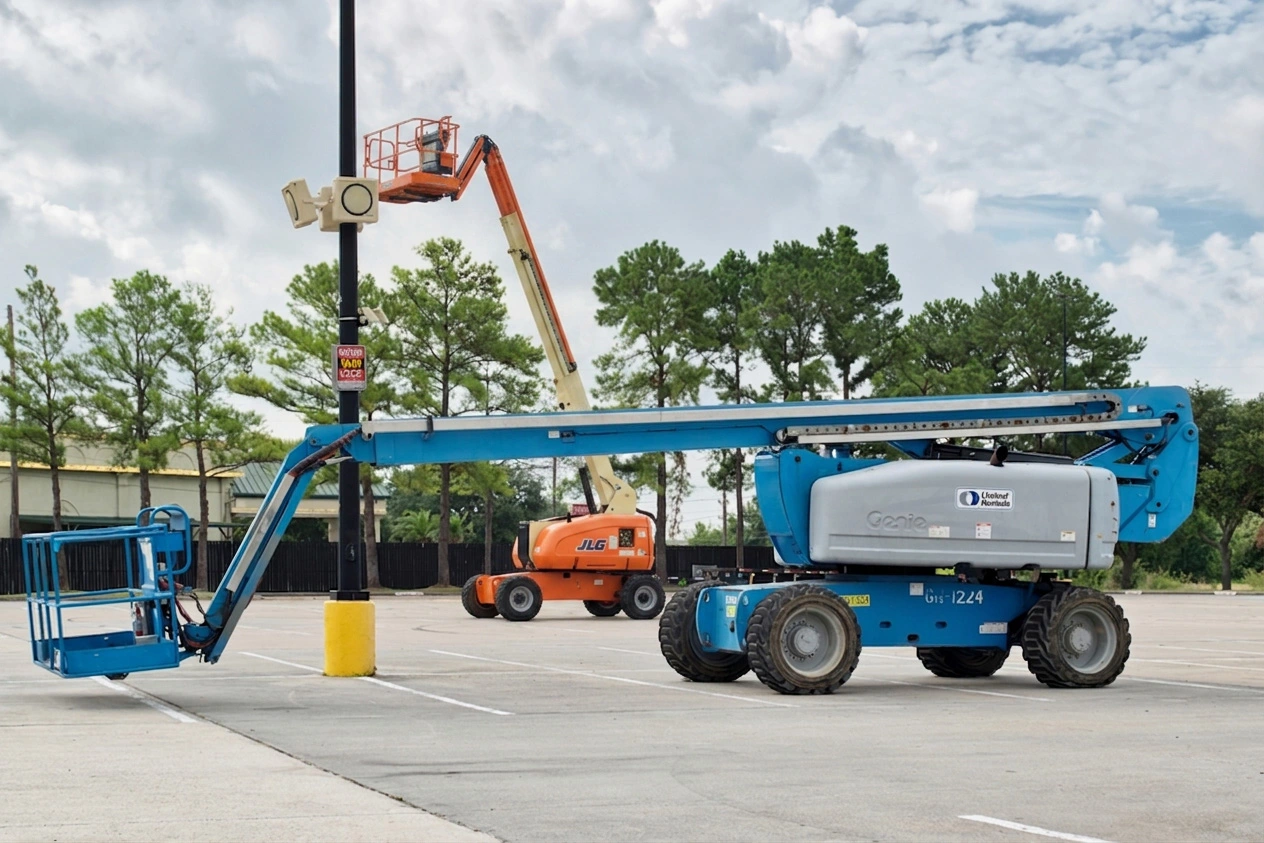
The defining feature of a knuckle boom lift is the articulating joint system, commonly referred to as the knuckle. Unlike telescopic models that extend sequentially from a single base turret, an articulating lift uses multiple hinge joints to divide the boom into distinct, independently controlled segments.
This design creates an adaptive reach envelope that changes how field teams approach high-elevation maintenance. It eliminates the requirement to clear ground space directly beneath the work area, allowing crews to position the machine chassis yards away from the structure.
Knuckle Boom Lift vs. Telescopic Boom Lift
Choosing between articulating and telescopic machinery depends on balancing your requirement for horizontal distance against your need for structural navigation. Neither design is universally superior, as each solves a distinct geometric problem on the jobsite:
- Telescopic models allow you to stage equipment far away from a structure, which can be useful for perimeter trenches, unstable soil, or public right-of-way restrictions. They provide long horizontal outreach and stable performance at extreme vertical heights.
- Knuckle configurations, by comparison, prioritize flexibility. If your path to a target requires navigating a Z-shaped route through structural steel or facility piping, the articulating model is the correct choice for the task.
Types of Knuckle Boom Lifts
Articulating lifts are categorized by their power distribution systems and chassis configurations, which dictate where and how long they can operate.
Electric Knuckle Boom Lifts
Indoor environments require clean, quiet machinery. Electric configurations rely on high-capacity industrial battery banks to run emission-free drive motors and hydraulic pumps silently.
Because these units feature compact chassis footprints and non-marking solid rubber tires, they maneuver easily through narrow warehouse aisles, active manufacturing facilities, and food processing plants with strict air quality rules. A single plug-in connection at the end of the day resets the system for the next full shift.
Diesel Knuckle Boom Lifts
Diesel-powered machines provide the high torque and raw horsepower needed for demanding outdoor applications. Built with heavy-duty four-wheel-drive systems, oscillating axles, and deep-lug foam-filled tires, these machines travel easily through deep mud, over loose gravel, and up steep jobsite grades. They are the standard choice for early-stage commercial construction, bridge inspections, and structural steel erection.
Towable Knuckle Boom Lifts
If your project spans multiple locations or relies on a tight transport budget, a towable configuration eliminates heavy flatbed logistics entirely. These lightweight units mount directly onto a standard trailer frame, allowing you to haul the machinery safely behind a conventional pickup truck.
Once unhitched at the work site, integrated mechanical or hydraulic outriggers deploy to stabilize the base for light commercial painting, residential tree maintenance, and multi-campus facility management.
Compact Knuckle Boom Lifts
Commonly called spider lifts, compact articulating booms utilize independent rubber tracks and folding outrigger legs. Their primary advantage is an ultra-narrow stowed profile. Many models fold down tightly enough to pass through a standard single commercial doorway.
This design allows your crews to bring mechanized access into interior courtyards, crowded arenas, or historic building auditoriums. Once the machine is staged, the wide outrigger feet deploy to distribute its weight evenly, protecting sensitive, low-capacity floor tiles or decorative concrete plates from structural cracking.
Common Uses for a Knuckle Boom Lift
The articulating design makes this equipment useful across various commercial, industrial, and municipal maintenance sectors.
- Commercial Construction: Crews use these units to thread mechanical, electrical, and plumbing lines around newly installed ductwork and complex steel framing.
- Industrial Facility Maintenance: Active plants feature crowded floor plates. Articulating arms reach overhead valves and lighting directly over active conveyor systems without forcing a production shutdown.
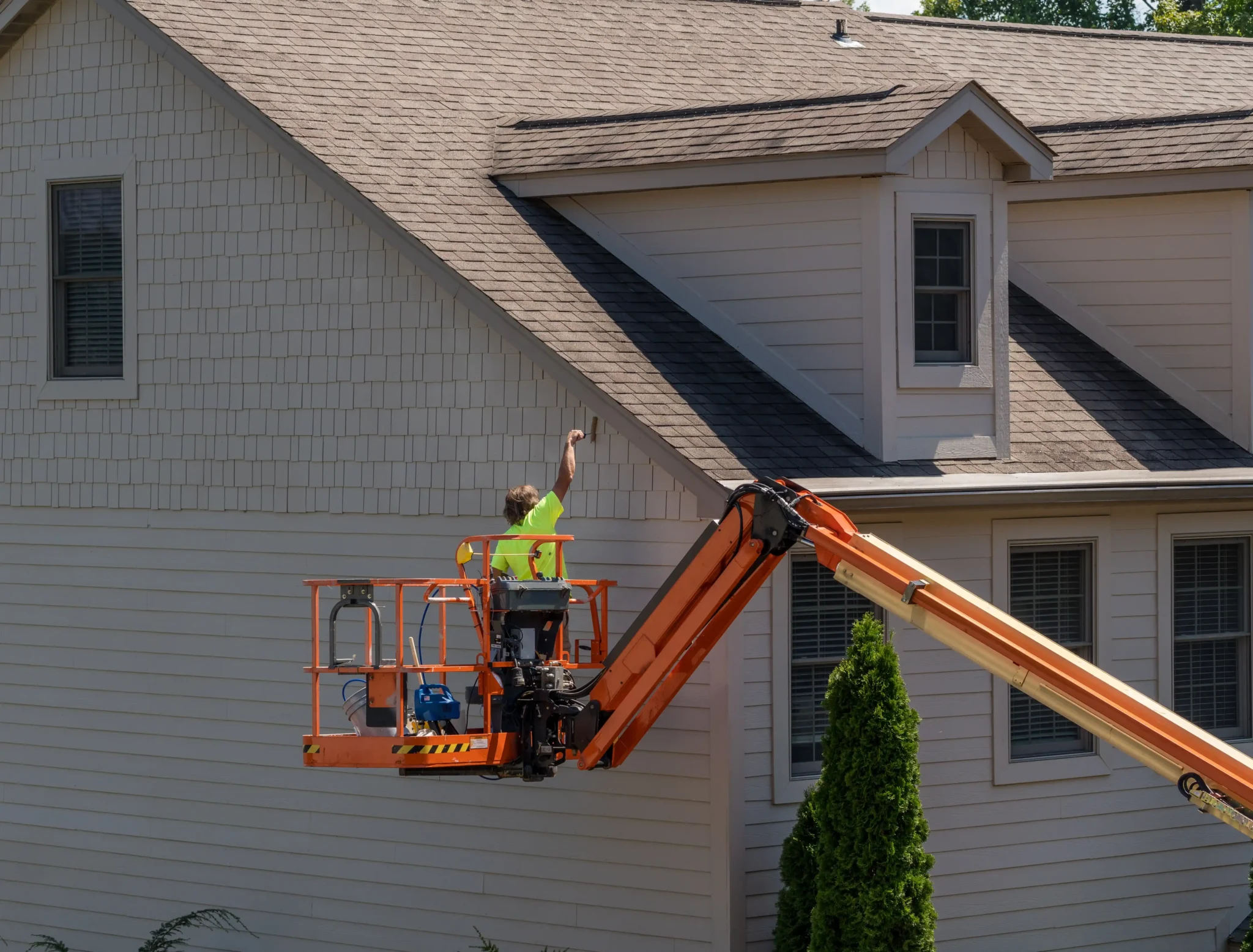
- Building Exterior Work: The machine stages outside a structure’s immediate perimeter, reaching up and over historical awnings or sensitive landscaping to access high windows and facade joints.
- Electrical and Utility Work: Navigating high-voltage lines requires exact platform placement. Articulating arms let technicians maneuver safely past roadside traffic signals and dense tree canopies.
- Sign Installation: Compact footprints provide a stable elevated platform in tight parking zones or over public walkways without requiring full street closures.
- Tree Care and Landscaping: Pruning limbs over structural rooftops or fences demands an indirect reach path. Operators drop the basket precisely into dense canopies from a safe ground distance.
Key Specifications Renters Should Evaluate
Selecting the right equipment requires analyzing mechanical performance boundaries. Reviewing these key parameters ensures your selected machine can handle the work safely:
Working Height vs. Platform Height
Platform height measures the exact distance from the ground plate to the floor of the basket at maximum extension. Working height adds an assumed six feet to that metric, representing the actual reach of a standard standing operator.
Always select your machine based on the platform height if your tasks involve working with heavy, overhead materials that must be handled at chest level.
Horizontal Reach Capabilities
Horizontal reach defines the maximum distance the boom can extend outward on a horizontal plane from the center of the turret rotation. Because articulating booms sacrifice horizontal length for vertical flexibility, verify your required horizontal offset with the manufacturer’s range-of-motion chart before booking a unit.
Up-and-Over Clearance
This parameter identifies the highest obstacle the machine can clear while extending its secondary boom horizontally. If you need to reach an HVAC unit situated ten feet inward on a roof behind a thirty-foot exterior parapet wall, your machine must provide an up-and-over clearance height of at least thirty-one feet to avoid structural contact.
Platform Capacity Limits
Platform capacity dictates the total weight of operators, specialized tooling, and raw materials allowed in the basket. Standard articulating models typically support between 500 and 650 pounds. Exceeding these thresholds triggers integrated load sensors that cut off boom functions to prevent tipping hazards.
Machine Width and Stowed Dimensions
Evaluating transport width ensures the machine can navigate your facility’s tightest restrictions. Indoor maintenance units often feature chassis widths under four feet to clear tight warehouse aisles, whereas rough-terrain models use wide wheel bases to maintain ground stability on raw earth.
Understanding Reach Capabilities
Evaluating an articulating lift requires analyzing its total range-of-motion diagram rather than just checking its maximum height specification. This diagram maps out the machine’s entire operating envelope, looking like a curved geometric bubble.
Maximum horizontal outreach is usually achieved at a specific mid-level height. As the upper sections are pushed higher, the platform draws closer to the center turret chassis line.
For instance, a machine rated for a 50-foot working height might only deliver its maximum horizontal reach of 25 feet when the primary knuckle hinge is locked at an elevation of 22 feet.
If your operators need to bridge a wide horizontal gap near the top of a building, a standard configuration might fall short of the work zone. You must plot both your vertical target point and your horizontal distance offset on the manufacturer’s chart to ensure the platform can reach the workspace safely.
When a Knuckle Boom Man Lift Is the Better Choice
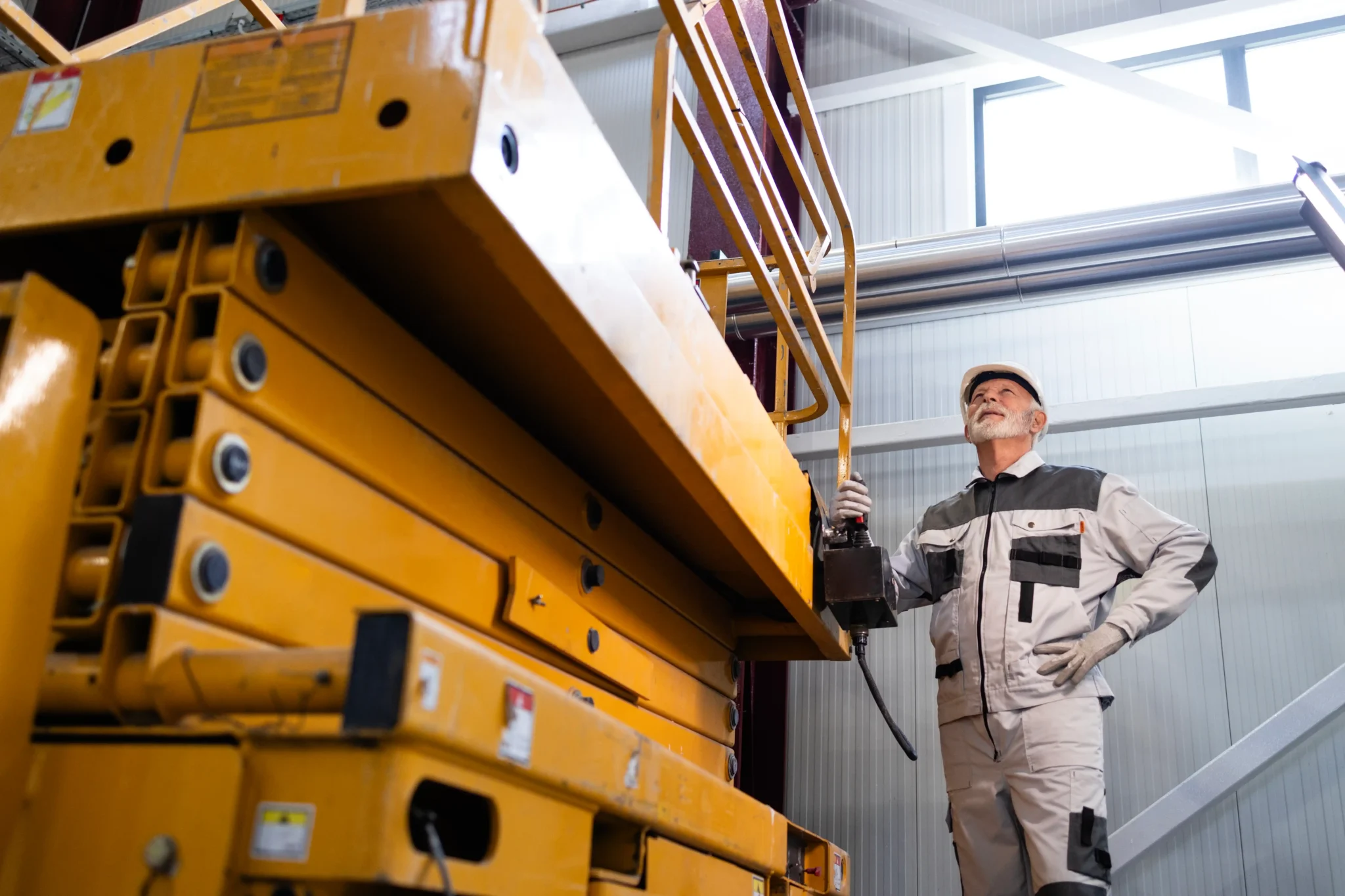
A knuckle boom man lift becomes necessary the moment your direct path to a workspace is blocked. While scissor lifts handle heavy material loads efficiently, they operate strictly on a vertical plane. If a permanent row of industrial machinery or an open utility trench sits directly beneath your target zone, a vertical lift cannot bridge that horizontal gap.
Opting for a multi-jointed machine prevents the logistical delays associated with alternative access methods. Additionally, it presents significant advantages in three precise jobsite scenarios:
- Up-and-Over Requirements: When you must clear an exterior parapet wall, roofline, or interior mezzanine to reach equipment set back from the edge.
- Congested Floor Plates: When active assembly lines or crowded warehouse aisles prevent staging equipment directly under the work zone, you can park the chassis yards away in an open corridor.
- Complex Structural Navigation: When technicians must weave the platform through a network of structural roof trusses, HVAC ductwork, or industrial piping where straight diagonal lines would cause immediate structural impacts.
Indoor vs. Outdoor Applications
Crossing the threshold between indoor and outdoor work completely changes your equipment selection criteria. Aside from working height considerations, you must evaluate how the machine interacts with the immediate environment. A machine configured for raw dirt will damage finished interior floor plates, while an indoor slab lift will quickly bog down on unpaved ground.
The operational parameters below outline the specific factors you must balance when moving between enclosed facilities and open-air environments:
| Indoor Operational Constraints | Outdoor Environmental Variables |
|---|---|
|
|
What To Consider Before a Knuckle Boom Lift Rental
Arranging a knuckle boom lift rental requires reviewing several critical jobsite factors to ensure the incoming machinery matches your project constraints.
- Identify All Access Obstructions: Walk the entire path the machine will travel. Measure narrow entry gates, low overhead roll-up doors, and permanent structural braces that could block transit.
- Verify Exact Reach Geometry: Measure both the vertical height to the work zone and the horizontal offset distance from where the chassis must be staged.
- Evaluate Ground Conditions: Determine if the machine will operate on finished concrete slab, packed gravel, soft mud, or sloped asphalt, and select the corresponding wheel type.
- Assess Power Source Infrastructure: Match your power selection to the jobsite phase. Select zero-emission electric units for interior fit-outs and choose high-output diesel variants for early unpaved infrastructure work.
- Plan Transport Logistics: Ensure the jobsite features a level, accessible loading area for the flatbed transport vehicle delivering your machine.
- Confirm Operator Training Compliance: Verify that your operators possess valid safety credentials and clear documentation for the specific equipment class before starting work.
Knuckle Boom Lift Hire vs. Equipment Ownership
Choosing between a long-term knuckle boom lift hire and capital equipment ownership comes down to one financial threshold: your predictable machine utilization rate. Tying up capital in a single asset size only makes sense if that specific machine can remain billable across consecutive projects throughout the year.
For general contractors running multiple short-term projects with varying reach requirements, renting is often the more practical financial choice. It allows you to select a 40-foot electric unit for one project and instantly swap it for a 135-foot diesel machine for the next, keeping your equipment costs aligned with active revenue.
Ownership requires ongoing capital investments, including mandatory annual structural inspections, emergency field service, secure overnight storage yards, and dedicated transport trucks. Renting shifts these logistical responsibilities to the equipment provider, ensuring your field teams can focus entirely on production quality and project timelines.
Common Mistakes When Selecting a Knuckle Boom Lift
Avoiding these frequent procurement errors helps prevent jobsite delays, cost overruns, and unexpected equipment updates:
- Focusing Only on Maximum Height: Selecting a machine based solely on working height while ignoring the horizontal outreach envelope can leave your operators unable to reach over a barrier.
- Underestimating Access Restrictions: Booking a machine without measuring narrow facility aisles or low-clearance entryways can prevent the lift from ever reaching the work area.
- Choosing the Wrong Power Source: Deploying a diesel model for interior warehouse renovations can cause immediate ventilation issues, while running a standard electric unit on deep outdoor mud can quickly strain the batteries.
- Overlooking Ground Capacity Restrictions: Forgetting to check machine weight against interior tile or suspended floor structures can cause costly structural damage.
- Neglecting Tailswing Clearance: Operating a standard counterweight model in tight, parallel corridors without verifying tailswing dimensions increases the risk of structural impacts during turret rotation.
How To Choose the Right Knuckle Boom Lift for Your Project
Follow this structured step-by-step framework to ensure you select the correct articulating model for your jobsite conditions:
- Identify all vertical and horizontal targets. Measuring the exact platform floor heights and required horizontal offsets establishes a precise reach boundary before you review equipment catalogs.
- Map the staging zones and potential travel barriers. Checking doorway clearances, narrow aisle widths, and permanent overhead obstructions along the machine’s path prevents logistical delays.
- Analyze the ground conditions and slope terrain. Choosing between solid non-marking tires for indoor slab floors or foam-filled tracks for unpaved earth ensures the machine maintains stable traction.
- Select the appropriate power source. Matching electric, diesel, or hybrid engines to the specific ventilation limits and charging infrastructure of your jobsite ensures compliance with indoor air quality rules.
- Determine the required rental duration. Aligning your delivery and pickup timelines with phase-specific project schedules prevents unnecessary expenditures on idle machinery.
Optimize Your Fleet Performance With BigRentz
BigRentz simplifies your equipment logistics by providing direct access to a comprehensive, nationwide network of modern aerial lifts. Every rental unit undergoes thorough inspection and maintenance protocols to help ensure your machine arrives fully operational and ready to work.
Secure the ideal elevated access equipment for your next project. Explore your choices and schedule your next knuckle boom lift rental with BigRentz today.
Frequently Asked Questions
What is a knuckle boom lift used for?
A knuckle boom lift is used to access high work areas that are blocked by permanent obstacles like piping networks, roof lines, machinery, or architectural features. Its multi-jointed design allows your operators to reach up, over, and around barriers safely.
What is the difference between a knuckle boom lift and a telescopic boom lift?
The main difference is their boom construction and reach path. A knuckle boom features multiple articulating joints that allow it to bend around obstacles in tight spaces. A telescopic boom extends in a single straight line from the base turret, providing greater horizontal outreach but requiring an unobstructed path to the target.
How high can a knuckle boom lift reach?
Articulating models span a wide variety of size classes, with working heights ranging from 30 feet for compact indoor models to over 150 feet for large, rough-terrain diesel machines used in industrial applications.
When should I choose a knuckle boom man lift instead of a scissor lift?
Choose an articulating man lift when you need to navigate around obstacles or require horizontal reach to bridge a gap over ground-level barriers. Scissor lifts can handle heavier material loads but can only move strictly vertically, requiring clear ground space directly beneath the work area.
Are knuckle boom lifts suitable for indoor use?
Yes. Electric and hybrid articulating models are engineered specifically for indoor environments. They use industrial battery banks for zero-emission operation, feature narrow chassis footprints for tight aisles, and ride on non-marking solid rubber tires to protect finished floor plates.
What should I consider before a knuckle boom lift rental?
You should evaluate your required vertical working height, the necessary horizontal reach offset, any up-and-over clearance barriers, interior door or aisle dimensions, ground terrain conditions, available power sources, and your operators’ safety training documentation.
Can knuckle boom lifts operate on rough terrain?
Yes. Diesel-powered rough-terrain models are designed for demanding outdoor environments. They feature heavy-duty four-wheel-drive tracking, active oscillating axles, high ground clearance, and foam-filled lug tires to navigate deep mud and unpaved grades safely.
How do I determine the right knuckle boom lift size?
Measure the vertical height to your highest work point and calculate the horizontal distance from your staging area to the structure. Plot these two coordinates onto the manufacturer’s range-of-motion diagram to ensure your target falls safely within the machine’s unrestricted operating envelope.