A counterbalance forklift is the most common forklift configuration found in warehouses, loading docks, and industrial yards. Its design affects maneuverability, capacity, and suitability for certain industrial applications. This makes it a versatile option for applications with heavier loads, as it doesn’t require an additional support structure in front of the machine.
This guide explains what a counterbalance forklift is, the main variants you’ll see among different types of forklifts, and the kinds of work it handles best.
What Makes It a Counterbalance
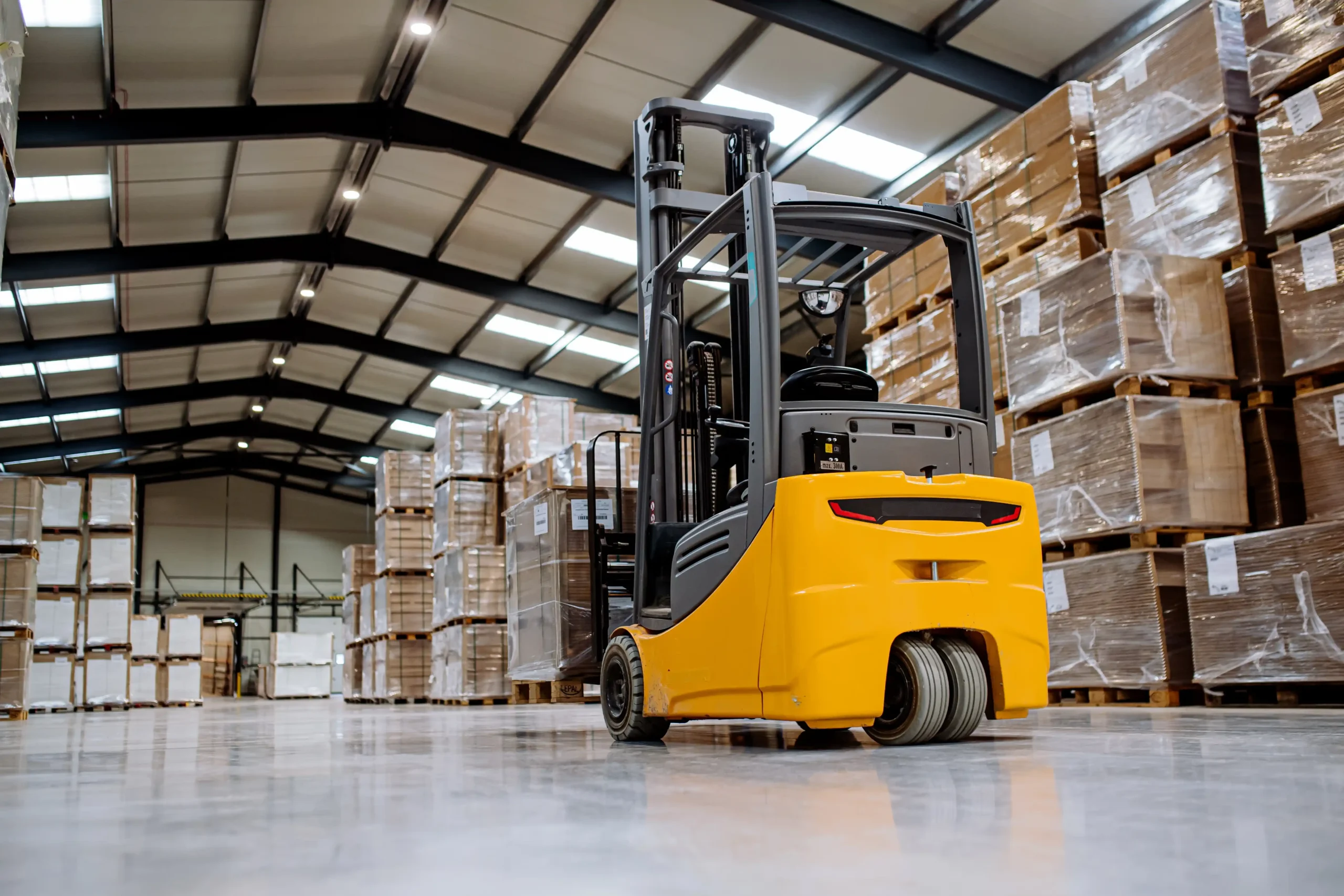
A counterbalance forklift’s defining feature is its open-front design. Unlike how a forklift’s lifting mechanism works for units with outrigger legs, support arms, or other structures extending under or around the load, a counterbalance forklift lifts loads directly on forks that project from the front of the truck.
Its design allows the operator to drive straight up to a pallet, rack position, trailer, or stacked material without front-end interference. The built-in counterweight at the back of the chassis offsets the load’s weight at the front, forming a forklift stability triangle that prevents it from toppling.
Its biggest practical advantage is its unobstructed access to the load. You can approach a pallet from the front, enter trailers, and work in open areas with fewer constraints, compared to other specialized equipment.
Three-Wheel vs. Four-Wheel Counterbalance
Counterbalance forklifts come in three-wheel and four-wheel chassis configurations.
| Three-Wheel | Four-Wheel | |
|---|---|---|
| Overview | Often used indoors and for applications that require lighter-duty narrow aisle forklift options | The standard design used for various applications (a generally versatile model that offers better stability) |
| Wheel Configuration | Two front wheels with a single rear drive wheel | Two front wheels and two rear wheels |
| Load Handling | Lighter-capacity applications | Better for heavier loads and more demanding duty cycles |
| Turning Radius | Tighter turning circle for maneuvering in confined spaces | Wider turning radius than three-wheel models |
| Aisle Suitability | Good choice where aisles are tight but not narrow enough to require a reach truck | Better for wider aisles and more open operating space |
| Environmental Conditions | Best on even, hard indoor surfaces | Suitable for indoor and slightly uneven paved outdoor surfaces |
| Stability | Prioritizes agility and compact movement | All-around stability, balance, and traction |
| Common Uses | Smaller warehouses, retail distribution, and other facilities that require counterbalance functionality in a smaller footprint | Standard warehouses, loading docks, and other general-purpose material handling across warehouse and dock operations |
Cushion Tire vs. Pneumatic Tire Variants
Among the various forklift parts and components, tire types can affect how a counterbalance forklift performs and safely handles everyday tasks. Your configuration choices directly affect surface compatibility, machine height, ride quality, and operating stability.
| Cushion Tire | Pneumatic Tire | |
|---|---|---|
| Tire Type | Solid rubber cushion tires | Air-filled or solid pneumatic tires |
| Surface | Best for smooth, hard indoor surfaces, such as warehouse concrete | Suitable for rougher outdoor surfaces, such as outdoor yards, loading docks, asphalt, and mildly uneven paved surfaces |
| Ground Clearance | Sits lower to the ground | Higher off the ground |
| Machine Size | Generally more compact | Larger overall stance |
| Ride and Handling | Best for controlled indoor travel on flat surfaces | Better for rougher surfaces and versatile indoor and outdoor use |
| Key Advantages | Compact design makes it efficient for indoor applications | Offers greater versatility across outdoor and mixed-surface conditions |
| Common Uses | Warehouses, distribution centers, and manufacturing interiors | Loading docks, outdoor storage yards, and mixed-use facilities |
Knowing which tire is best for your forklift when placing a rental order can help you avoid mistakes that can impact your operations.
- Cushion tire forklifts are designed for smooth, level floors. Using them on uneven pavement or rough outdoor surfaces can create handling problems and increase tip risk.
- Pneumatic tire forklifts are better suited to outdoor conditions. They are not recommended for indoor spaces with delicate flooring, as they may mark or damage the surface. They also may not deliver the same stable, controlled feel as a cushion tire model.
Fuel Type Options
Counterbalance forklifts are available in all three main fuel configurations:
- Propane (or LPG) Counterbalance Forklifts: Used in mixed indoor and outdoor operations where there is enough ventilation, such as loading docks.
- Electric Counterbalance Forklifts: A popular choice for indoor applications, as they produce zero direct emissions and operate more quietly.
- Diesel Counterbalance Forklifts: These are best suited to outdoor-only work that requires strong power and long runtime.
Your fuel choice can affect your operations, maintenance expectations, and runtime planning. If you’re unsure, check out our comparison guide for propane vs. electric vs. diesel forklifts.
Capacity Range
Counterbalance forklifts cover a very broad capacity range. Common models used in general warehousing and industrial handling range from 3,000 to 12,000 pounds. This covers much of the day-to-day work in distribution centers, loading docks, manufacturing facilities, and storage yards.
Beyond that, there is a separate class of heavy-duty industrial forklifts that can handle 20,000 to 100,000+ pounds in heavy manufacturing and port environments. These are purpose-built industrial machines with very different forklift dimensions, operating requirements, and site considerations, which may require getting a qualified counterbalance forklift hire to operate it.
As with any unit, the rated forklift load capacity is tied to a specific load center and operating configuration. The actual safe load depends on the shape, length, and position of the load, not just its stated weight.
Where the Counterbalance Excels
The counterbalance forklift is a common choice in many operations because of its open-front design, suitable for a wide range of tasks.
- Loading Dock Work: It can drive directly into trailers and containers, pick up palletized material, turn, and exit without needing extended support legs or specialized aisle conditions. That makes it the most practical warehouse truck for trailer loading and unloading.
- Outdoor and Mixed-Use Environments: When equipped with pneumatic tires, they can move between warehouse interiors, staging areas, loading aprons, and paved yards more easily than many specialized warehouse trucks.
- Warehousing: Once loads exceed around 8,000 to 10,000 pounds, four-wheel pneumatic counterbalance trucks become a common solution. They combine load-handling capability with practical mobility.
Another advantage is attachment compatibility. Counterbalance forklifts can be configured with side shifters, fork positioners, clamps, rotators, carpet poles, and fork extensions. This provides more flexibility for operations handling more than standard pallets.
Where Other Machine Types Are a Better Fit
A counterbalance forklift is versatile, but it is not the right answer for every facility.
If your building uses high-density storage with narrow aisles, a counterbalance truck may simply take up too much space. These forklifts usually need about 11 to 12 feet of aisle width to work efficiently. If your operation is designed around tighter aisles in the 8- to 10-foot range, a reach truck is often the better solution. Learn more about the differences between a reach truck vs. counterbalance forklift.
They are also not ideal for very high racking. At extreme heights, reach trucks, turret trucks, and other specialized warehouse machines may offer better precision and suitability for high-bay storage.
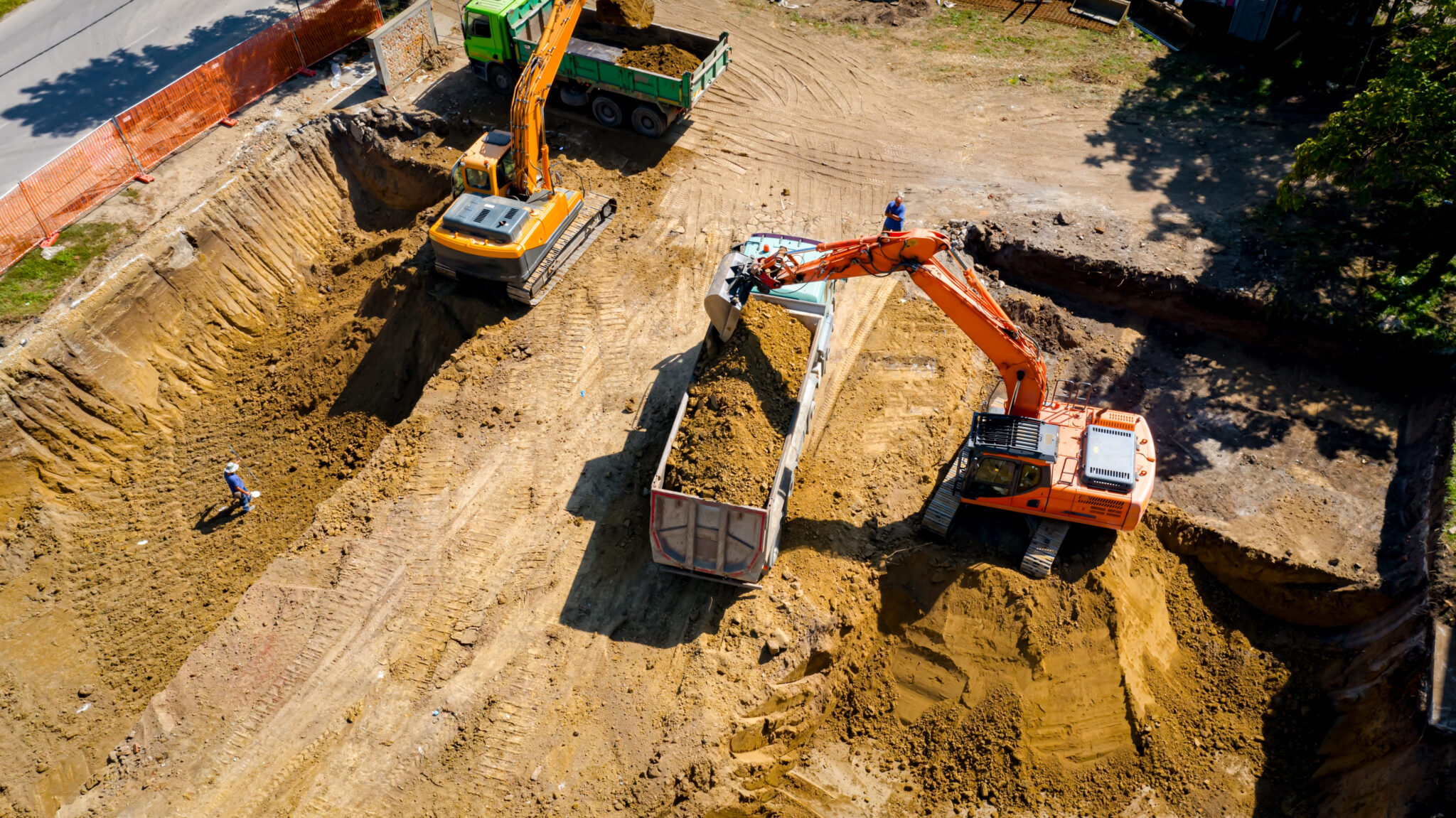
With pneumatic tires, they can handle paved outdoor areas. However, it is not a rough-terrain machine. On active construction sites, mud, uneven ground, and changing grade conditions call for a telehandler or rough terrain forklift instead.
It also has no horizontal outreach capability and must be positioned directly in front of the load placement point. If a job requires reaching over obstacles, setting materials farther forward, or placing loads at a distance, a telehandler is the better tool.
Industrial Counterbalance Forklift Trucks — Heavy Duty Applications
Industrial counterbalance forklift trucks are better suited to heavier capacities in the 15,000- to 100,000-pound range. They are used in ports, steel service centers, paper mills, foundries, lumber operations, and heavy manufacturing plants.
These are larger than typical warehouse forklifts and require special access planning, wider operating areas, and a floor-loading review before use. Tire and fuel configurations also shift at this end of the market, with diesel and LPG commonly used for the highest-capacity machines. While the core counterbalance design principle remains the same, these trucks belong to a different operational class than the forklifts used in standard warehouse aisles.
Rent a Counterbalance Forklift Truck for Your Operations
The counterbalance forklift offers flexibility and direct access well-suited to various types of material handling work. The key is understanding whether the counterbalance matches your application. Once you match that design to your surface conditions, aisle width, load type, and operating environment, it becomes much easier to determine whether a counterbalance forklift is the right tool for your facility.
With BigRentz, you can rent a forklift to improve your operational efficiency and safety. Browse our forklifts and other materials handling equipment today to find the right unit, or get in touch with our team to discuss your requirements. We can recommend the most suitable unit for your operations.
Frequently Asked Questions
What is a counterbalance forklift?
A counterbalance forklift features forks mounted at the front and a built-in counterweight at the rear to offset the load. Its open-front design allows it to drive directly up to pallets, trailers, and racks without support legs getting in the way.
How high can a counterbalance forklift lift?
Lift height depends on the specific model, its forklift mast types, and its configuration. Counterbalance forklifts are commonly used for standard warehouse racking, but for very high storage applications, specialized equipment may be a better fit.
Can a counterbalance forklift be used outdoors?
Many counterbalance forklifts can be used outdoors, especially pneumatic tire models. However, they are best suited to paved or mildly uneven surfaces rather than rough terrain or active construction sites.
How do OSHA forklift classes relate to counterbalance forklifts?
OSHA forklift classes are used to categorize forklifts by design and power source. Counterbalance forklifts commonly fall into specific classes depending on whether they are electric or internal combustion models, so the class can help identify the machine type during selection and training.
Is a counterbalance forklift a good choice for renting?
Yes, a counterbalance forklift is versatile and familiar to many operations. It works well for businesses that need a practical machine for loading, unloading, staging, and general material handling on standard surfaces.