Cranes are tremendously powerful pieces of equipment that make it possible to move heavy loads on construction sites. They are capable of transporting materials, placing structural components, and completing lifts that would be otherwise difficult or unsafe with other equipment.
On active construction sites, cranes are central to daily operations. However, they also pose serious risks when improperly handled.
Between 2011 and 2022, the Bureau of Labor Statistics recorded 487 fatalities tied to crane incidents, an average of 41 deaths per year. Crane-related accidents also account for a third of all construction site fatalities, with an estimated 264 injuries annually. These statistics highlight the need for crane safety at all stages of operation.
In the sections below, we discuss the most common crane hazards and share crane safety tips to minimize safety risks on your construction site while handling a crane.
Most Common Crane Hazards on Construction Sites
Construction sites present a range of crane hazards that can affect both operators and ground personnel. Identifying these risks before lifting begins is a key part of maintaining safe operations.
A structured hazard review helps evaluate the conditions that influence crane performance and lift safety. This review should account for site conditions, load path, and crane type, including factors related to overhead crawler safety.
With these elements in mind, the following are some of the most common crane hazards encountered on construction sites:
- Overloading: A crane can exceed capacity if the load weight is incorrect, the radius changes, or the crane is not configured as planned. This can lead to structural failure or tip-over.
- Power Line Contact: Booms and suspended loads can enter unsafe clearance zones if the work area is not clearly marked. Without active monitoring, contact with energized lines can occur and put both ground crews and operators at risk.
- Dropped Loads: Damaged rigging or improper hitch selection can cause a load to fall or swing unexpectedly.
- Tip-Overs: Tip-overs often happen when the crane is set up on unstable ground or outriggers are not properly supported. Load direction and positioning can further affect stability once the lift begins.
- Mechanical Failure: Worn or damaged components such as wire ropes, hydraulic systems, brakes, or safety devices can affect load control and increase the risk of an incident.
- Blind Spots: Accidents can happen when the operator cannot clearly see the load path or landing area. This increases the risk of unintended contact, load misplacement, or struck-by incidents.
Identifying these risks early is one of the most effective steps in crane accident prevention.
11 Crane Safety Tips
Crane safety relies on proper planning and correct setup before any lift begins. Each stage of the lift introduces different risks, so crews need to approach the work with clear procedures and a full understanding of the equipment on site.
The following safety tips outline practical steps that help reduce risk and support controlled crane operations:
1. Pick the Right Crane for the Job
Using the wrong type of crane can create site hazards. If the crane is not suited to the terrain or required radius, it may face stability issues or operate too close to its rated capacity.
Cranes can either be mobile or fixed. They are built for different applications, so the equipment should fit the demands of the lift:
- Crawler Crane: Well-suited for soft ground because tracks distribute weight
- Rough-Terrain Crane: Designed for uneven job sites and difficult grades
- All-Terrain Crane: Can travel on roads and operate across mixed site conditions
- Carry Deck Crane: Best for tight spaces and quick setup on smoother surfaces
There are dozens of crane types to choose from, including truly massive cranes, and safety starts with picking the right crane for each unique job site.
2. Use Trained and Qualified Crane Personnel
Safe operation of cranes demands trained personnel for setting up, rigging, signaling, and operation. The Occupational Safety and Health Administration (OSHA) has regulations in place that require only trained, certified and properly evaluated individuals to operate cranes on job sites. Make sure to adhere to all regulations to be certain that qualified personnel are being used to operate cranes at all times.
3. Review the Crane’s Operating Manual
Safe crane use starts with knowing the specific machine on site. Even experienced crews should understand the crane’s controls, capacity limits, safety systems, stabilizers, counterweights, and operating requirements before work begins.
The operator’s manual provides the information needed to run the crane correctly and follow the manufacturer’s safety instructions. Reviewing it before operation helps support safer setup, lifting, and overall crane performance.
4. Check the Crane Before Each Shift
A daily inspection checklist helps confirm the crane is safe prior to operation. Operators should review key systems at different phases:
- Pre-Start Checks: Before starting the crane, the operator should check tire condition, oil levels, seat belts, air reservoir, and the battery, among other things.
- Engine Start-Up Checks: Before daily work begins, the operator should start the engine and check the pressure gauge, fuel level, turn signals, horn, suspension, and brain system, among other things.
- Safety System Checks: Most importantly, safety system checks should be performed to prevent catastrophic accidents. Make sure to evaluate the anti-two block, the rated capacity limiter, and the outriggers.
Daily inspections help catch mechanical issues before they affect the lift. Missing even one of these issues can significantly increase the risk of equipment failure or loss of load control.

5. Avoid or Clear Obstacles During Travel
Plan and clear the crane’s travel path before moving. Avoid fixed hazards such as power lines, structures, and uneven ground, and maintain required clearance at all times. For example, cranes must stay at least 10 feet from power lines up to 50,000 volts.
A signal person should guide crane travel when hazards, blind spots, or nearby workers are present. This helps the operator maintain clearance and gives the rest of the crew advance warning.
6. Stabilize the Crane Before Rigging
Mobile cranes rely on outriggers and other support systems to stay level and stable during lifting. Before rigging begins, the crane should be set up according to the manufacturer’s instructions and checked to confirm that the ground and support points can safely support the load.
When stabilizing the crane, keep the following in mind:
- Follow the manufacturer’s instructions for outrigger extension.
- Use pads or mats beneath outriggers when required.
- Do not place outriggers over voids, trenches, recently backfilled areas, or unstable soil.
Improper outrigger placement is a common cause of crane instability, which is why the setup area should be carefully evaluated before lifting begins. So, make sure you’ve made a solid assessment of outrigger placement to ensure its stability.

7. Use Proper Rigging Methods
The way a load is rigged affects how it lifts, moves, and settles. Proper rigging helps keep the load balanced and reduces the risk of dropped materials or uncontrolled movement during the lift.
When rigging a load, take note of the following considerations:
- Hitching: Choose a hitch based on the load’s shape and weight distribution. Basket and choker hitches are two common options.
- Sling Angle: Angled slings create more force and reduce lifting capacity. Make sure the sling is rated for both the load weight and the lift angle.
- Load Balance: The center of gravity must be understood before the load is hoisted.
- Hardware Condition: Hooks, shackles, slings, and lifting accessories should be inspected before use.
Understanding load balance, sling force, and rigging method helps crews plan a more controlled and stable lift, especially when the load is large or uneven.
8. Know How Load Radius Affects Capacity
The load radius directly affects how much weight a crane can lift. As the load moves farther from the crane’s centerline, the crane’s lifting capacity decreases.
Boom length, boom angle, extension setup, and crane position all influence radius during a lift. A pick that looks acceptable at one point can move outside safe limits as the boom extends or the load shifts outward.
Check the load chart for the exact crane setup before lifting. That step helps confirm the crane can handle the load at the planned radius.
9. Stay Within the Crane’s Rated Capacity
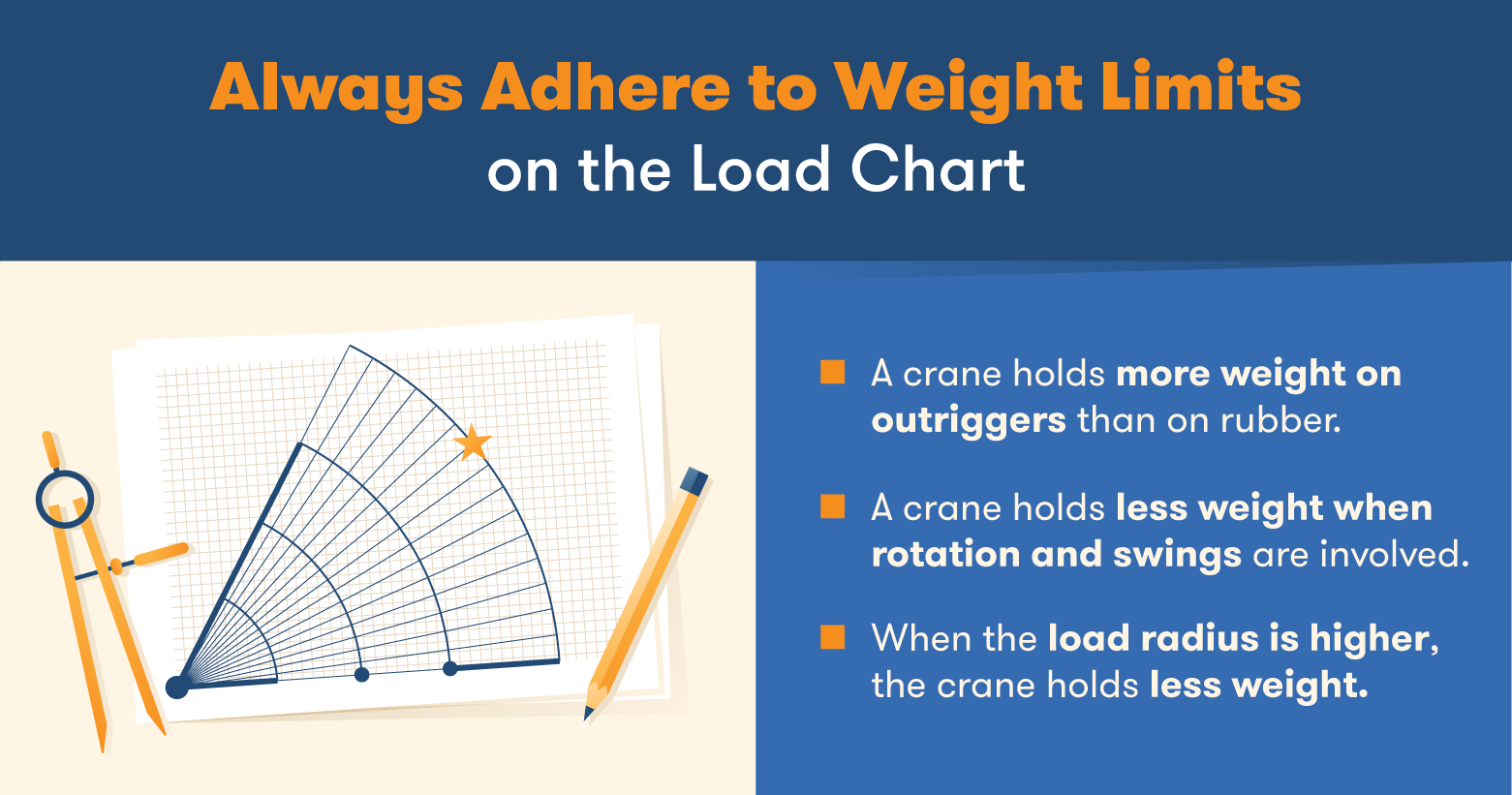
Many modern cranes have load-moment indicators and rated capacity limiters. However, operators still need to understand the load chart before making a lift. The chart shows the maximum load the crane can handle based on its setup, lift position, and working radius.
When reading load charts to determine if a lift is safe, keep the following in mind:
- Outriggers vs. On Rubber: Capacity is higher on outriggers than on tires alone, so follow the correct load chart column.
- Rotation: The crane’s capacity can change depending on whether the boom stays over the front or swings during the lift.
- Load Radius: As the radius increases, lifting capacity decreases. If the exact radius is not listed, use the next-highest value to stay within the limits.
Exceeding rated capacity is one of the clearest crane lifting hazards on any project. Load charts should be reviewed before the lift, not during it.
10. Use Proper Communication and Hand Signals
Clear communication is a basic part of safe crane work. Standard hand signals give the operator clear direction during the lift, and a qualified signal person can relay instructions or changes when visibility is limited or conditions shift.
These signals are used to communicate:
- Crane travel direction
- Boom movement
- Hoisting and lowering
- Stop commands and emergency holds
Everyone involved in the lift should understand who is giving signals and what communication method will be used. Mixed signals and unclear authority create unnecessary risk.
11. Plan Carefully for Complex Lifts
Complex lifts involve narrower operating margins and greater risk during the lift. This can include lifts that approach crane capacity, barge lifts, unusual load shapes, restricted work areas, or other conditions that make the pick harder to control.
For these lifts, a detailed plan should be in place before work begins. The crew should follow the site safety plan closely and monitor conditions throughout the lift in case adjustments are needed.
Crane Safety Checklist Before Lifting
A safety checklist helps you verify the safety site conditions prior to the start of lifting operations. While the exact checklist may vary by crane type and job site conditions, the following items should be reviewed before starting operations:
- Inspect the crane for any visible damage or safety concerns.
- Review the load chart and confirm the crane is configured correctly.
- Make sure the ground is stable and properly supported.
- Check the weather and visibility.
- Inspect rigging equipment and confirm it is rated for the load.
- Verify the load weight, pick points, and planned lift path.
- Establish clear communication between the operator and the signal person.
- Keep the swing radius and lift area clear.
- Confirm safe clearance from overhead power lines.
- Make sure outriggers are fully deployed and supported.
- Check that the landing area is clear and ready.
- Keep nonessential workers outside the lifting zone.
A documented pre-lift review can reduce oversights and help crews catch problems before the crane is under load.
Responsibilities for Crane Operation Safety
Crane operations involve multiple roles working at the same time, often under changing site conditions. Clear responsibilities help prevent gaps in communication, missed checks, and unsafe decisions during the lift.
- Operators: Inspect the crane, follow the load chart, stay within rated limits, and stop work when conditions change or visibility is limited.
- Employers: Provide training, verify qualifications, maintain equipment, and make sure the crane and lift plan fit the job site conditions.
- Ground Workers and Riggers: Use proper signals, inspect rigging, stay clear of suspended loads, and watch for hazards the operator may not be able to see.
Crane Safety Considerations by Crane Type
Each crane type operates under its own set of constraints, which affects how lifts are planned and executed. While core safety practices still apply, site conditions, movement, and load handling can introduce different risks depending on the equipment in use.
Mobile Crane Safety
Mobile cranes require careful attention to ground stability, outrigger setup, travel paths, and site congestion. Because these cranes are often repositioned during a project, setup conditions should be checked each time the crane is moved. Load charts, level setup, and clearance from overhead hazards are all critical.
Tower Crane Safety
Tower cranes are commonly used on larger building projects where height and reach are required. Wind conditions, load radius, tie-ins, foundation support, and coordination with nearby structures all affect safe operation. Because tower cranes serve wide areas of the site, communication and control of the load path are especially important.
Overhead Crane Safety
Overhead crane safety is often associated with industrial facilities, fabrication shops, and warehouses. However, the same principles apply: inspect the hoist, confirm the load path is clear, verify the hook and control function, and keep workers out from under suspended loads. Operators should also watch for side pulling and uncontrolled load movement.
Crawler Crane Safety
Crawler cranes perform well on softer ground, but they still require attention to bearing pressure, track stability, and lift planning. Because these cranes are often used for large lifts, ground preparation, and travel route evaluation remain important. A crawler crane can become unstable if ground conditions are weaker than expected or if it is operated outside its planned limits.
Understanding these differences helps you apply the appropriate crane safety guidelines to the equipment on site rather than treating every crane the same.
Frequently Asked Questions About Crane Safety
How can crane accidents be prevented?
Most incidents are tied to preventable issues such as poor setup, overloading, contact with power lines, or workers entering unsafe areas around the lift. Proper lift planning, daily inspections, utilizing qualified operators, correct rigging, and ensuring strict adherence to load charts can keep operations safe.
What are the main crane safety precautions?
The main crane safety precautions include selecting the right crane, inspecting the equipment before use, properly stabilizing the crane, verifying the load weight, checking the lift path, maintaining safe clearance from power lines, and keeping workers clear of suspended loads and swing areas.
What should you check before operating a crane?
Before operating a crane, you should check the crane’s condition, safety devices, fluid levels, wire ropes, hook, rigging equipment, outrigger setup, ground stability, weather conditions, load chart, and communication plan. You should also confirm that the load weight and radius are within the crane’s rated capacity.
Why should workers never stand under a crane load?
Workers should never stand under a suspended load because rigging can fail, loads can shift unexpectedly, and equipment movement can change the load’s path without warning. Even a controlled lift can become dangerous if the load swings, drops, or lands outside the intended area.
What causes crane tip-overs?
Crane tip-overs are commonly caused by overloading, excessive load radius, poor outrigger setup, weak ground conditions, side loading, or operating the crane out of level. In many cases, multiple factors contribute to the incident.
Choose the Right Equipment for Safer Lifting
Crane safety starts with selecting equipment that matches the demands of the job. Site conditions, lift requirements, and load characteristics all influence how a crane will perform in the field. Using the wrong equipment can introduce limitations that affect stability, reach, and overall control during the lift.
Access to the right crane for each project allows crews to plan lifts more accurately and work within safe operating limits. BigRentz offers a wide range of crane rentals and heavy equipment suited for different site conditions and lifting needs.
Explore our fleet to find equipment that aligns with your project requirements and supports safer job site operations.