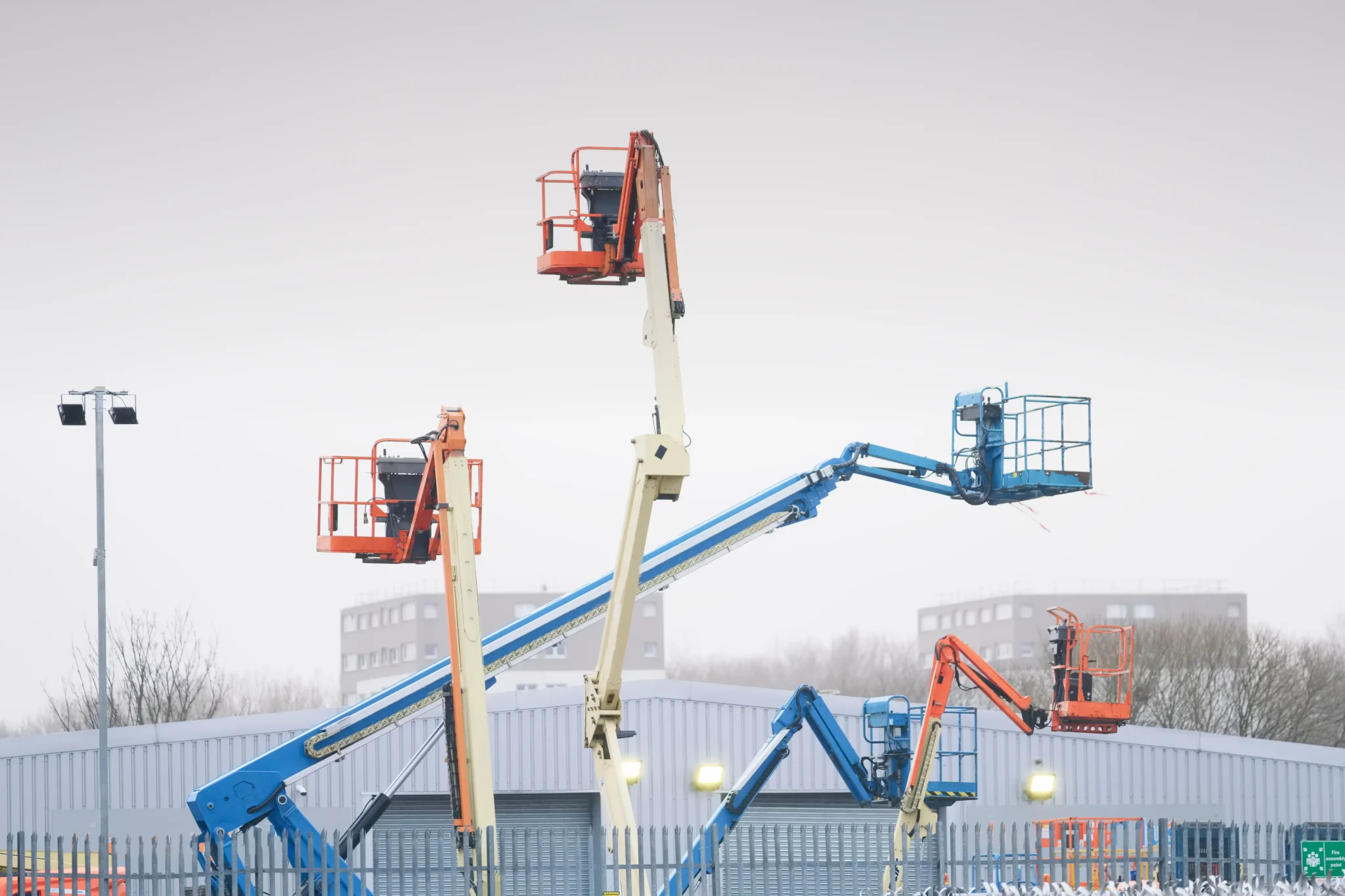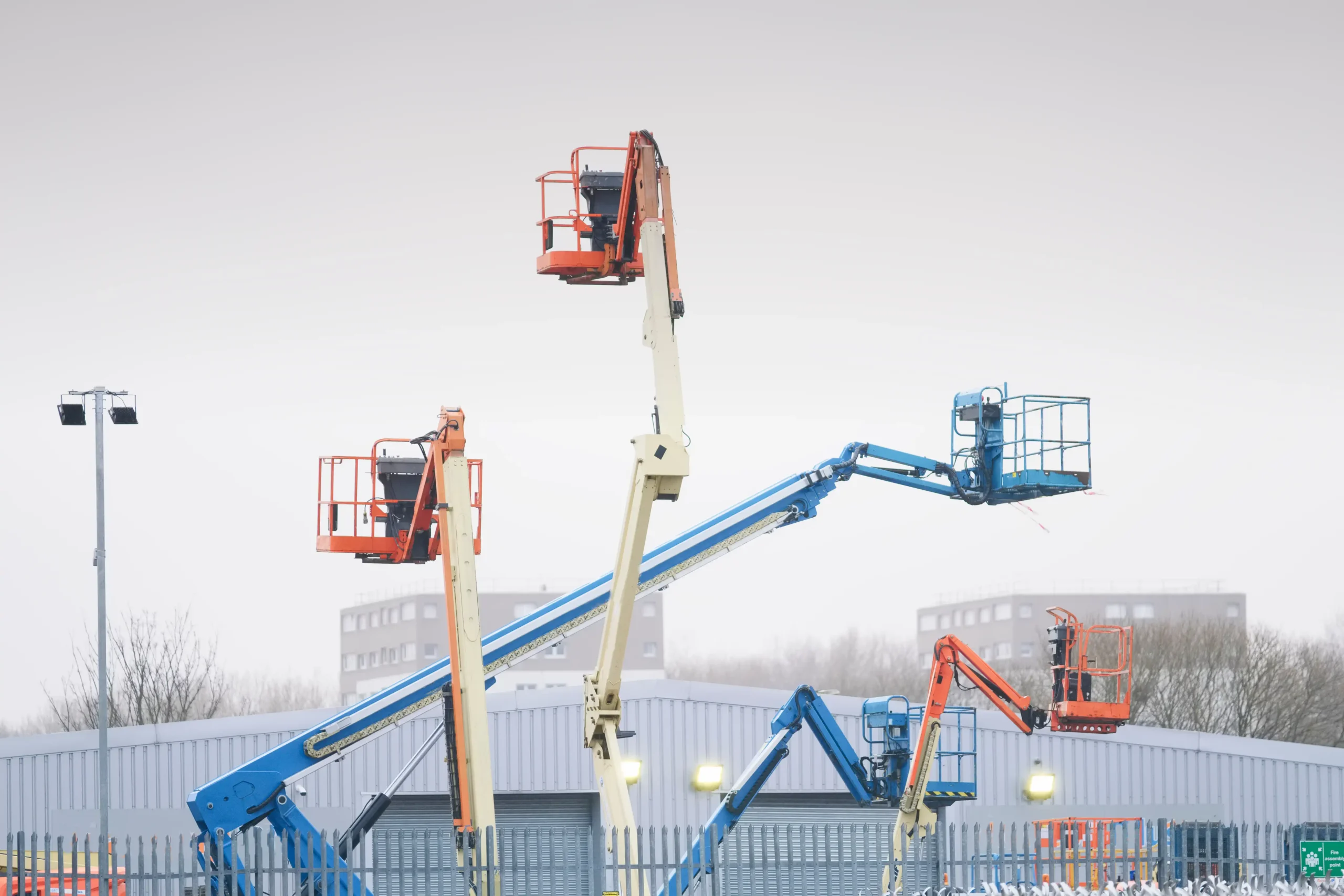
Many Occupational Safety and Health Administration (OSHA) citations involving aerial lifts stem from preventable issues. When an incident occurs on a jobsite, investigators are more likely to find a chain of overlooked safety protocols – inadequate training, inspection failure, improper fall protection measurements, and unsafe operating practices – as the cause of the accident, rather than mechanical failure.
Compliance with OSHA aerial lift regulations requires more than having an operator manual available in the basket. Before, during, and after operations, there must be integrated safety measures in everyday routines. We break down these regulations to help employers and operators understand their specific obligations and the evolving expectations for jobsite safety.
Who Must Comply With OSHA Aerial Lift Regulations?
A common misconception on construction sites is that whoever is in the basket operating the lifting equipment is solely accountable for safety compliance. However, OSHA aerial lift regulations establish a chain of responsibility that covers multiple roles across a project.
Compliance obligations extend to:
- Employers: They are the primary entity in charge of providing a safe workplace, ensuring equipment is maintained, and verifying that all operators are trained and evaluated.
- Operators: These are the individuals who control the equipment, conduct pre-use inspections, wear required personal protective equipment (PPE), and follow safe work practices.
- Supervisors and Site Managers: These personnel oversee daily operations, identify site-specific hazards, and enforce safety protocols.
- Temporary Workers: Contracted or temporary staff must receive the exact same level of training and evaluation as full-time employees before operating equipment.
- Rental Equipment Users: Contractors who rent any equipment assume the employer’s responsibility for site-specific training, daily inspections, and safe operation during the rental period.
- Subcontractors: Independent teams working on a larger site who must coordinate with the general contractor to ensure their lift operations do not create hazards for other trades.
OSHA Aerial Lift Requirements Every Employer Should Understand
Understanding these requirements means applying actionable procedures to your jobsite. Employers must build a safety program that addresses equipment selection, daily use, and ongoing maintenance.
These are the core OSHA aerial lift requirements and how they apply in practical scenarios:
| Regulatory Focus | Practical Jobsite Application |
|---|---|
| Safe Equipment Selection | Matching the lift’s capacity, reach, and power source (electric vs. diesel) to the specific task and environment |
| Operator Authorization | Restricting equipment access to personnel who have completed formal training and a practical evaluation |
| Equipment Inspections | Mandating documented pre-start inspections and frequent/annual inspections by qualified mechanics |
| Maintenance Responsibilities | Removing defective equipment from service immediately and repairing it according to manufacturer specifications |
| Hazard Assessments | Surveying the work area for drop-offs, holes, slopes, overhead power lines, and high wind conditions before operation |
| Fall Protection | Enforcing the use of a body harness and lanyard attached to the boom or basket when operating articulating or telescopic lifts |
| Safe Work Practices | Prohibiting operators from sitting or climbing on the edge of the basket, or using planks and ladders to gain additional reach |
| Documentation | Maintaining written records of all training, evaluations, and equipment inspections for auditing purposes |
These form the foundation of an employer’s safety program. Treating them as daily operational standards rather than annual checklist items significantly reduces the risk of jobsite incidents.
OSHA Aerial Lift Training Requirements
Training is the most heavily scrutinized aspect of compliance during an inspection. OSHA aerial lift training requirements require employers to ensure that all operators are trained in aerial lift safety and evaluated by a qualified professional before they are allowed to operate the equipment.
Meeting these requirements involves a curriculum that covers these topics through classroom instruction and practical, hands-on evaluation:
- Hazard Recognition: Identifying electrical, fall, and falling object hazards in the work area
- Equipment Familiarization: Understanding the specific controls, safety devices, and operating characteristics of the exact make and model the employee will use
- Workplace-Specific Training: Addressing unique site conditions, such as uneven terrain, pedestrian traffic, or proximity to active roadways
After training, operators must be evaluated for their competency. A qualified evaluator must observe the operator successfully performing designated tasks and demonstrating safe practices.
This process is not a one-time event that guarantees operators will always perform accordingly. Employers must monitor them continuously and initiate retraining if an operator demonstrates unsafe practices, is involved in an accident, or is assigned to a different type of equipment.
OSHA Aerial Lift Safety Training: What Should It Include?
Effective OSHA aerial lift safety training should provide practical instruction that prepares operators for the unpredictable nature of active construction sites. Comprehensive safety training should teach operators:
- Pre-Operation Inspections: How to check fluid levels, inspect structural components, test controls, and verify that safety devices (like tilt alarms) are functioning
- Safe Startup Procedures: How to establish a secure perimeter and verify ground conditions before elevating the platform
- Fall Protection: Conducting proper inspection, donning, and tie-off procedures for personal fall arrest systems
- Load Capacity Awareness: Calculating the combined weight of the operator, tools, and materials to ensure it does not exceed the manufacturer’s rated capacity
- Stability Considerations: Understanding how wind speed, soft soil, and outrigger placement affect the machine’s center of gravity
- Traveling While Elevated: Recognizing the strict limitations and hazards of moving the machine while the platform is raised
- Working Near Power Lines: Maintaining the minimum safe approach distance (typically 10 feet for lines up to 50kV) and utilizing spotters
- Emergency Procedures: How to lower controls to rescue an incapacitated operator and execute emergency descent protocols
- Weather Considerations: Knowing the manufacturer’s maximum allowable wind speeds and recognizing when to halt operations due to lightning or ice
Aside from detailed instruction, training should include practical, hands-on instruction. This ensures operators have built muscle memory and situational awareness before independently operating any equipment – something instructional learning alone cannot provide.
OSHA Aerial Lift Certification: What Employers Need To Know
OSHA requires operators to be trained and evaluated as competent before handling any equipment. Following this, employers and authorized third-party training providers can issue an OSHA aerial lift certification that states that an individual has successfully completed the required training and evaluation.
However, employers must understand that holding a card from a previous job does not automatically clear an operator to work. As the operator’s current employer, you are liable for:
- Verifying the operator’s competency
- Ensuring they are familiar with the specific equipment on site
- Maintaining accurate training records
During an audit, OSHA inspectors will ask for documentation proving that the operator was trained, evaluated, and authorized for that specific workplace.
OSHA Aerial Lift Training Expiration: Does Certification Expire?
Unlike some safety credentials that expire on a strict calendar date, OSHA does not assign a fixed or universal expiration date for aerial lift training.
Regulations rely on performance-based retraining triggers, so employers are held accountable for keeping their operators competent. Retraining is legally required under the following circumstances:
- An operator is observed operating the equipment in an unsafe manner.
- An operator is involved in an accident or a near-miss incident.
- The operator is assigned to use a different type of equipment, such as moving from a scissor lift to an articulating boom lift.
- Workplace conditions change and introduce new hazards.
- An evaluation from the employer or a third-party evaluator reveals that the operator lacks the necessary knowledge or skills.
While OSHA does not prescribe a renewal period, many employers voluntarily adopt periodic refresher training schedules. This is done typically every three years as an industry best practice to maintain high safety standards.
New OSHA Aerial Lift Standards and Training Requirements
While OSHA’s foundational rules remain consistent, safety regulations are not static. Employers must stay informed about new standards and the agency’s interpretation of consensus guidelines.
The agency references updated industry standards, particularly the ANSI A92 standards for Mobile Elevating Work Platforms (MEWPs). When ANSI updates its design, safe use, and training guidelines, OSHA uses these consensus standards to enforce safety under the General Duty Clause.
Adapting to new OSHA aerial lift training requirements means recognizing shifts in industry expectations. For example, recent ANSI updates placed heavier emphasis on supervisor training, requiring anyone who directly supervises MEWP operators to understand the rules, hazards, and equipment selection processes. Furthermore, the standards introduced stricter requirements for documented rescue plans.
We recommend that employers regularly:
- Review existing safety programs and update as needed
- Monitor updates for new OSHA aerial lift standards
- Adjust their internal policies to align with new OSHA requirements and ANSI best practices
These can protect your operations from liabilities and keep your crew safe.
Common OSHA Violations Involving Aerial Lifts
Understanding where other companies fail provides a roadmap for improving your own safety program. OSHA frequently issues citations for a specific set of recurring violations.
| Common Violation | Root Cause | Prevention Strategy |
|---|---|---|
| Inadequate Operator Training | Untrained personnel have been allowed to operate lifts to save time. | Implement a strict authorization process, such as keeping keys secured from untrained workers. |
| Failure to Inspect Equipment | Schedule pressure and time constraints have led operators to skip daily pre-use inspections. | Require operators to submit signed daily inspection logs before beginning work. |
| Improper Fall Protection | Operators have failed to tie off to adjacent structures instead of the basket. | Conduct daily PPE checks and enforce a zero-tolerance policy for boom lift tie-offs, and ensure scissor lift guardrails are fully intact. |
| Exceeding Platform Capacity | Lift equipment was used to load heavy materials with multiple workers. | Train operators to calculate total load weight and consult the capacity chart. |
| Unsafe Positioning Near Power Lines | The site was not properly assessed for hazards prior to operation. | Mandate pre-job hazard surveys and use dedicated spotters near electrical hazards. |
| Operating on Unstable Surfaces | Operators either ignored ground conditions or failed to use outriggers properly to mitigate these risks. | Train operators to assess soil compaction, slopes, and hidden voids like vaults. |
| Unauthorized Modifications | Operators bypassed safety switches or added unapproved attachments. | Prohibit any equipment modifications without written approval from the manufacturer. |
Employer Compliance Checklist
To maintain ongoing compliance, you should implement a structured oversight process. Use this actionable checklist to evaluate your current safety program:
- Operator Training: Verify that all operators have completed both formal instruction and hands-on evaluation.
- Competency Evaluations: Document the specific make and model of equipment each operator is authorized to use.
- Equipment Inspections: Require operators to file daily pre-use inspection logs and keep annual mechanic inspection reports.
- Maintenance: Schedule all preventative maintenance in compliance with the manufacturer’s recommended intervals.
- Documentation: Keep all training certificates, evaluations, and maintenance records easily accessible for audits.
- Site Hazard Assessments: Require a documented hazard survey before lift operations begin on any new site.
- PPE Verification: Inspect all fall protection harnesses and lanyards regularly for wear and tear.
- Rescue Planning: Develop and document a specific rescue plan for retrieving an elevated, incapacitated operator.
- Ongoing Supervision: Train site supervisors to monitor lift operations and enforce safety rules.
Operator Best Practices Beyond OSHA Compliance
Regulatory compliance is the minimum legal standard for safety. This is why many employers and jobsite supervisors aim to improve site conditions and go beyond this by integrating these practices:
- Conducting Thorough Pre-Use Inspections: Treat daily inspections as critical life-safety checks and ensure operators do not rush through them.
- Reporting Equipment Issues Immediately: Tag out machines at the first sign of a hydraulic leak, frayed cable, or malfunctioning control.
- Maintaining Situational Awareness: Scan for overhead obstacles, changing ground conditions, and pedestrian movement.
- Monitoring Weather Conditions: Check local forecasts for high winds or approaching storms and lower the platform before conditions become hazardous.
- Communicating With Ground Personnel: Using clear hand signals or radios to coordinate movement with spotters and other trades.
- Following Manufacturer Instructions: Consulting the operator’s manual stored in the weather-resistant compartment on the lift for specific operational guidance.
Common Questions From Employers About OSHA Compliance
Employers frequently encounter specific logistical challenges when implementing safety programs. Here are practical answers to common compliance scenarios:
Do rental aerial lifts still require operator training?
Yes. Employers who rent a boom lift or any lifting equipment must ensure that their operators are fully trained and evaluated on the specific rental unit before use.
Can employers conduct training internally?
Yes, provided the person conducting the training is qualified and possesses the knowledge, training, and experience to teach and evaluate operators effectively.
What documentation should employers maintain?
Employers must keep records detailing the name of the trainee, the date of training, the name of the trainer, and the specific equipment the operator was evaluated on.
What happens if an operator changes job sites or equipment?
If the new job site introduces new hazards or if the operator is assigned a different make/model of lift, the employer must provide additional workplace-specific or equipment-specific training.
Elevate Your Jobsite Safety Standards With Reliable Equipment From BigRentz
OSHA aerial lift regulations exist to reduce preventable incidents through proper training, rigorous equipment inspection, and hazard recognition. By ensuring safe operating practices from both employers and operators, you can integrate structured safety protocols into your processes while keeping your projects moving efficiently.
Effective compliance requires safe operating practices from both employers and operators. When you need reliable, job-ready equipment for your next project, BigRentz is here to help. From single man lift rentals to boom lifts, scissor lifts, and other aerial lift rental equipment, we can connect you with the right choice for your operations. When you need nationwide availability and flexible rental terms, our rental specialists can meet your project demands safely and efficiently.
Frequently Asked Questions
What are OSHA aerial lift regulations?
They are federal safety standards that dictate how employers and operators must train for, inspect, maintain, and operate aerial lift equipment to prevent workplace injuries and fatalities.
What are OSHA’s aerial lift training requirements?
Employers must ensure operators receive instruction on hazards and equipment operation, followed by a practical, hands-on evaluation by a qualified professional before they are authorized to use the lift.
Does OSHA require aerial lift certification?
OSHA requires operators to be trained and evaluated. Employers or training providers issue documentation proving the operator has met the training requirements.
How long does OSHA aerial lift certification last?
OSHA does not set a strict expiration date for training. However, operators must be retrained if they operate unsafely, are involved in an accident, use new equipment, or face new workplace hazards.
When is retraining required?
Retraining is mandatory when an operator demonstrates a lack of skill, is involved in a near-miss or accident, is assigned a different type of lift, or when workplace conditions change significantly.
Who is responsible for aerial lift training?
The employer is ultimately responsible for ensuring that all employees, including temporary workers, are properly trained and evaluated before they are authorized to operate equipment.
Are rental aerial lifts covered under OSHA regulations?
Yes. When a company rents an aerial lift, it assumes the employer’s responsibility for ensuring that its workers are trained, the equipment is inspected daily, and safe work practices are followed.
What are the most common OSHA aerial lift violations?
The most frequent citations involve inadequate operator training, failure to perform daily equipment inspections, improper use of fall protection, and operating too close to overhead power lines.