![How to Identify Bottlenecks in Your Procurement Processes [+Quick Checklist]](https://acropolis-wp-content-uploads.s3.us-west-1.amazonaws.com/How-to-Identify-Procurement-Bottlenecks.webp)
Procurement is the engine that keeps your operations running. But when bottlenecks creep in, delays pile up, costs increase, and frustration spreads across teams. The good news? Many bottlenecks are easier to spot and fix than you might think—if you know what to look for.
Here’s how to identify the choke points slowing down your procurement workflow, plus a handy checklist to guide you.
1. Map Your Entire Procurement Workflow
Practical Tip: Draw a step-by-step flow of your process from requisition to payment. Include:
-
Request submission
-
Approvals
-
Vendor selection
-
Purchase order issuance
-
Delivery and inspection
-
Invoice payment
Example: If it normally takes 2 hours to approve a request but some approvals take 3–5 days, that’s an immediate red flag.
2. Track Cycle Times at Each Stage
Collect data on how long each step takes. Look for unusually long delays or inconsistent timing.
Example Metrics to Track:
-
Approval time per request
-
Supplier lead times
-
Time from order creation to delivery
-
Invoice processing time
Practical Tip: Use a spreadsheet or simple dashboard to highlight steps exceeding your target times.
3. Look for Repeated Delays
Check historical records for recurring issues. Delays that happen consistently often indicate systemic bottlenecks.
Examples:
-
Requests waiting in approval queues for more than 48 hours
-
Specific suppliers consistently delivering late
-
Frequent corrections needed on purchase orders due to errors
4. Collect Feedback From Your Team
Data tells one part of the story; your team can highlight hidden friction points. Ask:
-
Which steps slow you down the most?
-
Where do orders “get stuck”?
-
Are errors in paperwork or approvals common?
Practical Tip: Hold a short 30-minute feedback session or anonymous survey to uncover insights quickly.
5. Audit Your Tools and Systems
Inefficiencies can stem from outdated or disconnected systems.
Questions to Ask:
-
Do our systems integrate smoothly with accounting, inventory, and vendor platforms?
-
Are manual approvals causing delays?
-
Could automation reduce repetitive tasks?
Example: Automating purchase order approvals can reduce wait time from days to hours.
6. Benchmark Against Industry Standards
Benchmarking your procurement process helps you see where you stand relative to peers and identify areas ripe for improvement. Here are real-world benchmarks that many high‑performing organizations use to gauge efficiency and pinpoint bottlenecks: 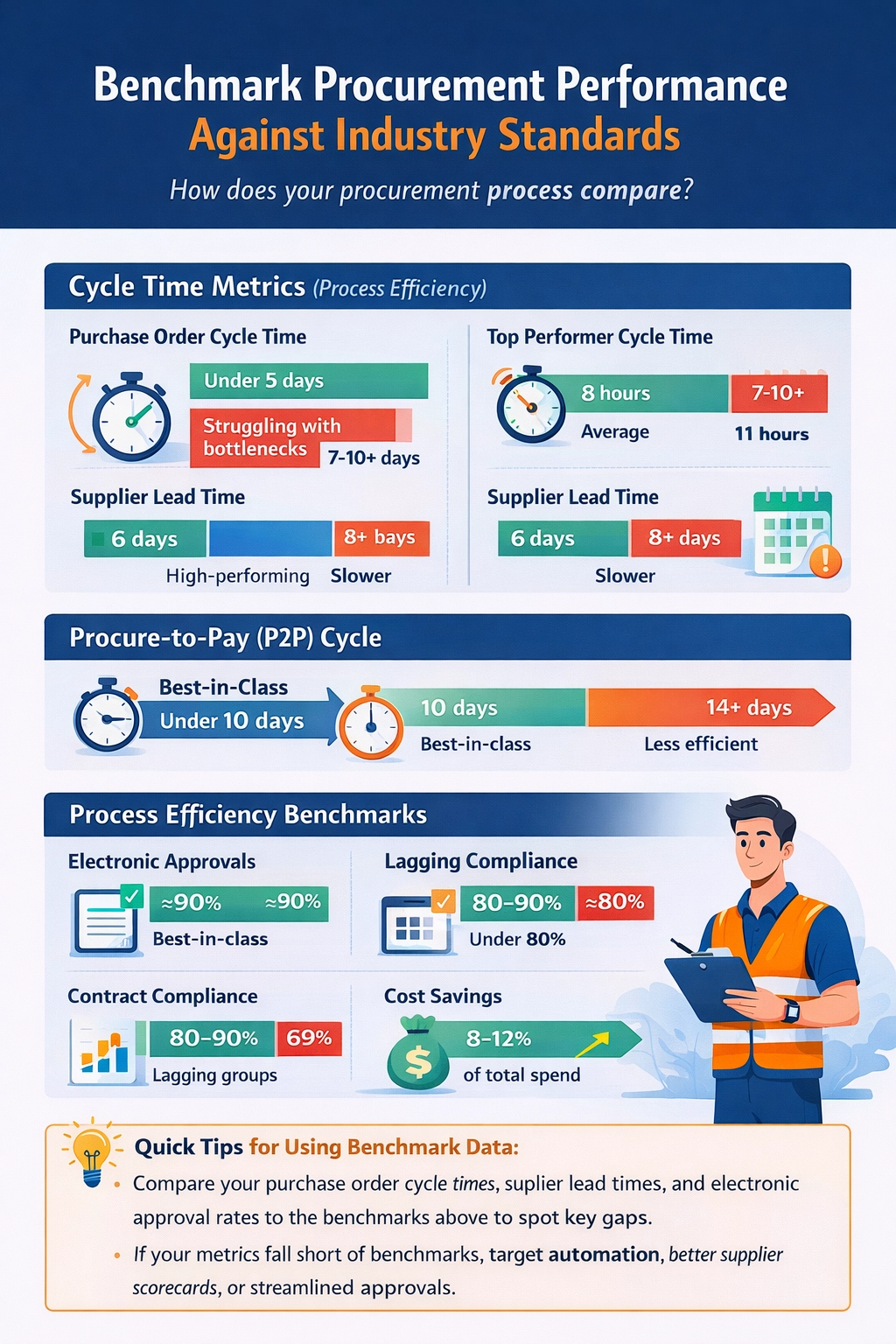
7. Prioritize and Act
Once you identify bottlenecks, rank them by impact: cost, operational risk, and time lost. Start with changes that provide the most benefit.
Examples of Solutions:
-
Automate approval workflows
-
Reallocate staff to overloaded tasks
-
Consolidate vendors for faster fulfillment
-
Standardize documentation to reduce errors
Mini Procurement Bottleneck Checklist
Use this quick checklist to spot bottlenecks in your process:
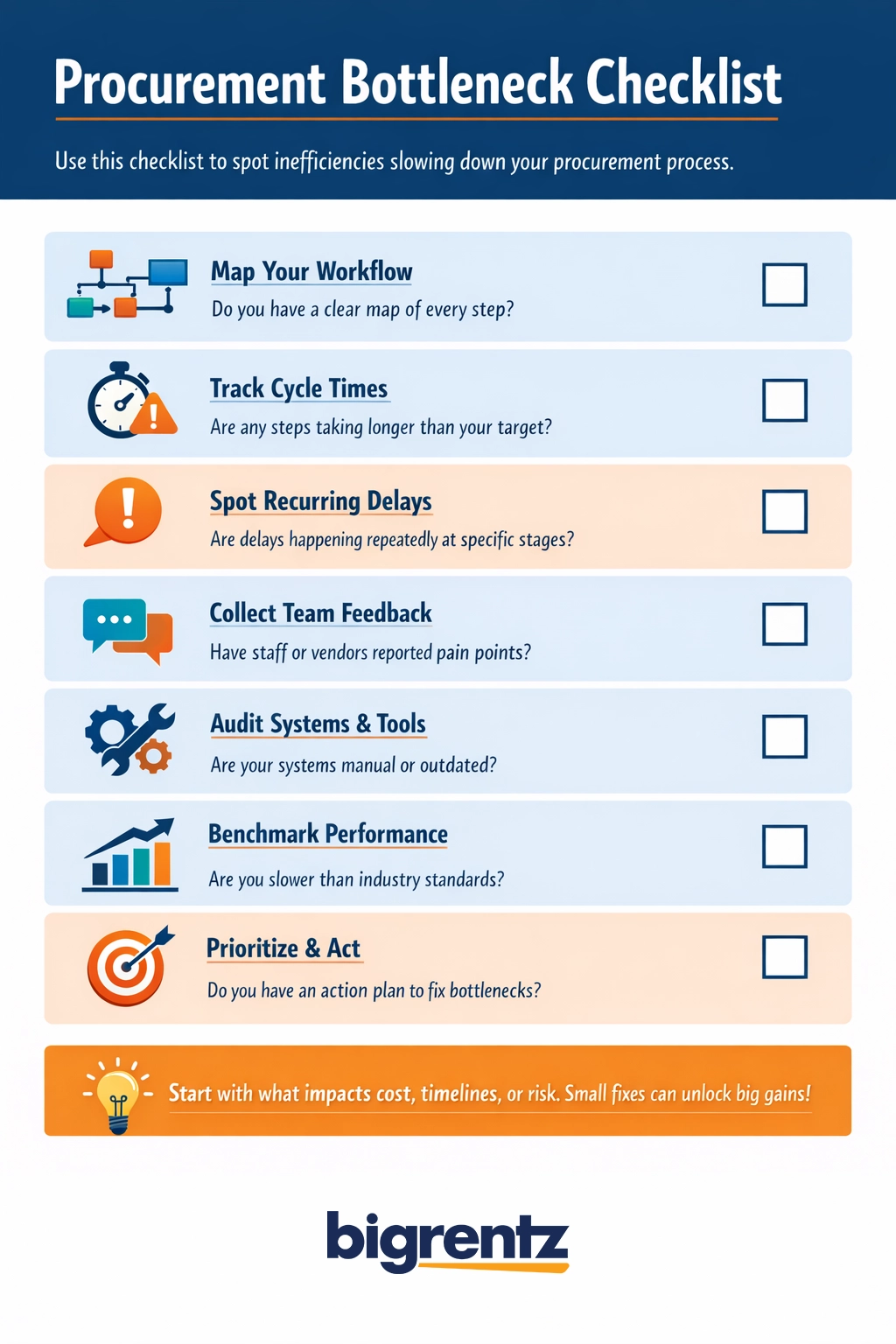
Tip: Start with the items that most directly impact cost, project timelines, or risk. Even small improvements at one stage can unlock big gains across the entire process.
Final Thought
Identifying procurement bottlenecks doesn’t have to be overwhelming. By combining process mapping, data analysis, team feedback, and system audits, you can uncover hidden inefficiencies and implement solutions that save time, reduce costs, and keep your projects on track.
Partnering with BigRentz to Streamline Procurement
One of the most effective ways to eliminate procurement bottlenecks is by working with a reliable partner who understands large-scale project needs. BigRentz specializes in helping contractors and businesses simplify equipment rentals, ensuring materials and machinery arrive on time and on budget.
Here’s how partnering with BigRentz can help reduce bottlenecks:
-
Centralized Equipment Access: One platform for all your rental needs means fewer vendors to manage, reducing delays caused by fragmented procurement.
-
Transparent Pricing & Contracts: Avoid last-minute surprises with clear pricing and flexible rental terms.
-
Nationwide Network: Access thousands of locations across the U.S., so you can secure equipment even on tight timelines.
-
Dedicated Support: Expert guidance ensures orders are processed quickly, approvals are streamlined, and project schedules stay on track.
By integrating BigRentz into your procurement workflow, you can minimize bottlenecks, improve project efficiency, and focus your team’s energy on completing projects—not chasing equipment.
Tip: Treat your vendor partnerships as an extension of your procurement team. A trusted partner like BigRentz can help you proactively prevent delays before they become costly issues.