Construction projects require various types of machines, each identified by a specific name based on its design, classification, and how it is referenced in documentation. Having a clear understanding of construction equipment names helps teams stay aligned when communicating, recording information, and maintaining consistency across project records.
In this guide, we cover a comprehensive construction equipment list consisting of 37 machines. Each entry provides clear, standardized heavy equipment names and descriptions that align with industry terminology, including the machine’s characteristics, structure, and distinguishing traits. This helps differentiate between similar machines, reducing confusion and ensuring crews select the right equipment faster and more safely.
Construction Equipment Classification Table
| Equipment Name | Category |
|---|---|
| Boom Lift | Lifting & Access Equipment |
| Scissor Lift | Lifting & Access Equipment |
| Forklift | Material Handling Equipment |
| Single Man Lift | Lifting & Access Equipment |
| Telehandler | Material Handling & Lifting Equipment |
| Bulldozer | Earthmoving Equipment |
| Wheel Tractor-Scraper | Earthmoving Equipment |
| Compact Loaders | Earthmoving Equipment |
| Excavator | Earthmoving Equipment |
| Feller Buncher | Forestry Equipment |
| Harvester | Forestry Equipment |
| Trencher | Earthmoving Equipment |
| Articulated Hauler | Hauling Equipment |
| Off-Highway Truck | Hauling Equipment |
| Asphalt Paver | Road Construction Equipment |
| Cold Planer | Road Construction Equipment |
| Motor Grader | Earthmoving Equipment |
| Compactor | Compaction Equipment |
| Drum Roller | Compaction Equipment |
| Compact Track Loader / Multi-Terrain Loader | Compact Loaders |
| Skidder | Forestry Equipment |
| Forwarder | Forestry Transport Equipment |
| Knuckleboom Loader | Material Handling & Lifting Equipment |
| Towable Light Tower | Support Equipment |
| Carry Deck Crane | Mobile Crane Equipment |
| Concrete Mixer Truck | Concrete Equipment |
| Drill Rig | Drilling Equipment |
| Dump Truck | Hauling Equipment |
| Utility Vehicle (UTV) | Support Equipment |
| Truck-Mounted Crane | Mobile Crane Equipment |
| Walkie Stacker | Material Handling Equipment |
| Tunnel Boring Machine | Specialized Excavation Equipment |
| Rock Breaker | Demolition & Fragmentation Equipment |
| Concrete Pump | Concrete Equipment |
| Pipe Layer | Specialized Lifting Equipment |
| Dragline Excavator | Heavy Excavation Equipment |
1. Boom Lift

The first on our list of construction machines is the boom lift, a type of aerial lift equipment identified by its extendable arm that supports an elevated platform. The boom may be telescopic or articulated, allowing the platform to extend both outward and upward.
Boom lifts are commonly recognized by their rotating base, hydraulic arm segments, and enclosed or open operator platform. These heavy equipment machines are typically categorized within lifting and access equipment.
2. Scissor Lift

A scissor lift is a mobile elevating platform distinguished by a crisscrossing metal support structure beneath the platform. This mechanism expands vertically, raising the platform in a straight upward motion that resembles an array of scissors as it rises and descends.
Scissor lifts are identified by their compact footprint, stacked folding supports, and guardrail-enclosed work platform. These construction machines are commonly grouped under lifting and access equipment and are available in electric or engine-powered configurations.
3. Forklift

A forklift, on the other hand, is a powered industrial truck with front-mounted fork tines and a vertical mast assembly. One of the distinguishing features of this heavy equipment machine is its counterweight, located at the rear of the machine, which helps to balance the loads laid out in the front.
Forklifts vary in size, lifting capacity, and power type, including electric and internal combustion models, and are typically classified as material handling equipment.
4. Single Man Lift

A single man lift is a compact vertical access machine designed to accommodate one operator at a time. It is identified by its narrow base, lightweight construction, and vertically extending mast or column.
Single man lifts are often self-propelled or manually positioned and include a small enclosed platform. Due to their size and configuration, they are commonly categorized as lightweight lifting and access equipment.
5. Telehandler

A telehandler, sometimes referred to as a telescopic handler, is one of the construction equipment names you’ll commonly hear on job sites. Its overall design incorporates elements that may be recognized from both forklifts and cranes, including a boom-mounted attachment system and a wheeled chassis.
Telehandlers are lifting machines that feature a forward-extending telescopic boom, further distinguished by their enclosed operator cab, oversized tires, and multiple boom extension stages. Based on these characteristics, they are commonly classified within material handling and lifting equipment categories.
6. Bulldozer

A bulldozer is a heavy construction machine easily identified by its wide, flat metal blade mounted at the front of the unit. Most models of this construction equipment are built on a tracked undercarriage, a defining feature that supports its weight and improves overall stability.
Bulldozers also feature a solid frame construction, prominent engine housing, and, on certain models, a rear-mounted ripper assembly. Due to their size and structural configuration, they are generally categorized under earthmoving equipment.
7. Wheel Tractor-Scraper

The next machine on this construction equipment list is the wheel tractor-scraper: a large, wheeled earthmoving machine consisting of a tractor unit and a rear-mounted scraper bowl. The scraper bowl features a cutting edge and an internal hopper, both of which are integrated into the machine’s structure.
Wheel tractor-scrapers are identified by their articulated frame, large rubber tires, and long overall profile, and are typically classified under heavy earthmoving equipment.
8. Skid Steer Loader

A skid steer loader is a compact construction machine with a rigid frame and lift arms that attach to a front-mounted bucket or attachment. It is distinguished from other machines in its class by its ability to turn by skidding its wheels or tracks, rather than steering conventionally.
Skid steer loaders are identified by their short wheelbase, enclosed operator cab, and wide range of compatible attachments, and are commonly classified as compact loaders.
9. Backhoe Loader

A backhoe loader is a versatile construction machine featuring a front-mounted loader bucket and a rear-mounted backhoe attachment. Its identifying features include a wheeled chassis, an articulated digging arm, and a centrally positioned operator cab.
Backhoe loaders combine multiple machine components into a single unit, making them easily recognizable by their dual-attachment configuration. They are generally categorized as multipurpose construction equipment.
10. Excavator

An excavator is a heavy construction machine with an upper structure that rotates independently from its undercarriage. One of its distinguishing features is the long boom and stick assembly with a bucket mounted at the end, all connected around a central pivot point.
Excavators also feature hydraulic cylinders, a rotating operator cab, and either a tracked or wheeled base. These characteristics place excavators within the earthmoving equipment category, with models produced in a wide range of sizes and configurations.
11. Feller Buncher

A feller buncher is a forestry machine that you can identify by the front-mounted cutting head, which is used to grip and sever trees at their base. This piece of equipment is constructed on a tracked or wheeled undercarriage and supported by a heavy-duty hydraulic arm system.
Depending on the model, the cutting head may incorporate rotating disc blades or shear-style mechanisms. Based on these defining features, feller bunchers are classified as forestry equipment within standard construction machine references.
12. Harvester

Another forestry machine name you can encounter is called the harvester. You can recognize it by its articulated boom and integrated processing head. The head assembly combines multiple mechanical components into a single unit, allowing it to grip, cut, and process material in a continuous motion.
Harvesters are commonly mounted on tracked or wheeled platforms and include an enclosed operator cab as part of the upper structure. Their combined cutting and processing design places harvesters within forestry equipment classifications.
13. Trencher

Another one of the construction machine names you’ll commonly find on site equipment lists is a trencher, which is outfitted with an elongated cutting assembly (mounted at the front or rear of the unit). The cutting mechanism of this machine varies by design and can include a chain-driven system, rotating wheel, or segmented teeth.
Trenchers can be built on tracked or wheeled frames and include a reinforced boom structure that supports the machine’s cutting components. They are available in a range of sizes and have various capacities, such as the wheel trencher or chain trencher, which resembles a giant chainsaw.
14. Articulated Hauler
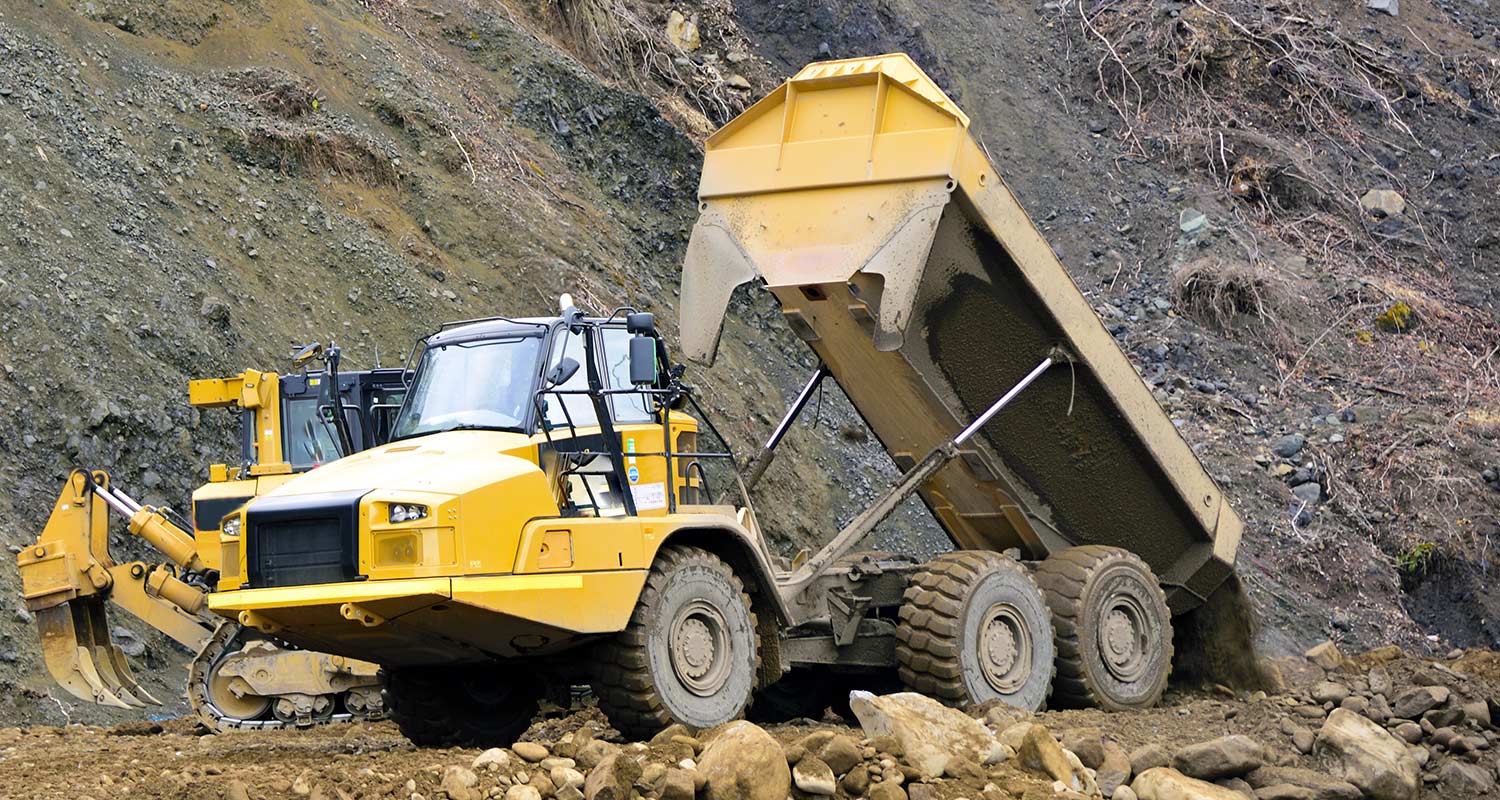
As with any articulated truck, an articulated hauler is a heavy transport machine identified by its jointed frame, which allows the front and rear sections to pivot independently. It features a large open-bed carrier mounted behind the operator cab and oversized tires designed for uneven terrain.
The articulation point is a defining structural feature that distinguishes this machine from rigid-frame trucks. Articulated haulers are typically classified as hauling or earthmoving support equipment.
15. Off-Highway Truck
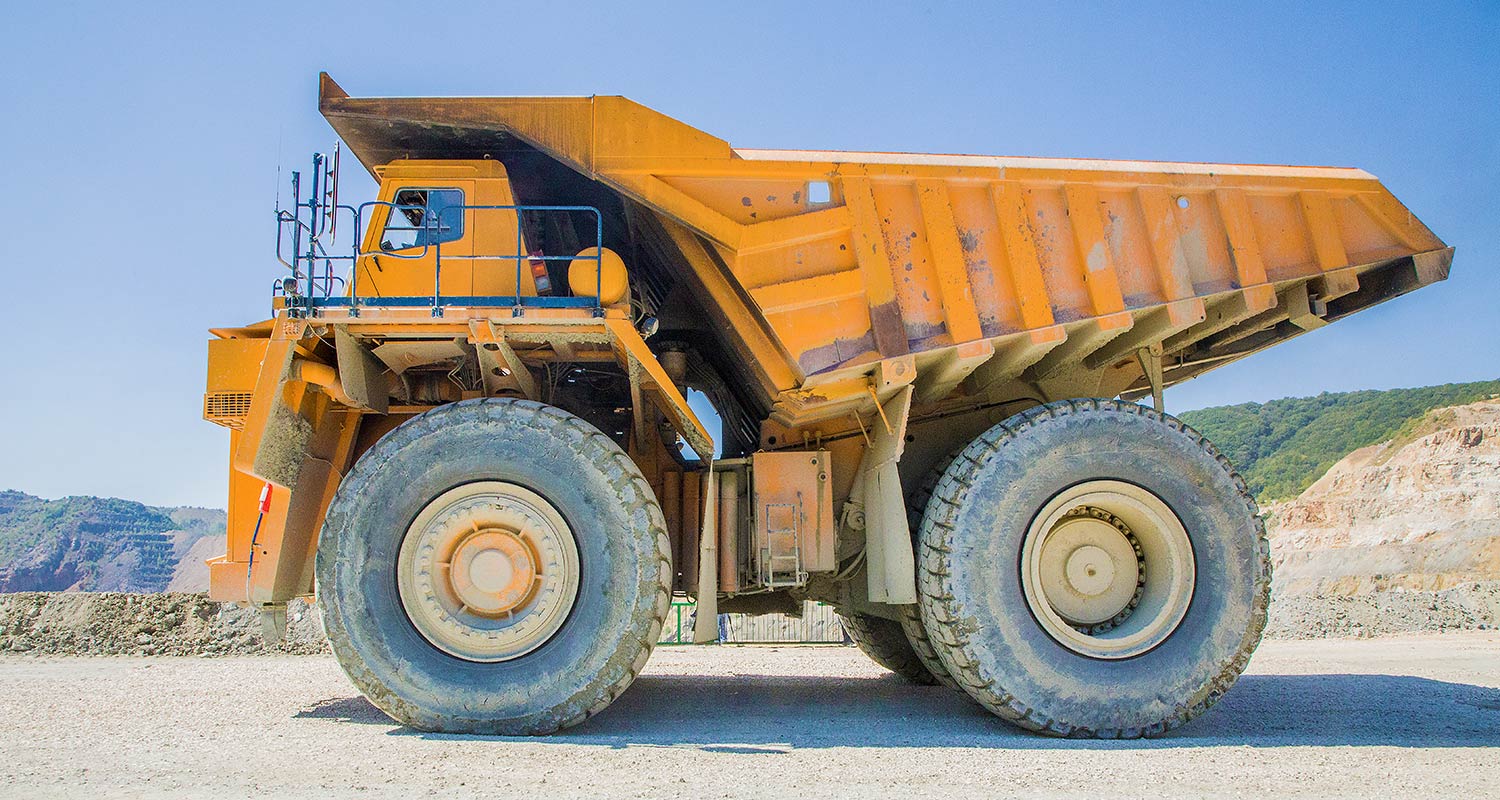
Another construction machine name you will come across is the off-highway truck. This is a large, heavy-duty vehicle designed for rugged environments. You can distinguish it from other trucks by its rigid frame, high-capacity dump body, massive tires, and elevated operator cab.
Unlike the standard road trucks you can see on highways, off-highway trucks are designed without conventional highway features. These machines are commonly classified as heavy hauling equipment due to their size and configuration.
16. Asphalt Paver

Asphalt pavers are road construction machines that feature hoppers at the front and a screed assembly located at the rear. Its layout also features a conveyor system that moves material from the hopper to the screed.
Asphalt pavers are typically tracked or wheeled and have an operator platform with integrated controls.
17. Cold Planer

This road construction machine often appears in industry references and construction machine name lists. Cold planers feature a distinctive milling design. Instead of using a fixed cutting edge, the machine relies on a rotating drum fitted with cutting teeth, positioned beneath the main frame.
Cold planers are typically built on tracked chassis and feature conveyor systems and enclosed operator stations as part of their overall design. Together, these features categorize cold planers within road construction and surface preparation equipment.
18. Motor Grader

A motor grader is one of the heavy equipment machines, characterized by a long frame and a centrally mounted, adjustable blade. The blade is positioned between the front and rear axles and can be angled, tilted, or rotated to suit the application.
Commonly classified as grading or earthmoving equipment, motor graders are typically equipped with multiple axles, an enclosed cab, and articulated steering components.
19. Compactor

Compactors are construction machines that come with a heavy frame and a compressive mechanism. It is designed to apply downward force using a compacting component that consists of steel drums, rubber tires, or vibrating plates, depending on the model.
Compactors are typically built with reinforced structures and enclosed operator stations.
20. Drum Roller

Unlike the compactor, a drum roller is a type of compaction machine equipped with one or more large cylindrical steel drums, which it uses to perform compaction functions. These drums may be smooth or textured and are mounted at the front, rear, or both ends of the machine.
Drum rollers feature a rigid frame, enclosed operator cab, and vibration systems integrated into the drums. They are classified as compaction equipment due to their structural design.
21. Compact Track and Multi-Terrain Loader

A compact track loader and a multi-terrain loader are closely related machine types. They can be distinguished by their tracked undercarriage and compact frame. Both feature lift arms mounted to a rigid chassis and are identified by their rubber track systems rather than wheels.
While the two machines appear similar at first glance, you can tell their difference by their track construction and suspension design. Compact track loaders will have a rigid undercarriage with steel-embedded rubber tracks that are fixed directly to the frame. On the other hand, multi-terrain loaders are outfitted with a suspended undercarriage with independent rollers and flexible tracks.
22. Skidder

A skidder is a forestry machine that is equipped with a heavy-duty frame and rear-mounted grappling or cable system. It is typically built on large wheels or tracks and designed with a reinforced chassis to support demanding operating conditions.
Skidders are recognized by their articulated or rigid steering configurations and enclosed operator cabs. Based on these structural features, skidders are classified within forestry and logging equipment categories.
23. Forwarder

Classified as a forestry machine, a forwarder can be identified by its rear-mounted load carrier and an integrated hydraulic crane assembly. The heavy equipment machine is built around a flatbed-style cargo area positioned behind the operator’s cab, which gives it a distinct overall layout.
Forwarders are typically constructed on wheeled frames and include articulated steering as part of the chassis design. These features place forwarders within forestry transport equipment classifications.
24. Knuckleboom Loader

A knuckleboom loader is a machine that features an articulated crane arm composed of multiple hinged sections. The segmented arm can fold inward when not extended and is mounted to a carrier or base platform. Hydraulic joints control the arm’s movement, while a rotating base allows the assembly to reposition as a single unit.
These design elements are what place knuckleboom loaders within the classifications of material handling and lifting equipment.
25. Towable Light Tower

A towable light tower is a mobile support machine identified by its trailer-mounted base and vertically extending mast. The mast supports one or more lighting fixtures and can be raised or lowered as part of the unit’s design.
Their identifying features include stabilizing outriggers and integrated power components, and they are generally categorized as temporary support or auxiliary equipment.
26. Carry Deck Crane

One of the familiar heavy equipment names on any equipment list is the carry deck crane. It is a small mobile crane distinguished by its flat, load-bearing deck and centrally mounted rotating boom. The deck wraps around the boom base, which gives the machine its name.
Most of these machines’ models are built with four-wheel steering and a single enclosed operator cab. All of the components are housed within a compact chassis.
27. Concrete Mixer Truck

Concrete mixers are specialized vehicles commonly used on construction sites and are usually listed with other concrete equipment machines. These large trucks feature an integrated system built around a reinforced truck chassis. The rotating drum, positioned behind the operator cab, forms the core of that system and is supported by hydraulic controls that regulate movement and discharge elements.
These distinguishing features set concrete mixer trucks apart from other equipment frequently found on construction machine lists.
28. Drill Rig

You can identify a drill rig by its vertically oriented drilling mast and rotary or percussive drilling mechanism. The mast supports drilling tools that are mounted along a guided track system.
Drill rigs are built on tracked, wheeled, or stationary bases and include enclosed control stations. These machines are classified within drilling and boring equipment categories.
29. Dump Truck

Dump trucks are one of the familiar construction machines you can find on many sites. They feature reinforced frames, hydraulic lifting systems, and large-capacity beds. They are classified as hauling machines within construction equipment lists.
These heavy-duty vehicles have a hinged open-box bed mounted on a truck chassis, designed to tilt upward from the front. This fulcrum-like action allows the material to be released from the rear.
30. Utility Vehicle (UTV)

A utility vehicle (UTV) is a compact off-road vehicle that has a side-by-side seating configuration and a small cargo bed. UTVs are recognized by their lightweight frame, four-wheel drive systems, and enclosed or open cab options.
These vehicles are typically classified within support or utility equipment categories based on their size and general configuration.
31. Truck-Mounted Crane
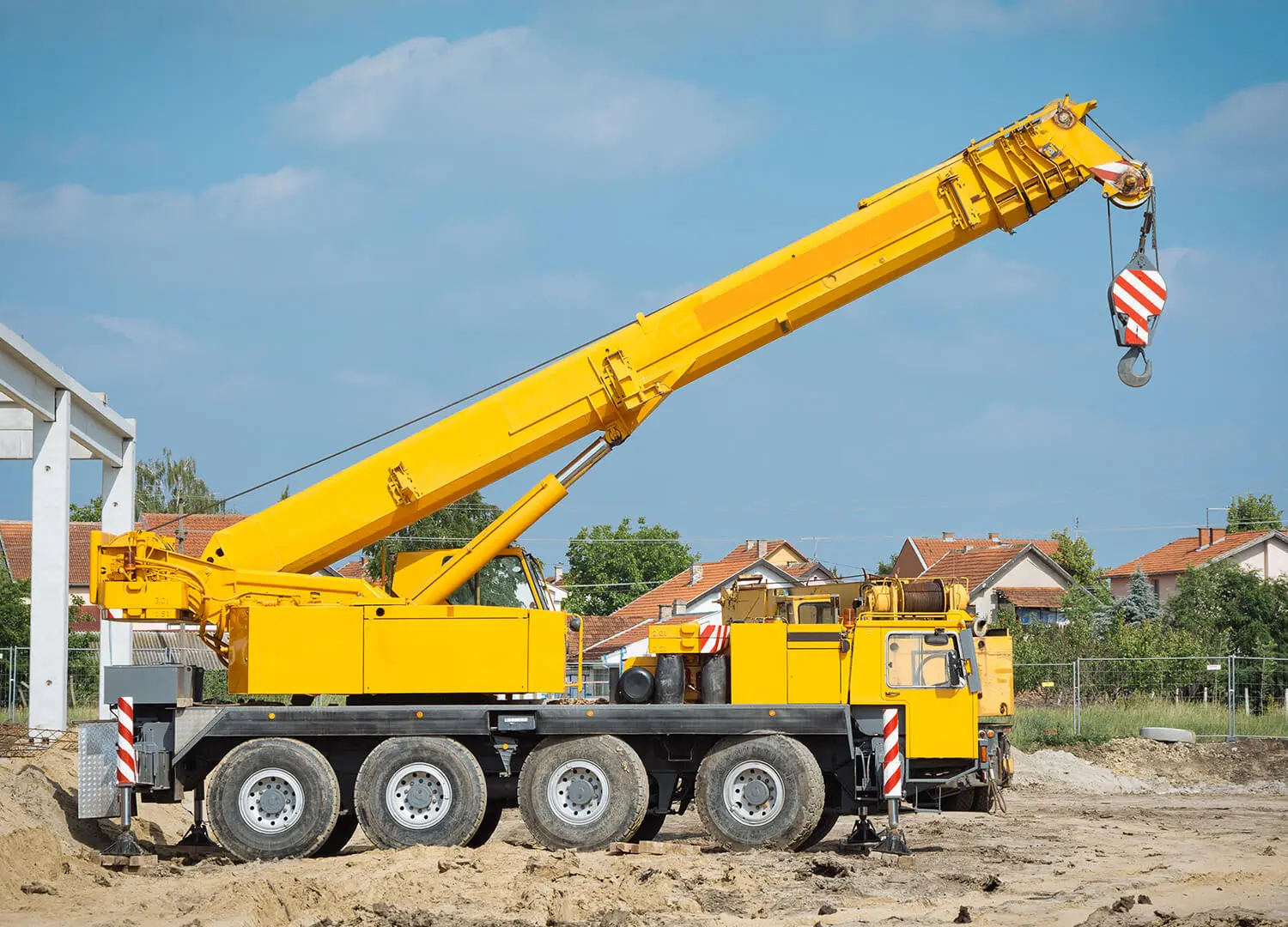
A truck-mounted crane is a crane system installed on a standard or reinforced truck chassis. The crane assembly is typically mounted behind the operator’s cab and includes a rotating boom supported by hydraulic components. This configuration allows the crane and carrier to function as a single, integrated unit.
32. Walkie Stacker

A walkie stacker is a compact material handling machine with an upright mast and fork-style lifting arms. It is designed with a walk-behind control layout rather than a seated operator cab.
Walkie stackers are typically powered by electric systems and feature a narrow frame to support controlled movement.
33. Tunnel Boring Machine

This machine is a large, specialized piece of construction equipment that can be identified by its cylindrical body and rotating cutting head. The structure features integrated support systems housed within the main frame, forming a continuous assembly.
Tunnel boring machines vary widely in size and configuration, depending on design specifications.
34. Rock Breaker

A rock breaker is a mechanical attachment or standalone machine classified within demolition and material fragmentation equipment. Identified by its chisel-like tool and hydraulic impact system, its breaking mechanism is designed to deliver repeated force through a hardened steel tip.
Rock breakers are commonly mounted to a carrier or base structure, depending on configuration.
35. Concrete Pump
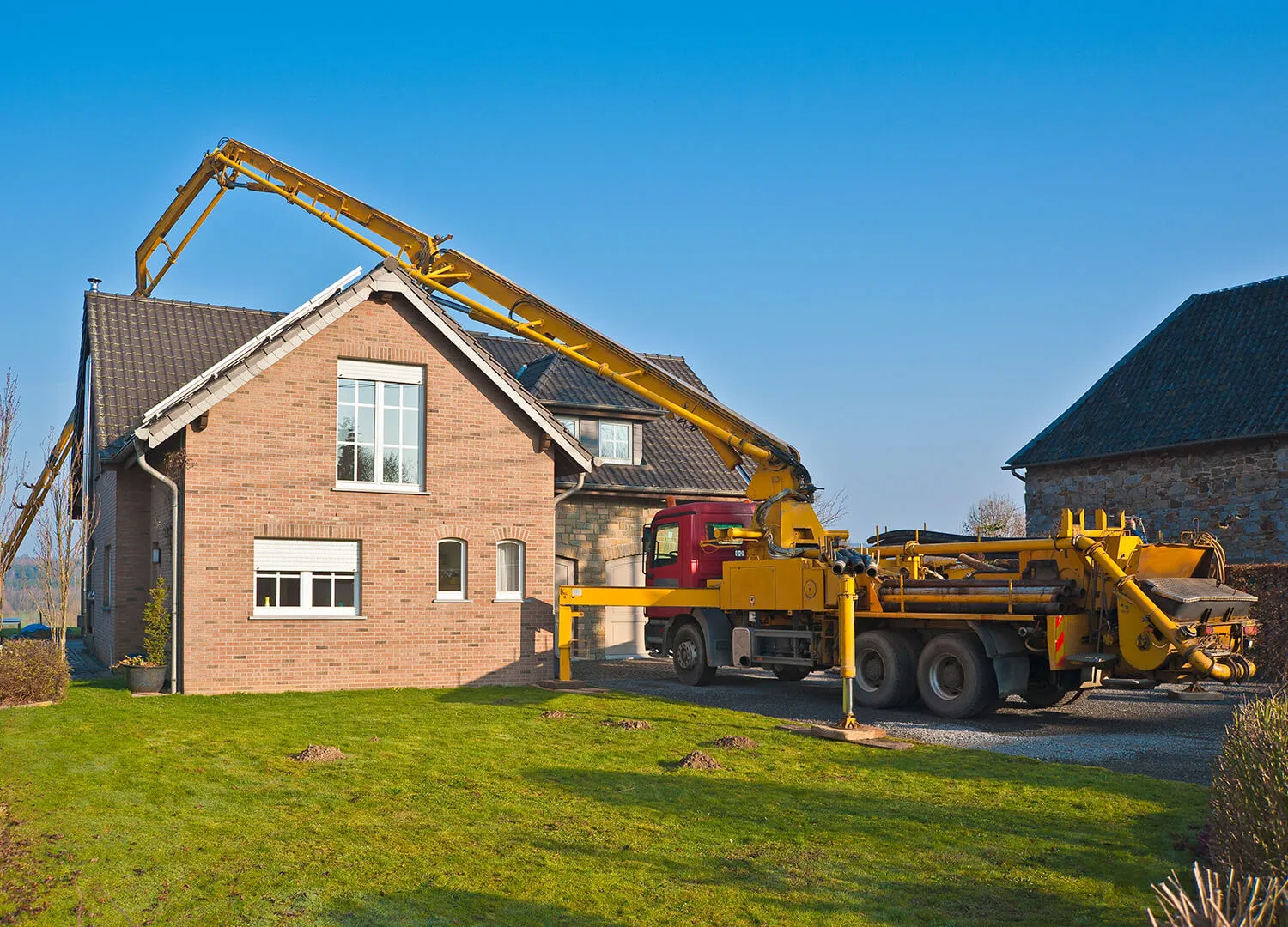
A concrete pump is a machine outfitted with a pumping system and distribution components, which are integrated into a single mechanical assembly. They may be mounted on a vehicle chassis or configured as a stationary unit.
Concrete pumps feature a hopper, pumping cylinders, and a delivery pipeline or boom system, and are classified as concrete handling equipment.
36. Pipe Layer

A pipe layer is a tracked construction machine identified by a side-mounted boom or lifting attachment. The machine’s structure is based on a crawler undercarriage, similar to that of other heavy tracked equipment.
Pipe layers are distinguished by their lateral lifting configuration and reinforced frame.
37. Dragline Excavator

Dragline excavators are large excavation machines that can be recognized by their long booms and suspended buckets. This bucket is attached using wire ropes rather than a rigid arm, like the other similar heavy equipment machines on this list.
Dragline excavators are typically built on either a crawler base or a fixed platform. Their size and mechanical configuration place them within heavy excavation equipment classifications.
Whatever your project entails, having accurate construction equipment naming references makes planning easier by providing more direction in deciding which equipment is best suited to the task at hand.
Although some of these machines may be easier to come by than others, BigRentz has everything you need to help you get the job done right. Contact our team today!