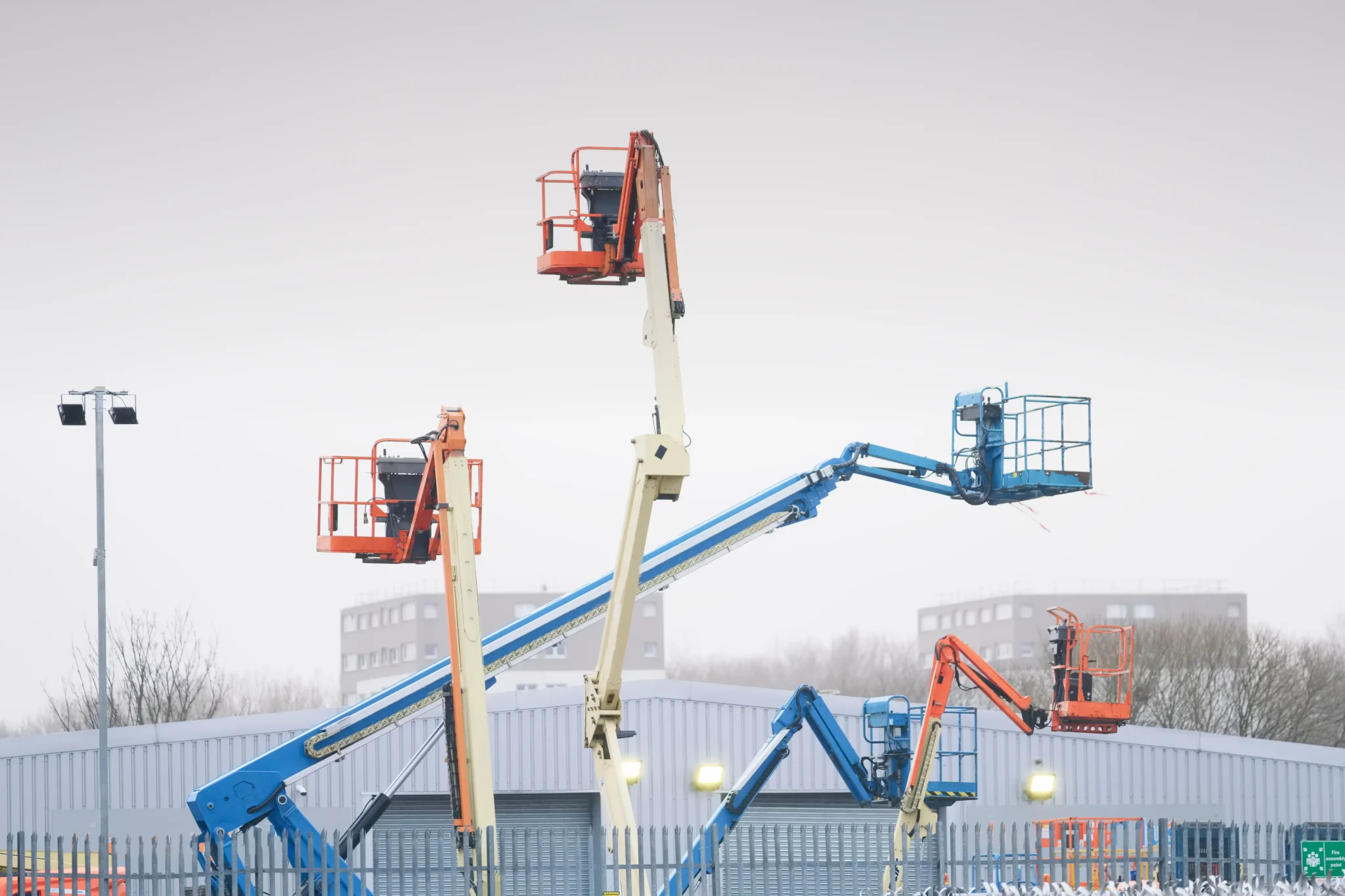
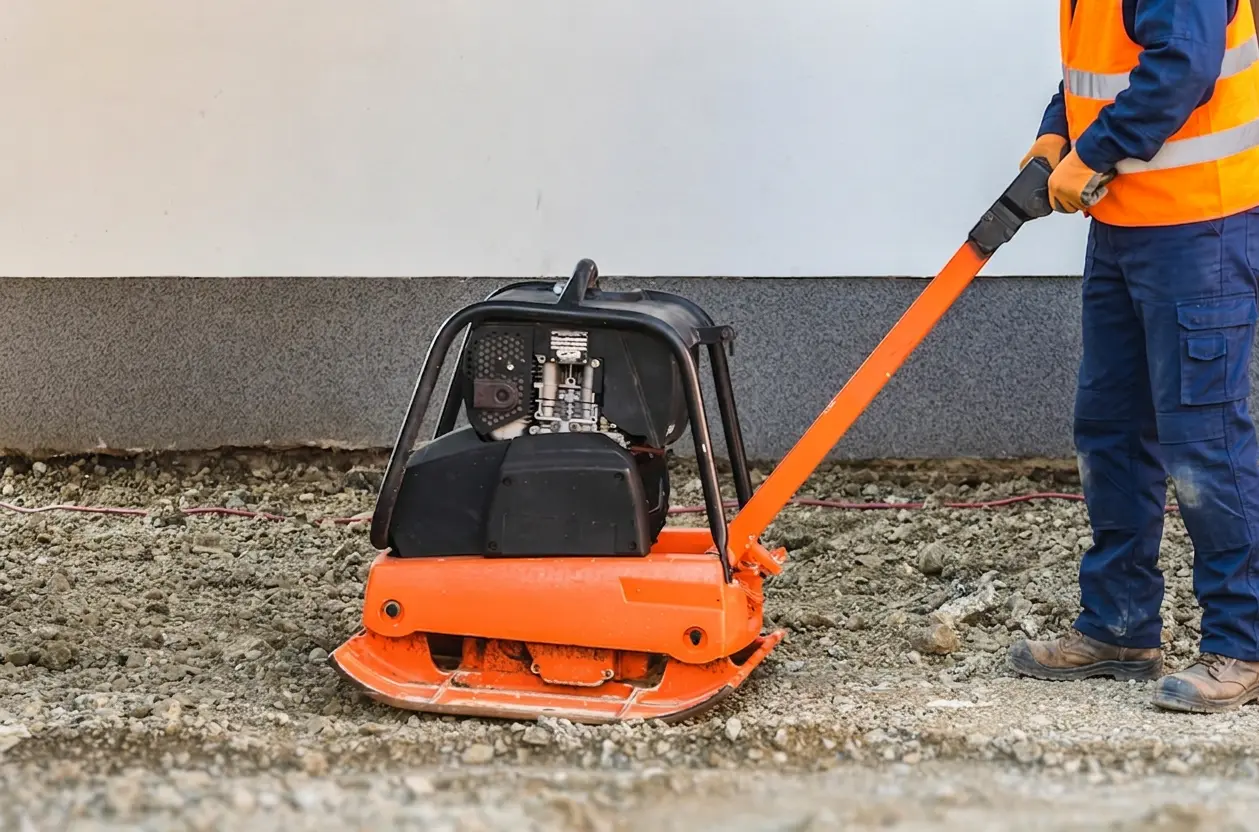
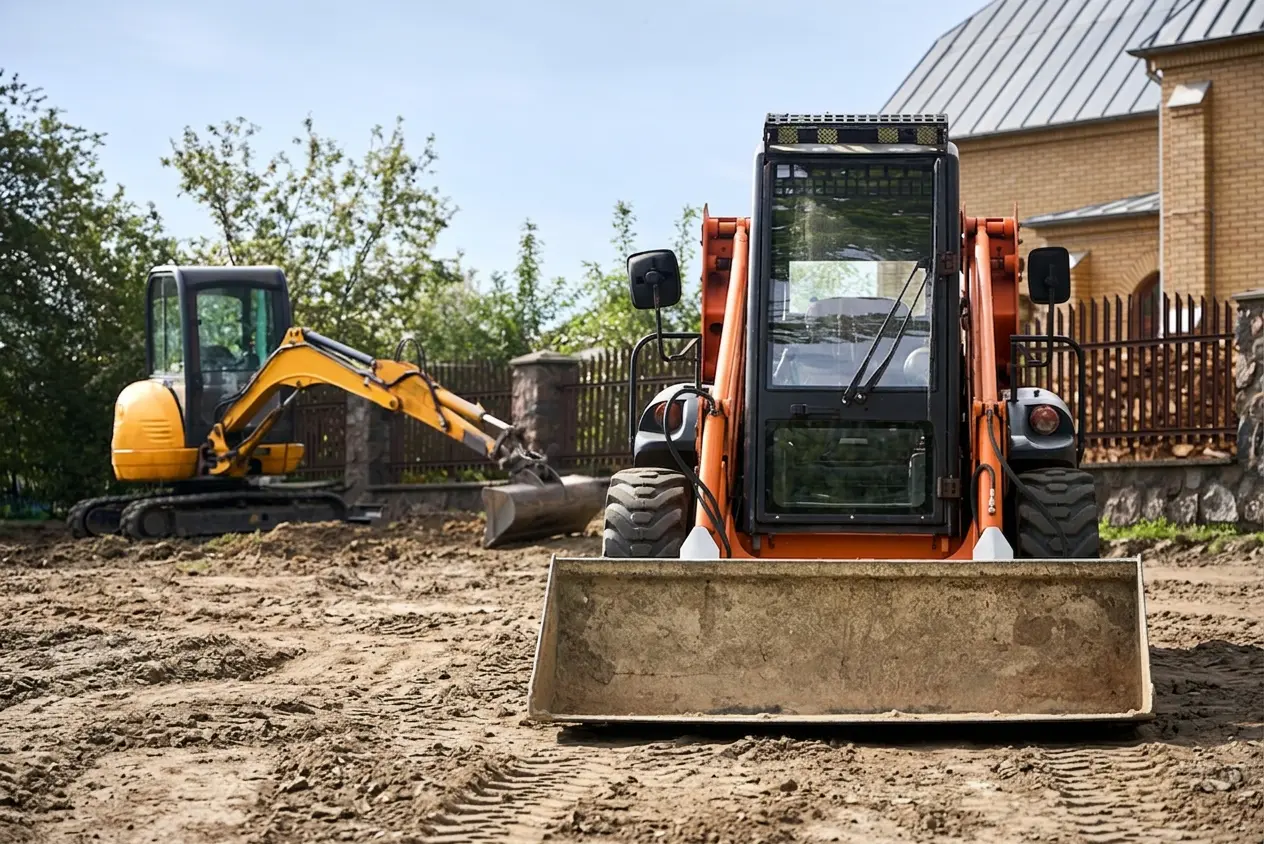
Construction vehicles show up on site for one reason: to keep work moving. Some handle material flow: bringing it in, moving it across the site, hauling it out. Others shape grades, place surfaces, or give you safe access to elevation. When you match the right vehicle to the task and the site conditions, you can cut cycle time, minimize rework, and prevent crews from waiting for the next step.
This guide on different types of construction vehicles focuses on how each vehicle is used in real job-site conditions. For every machine, you’ll see what it’s typically doing day to day, what kinds of projects it supports, and where it usually fits in the workflow.
- Articulated Haulers
- Asphalt Pavers
- Backhoe Loaders
- Boom Lifts
- Bulldozers
- Cranes
- Cold Planers
- Combine Harvesters
- Concrete Mixer Trucks
- Double Drum Rollers
- Dump Trucks
- Excavators
- Feller Bunchers
- Forklifts
- Forwarders
- Manlifts
- Motor Graders
- Scissor Lifts
- Skidders
- Skid Steer Loaders
- Telehandlers
- Tractors
- Trenchers
- Wheel Tractor Scrapers
1. Articulated Haulers
Articulated haulers are the workhorses you put on a site when you need to move a lot of material on unstable ground. They handle repeated haul cycles between a cut area and a dump/stockpile zone, especially when haul roads are muddy, uneven, steep, or still being established.
On busy earthwork jobs, they’re often what keeps the excavator or wheel loader from sitting idle, because they can keep moving when different types of construction trucks bog down or can’t turn efficiently in tight haul paths.

| Job-Site Area | Task | What the Articulated Hauler Helps You Do |
|---|---|---|
| Excavation Zones and Cut Areas | Mass Earthmoving Support | Haul spoil away from excavation so digging and loading equipment can continue operating without interruptions. |
| Cut-and-Fill Zones During Rough Grading | Site Balancing (Cut / Fill) | Shuttle fill from one area of the site to another to support rough grading and maintain material flow. |
| Subgrade and Base Prep Areas | Aggregate and Base Movement | Deliver aggregate and base material to keep dozers, graders, and compactors supplied during layer placement. |
| Demolition Areas and Poor-Access Routes | Debris Removal on Rough Access | Move demolition waste or unsuitable material to staging areas when muddy, uneven, or temporary access limits standard trucks. |
Key Feature: Articulated haulers can carry massive loads while making tighter turns and can remain stable on all sorts of terrain.
2. Asphalt Pavers
Asphalt pavers are the machines you use to achieve a controlled, consistent asphalt mat. They’re the link between material delivery and final compaction: different types of construction trucks feed hot mix into the paver, the paver places it at the right thickness and width, and then rollers follow to hit density and smoothness.

| Job-Site Area | Task | What the Asphalt Paver Helps You Do |
|---|---|---|
| Roadway Mainline (New Paving or Overlays) | Place Asphalt Mat Uniformly | Lay a consistent width and thickness of hot mix so the surface meets grade and is ready for rolling. |
| Parking Lots and Drive Aisles | Produce Smooth, Durable Traffic Surfaces | Place asphalt evenly across large flat areas where ride quality and drainage slopes matter. |
| Subdivision Streets and Residential Access Roads | Maintain Steady Paving Production | Keep a consistent paving speed to reduce stops/starts that can create temperature and seam issues. |
| Tie-Ins (Driveways, Intersections, Utility Patches) | Build Clean Transitions and Joints | Shape tie-ins to existing pavement so edges align and the mat can be compacted without weak seams. |
| Sidewalks, Multi-Use Paths, Golf Cart Paths | Place Narrow, Controlled Asphalt Runs | Spread asphalt in smaller widths where precision and edge control prevent wasted material and rework. |
| Shoulder Work and Widening Projects | Extend Pavement Width | Place material along the edge of existing pavement while maintaining consistent thickness and cross-slope. |
| Bridge Approaches and Approaches to Structures | Match Elevations and Smooth Approach Grades | Help dial in surface height and smoothness where transitions are sensitive to settlement and ride. |
| Industrial Yards and Heavy-Use Pads | Support Higher-Demand Asphalt Placement | Place a consistent mat where loads are heavier and surface performance depends on uniform placement and compaction timing. |
Key Feature: Asphalt pavers utilize a screed unit that levels your material uniformly, as well as flattens and compresses it.
Types of Asphalt Pavers:
- Tracked Pavers: Track-mounted pavers have a rubber track on each side, allowing the machine to propel itself. Ideal for softer surfaces, tracked pavers offer greater stability in sandy or soggy conditions and work well on new paving projects and mountainside applications.
- Wheeled Pavers: Since they don’t offer the same traction as tracked pavers, wheeled pavers work better on existing road surfaces. They move faster and deliver better efficiency than tracked pavers, making them the better choice for paving long stretches of asphalt or for night work that may have time constraints.
3. Backhoe Loaders
Backhoe loaders are the kind of machine you keep close when the site has a little bit of everything going on. They’re especially useful when you need to switch between digging and material handling without bringing in two separate machines.
A backhoe often becomes the “go-to” unit for utility work, light excavation, and cleanup on smaller jobs because it can dig from the rear, load and carry from the front, and reposition quickly around the site.

| Job-Site Area | Task | What the Backhoe Loader Helps You Do |
|---|---|---|
| Utility Corridors and Trench Lines | Trenching and Utility Work | Dig for water, sewer, drainage, and conduit runs, then backfill and tidy the trench line without switching machines. |
| Stockpiles, Laydown Areas, and Truck Loading Zones | Loading and Moving Material | Scoop soil, gravel, and debris into trucks or relocate material around the site to keep crews supplied and work areas clear. |
| Site Prep Areas and Active Work Zones | Site Prep and Cleanup | Remove loose debris, spread base material in smaller sections, and keep traffic paths and staging areas functional. |
| Demo Zones and Tear-Out Areas | Light Demolition and Breaking | Handle small tear-outs or surface removal when paired with the right attachment, then clean up and move spoils. |
| Tight Residential Lots, Side Yards, and Constrained Access Points | Tight-Access Work | Work as a practical excavator alternative where space, transport limits, or scope doesn’t justify a larger machine. |
Key Feature: The versatile backhoe can perform a wide range of tasks on all kinds of terrain, working in conjunction with its three main parts: the tractor, loader, and backhoe.
Types of Attachments:
- Augers: Corkscrew-shaped bits allow backhoes to drill holes of varying sizes.
- Compactors: Powerful compacting attachments can tamp down soil on excavations or drive in sheeting in retaining walls.
- Hammers: Demolition and earth preparation projects can use hammers (also known as breakers) to break up rock, soil, and other materials.
- Snow Handlers: Attachments such as blowers, buckets, pushers, angle brooms, snow blades, and V-blades allow backhoes to perform heavy-duty snow removal jobs.
- Rippers: Rippers use a strong curved tool to cut through thick materials, such as ice, rock, hard ground, and asphalt.
4. Boom Lifts
Boom lifts are ideal when you need safe access to height, but the work area isn’t directly below the target. Unlike straight up-and-down platforms, a boom lets you reach over, around, and past obstacles, which is especially useful on active sites where staging is tight and the best ground position is rarely the closest one.

| Job-Site Area | Task | What the Boom Lift Helps You Do |
|---|---|---|
| Building Exterior (Façade Zone) | Exterior installs and repairs | Reach along walls for glazing support, sealing, flashing, cladding work, and punch-list fixes without building full scaffolding. |
| Interior Buildout (High Bays, Atriums) | Elevated finish work | Position workers for overhead tasks like painting, signage, ceiling elements, and detail work where stable access matters. |
| MEP Rough-In Zones (Ceilings, Racks, Corridors) | Electrical and mechanical installation | Reach and travel along runs to install conduit, lighting, ductwork, piping, and supports with precise positioning. |
| Structural Areas (Steel, Canopy Frames, Mezzanines) | Connections and inspection | Access connection points for bolting, fastening, and inspection when ladders are unsafe and scaffolding is inefficient. |
| Sites With Obstructions (Setbacks, Landscaping, Equipment Pads) | Reach-over access | Work around fences, equipment, or “no-go” zones by reaching horizontally to the work area from a safer setup point. |
| Facility Grounds (Parking Lots, Perimeter Areas) | Maintenance and repair | Access site lighting, cameras, building-mounted equipment, and other elevated assets for repair or replacement. |
Key Features: Able to maneuver both vertically and horizontally, boom lifts can extend people or materials up to 210 vertical feet and 115 horizontal feet.
Types of Boom Lifts:
- Articulating Boom Lift: Also known as a knuckle lift, it features arms with multiple joints that enable it to maneuver around obstacles in tight spaces.
- Telescopic Boom Lift: With an arm that extends and contracts in a straight line, this boom has the highest reach.
- Bucket Truck: Designed for outdoor use, this heavy-duty vehicle features a railed aerial platform attached to a hydraulic crane.
5. Bulldozers
Bulldozers are the muscle you rely on when material needs to move across the ground fast and in volume. They’re most effective in the rough phases of a job, when you’re shaping the site, stripping and pushing soil, building up pads, and keeping haul routes and work areas workable for other machines.

| Job-Site Area | Task | What the Bulldozer Helps You Do |
|---|---|---|
| Clearing and Grubbing Zone | Strip and Clear Surface Material | Push brush, topsoil, and debris into manageable piles so the site is ready for excavation and grading. |
| Cut-and-Fill Areas During Rough Grading | Move and Spread Material | Push soil from high spots to low spots and distribute fill in lifts so other equipment can compact and finish grade. |
| Stockpile and Dump Zones | Manage Material Piles | Spread loads from dump trucks or articulated haulers, reduce pile height, and keep the area safe and usable. |
| Haul Roads and Access Routes | Maintain Travel Paths | Push loose material back into ruts, smooth transitions, and keep trucks and support equipment moving reliably. |
| Rocky Ground and Hardpan Areas | Break Up Tough Material | Rip compacted soil or rock so excavators, loaders, and graders can work faster with less wear. |
| Backfill Areas (Foundations, Trenches, Retaining Zones) | Push Backfill Into Place | Move bulk backfill efficiently before compactors and smaller equipment handle tighter finishing work. |
| Snow- or Debris-Prone Sites | Clear Surfaces Quickly | Push snow, loose debris, or job-site waste off travel lanes and work zones to reduce downtime. |
Key Feature: Bulldozers use a large front blade to push massive amounts of materials over a variety of terrain types.
Types of Bulldozers:
- Crawler Bulldozer: Crawler dozers feature tracks rather than wheels, which give them superior traction on rough terrain.
- Wheel Bulldozer: Also known as a tire bulldozer, wheel dozers offer enhanced maneuverability and greater ability to move on soft surfaces.
- Mini Bulldozer: These compact machines offer better speed, handling, and versatility than some of the bigger options.
6. Cranes
Cranes are used for handling heavy materials and placing them accurately. They’re especially useful when the load can’t be moved safely or efficiently by forklifts, telehandlers, or ground crews.
On most jobs, the crane functions as a scheduling anchor. When crane time is planned well, you can place bundles, set structural members, and position large assemblies in a tight sequence without stacking material in the way.

| Job-Site Area | Task | What the Crane Helps You Do |
|---|---|---|
| Laydown Yards and Delivery Zones | Offload and Stage Heavy Materials | Lift large deliveries off different kinds of trucks and place them where crews can access them without double-handling. |
| Structural Build Areas | Set Steel and Structural Components | Pick and set beams, columns, trusses, and precast elements with controlled placement and fewer ground-level constraints. |
| Rooflines and Elevated Building Areas | Place Rooftop Equipment and Assemblies | Set HVAC units, generators, rooftop frames, and other large components where forklifts and telehandlers can’t reach safely. |
| Tight Urban Sites and Obstructed Work Zones | Lift Over Obstacles | Reach over fences, active work zones, or existing structures to place loads where ground access is limited. |
| Bridge and Civil Work Zones | Lift and Set Large Civil Components | Position girders, deck panels, pipe sections, and heavy formwork with alignment control. |
| Industrial Facilities and Maintenance Areas | Remove and Replace Heavy Equipment | Handle equipment swaps and relocations during shutdowns when precision placement and safety margins matter. |
Key Feature: Cranes can move heavy loads to great heights up to 265 feet (or more if attached to a building).
Types of Cranes:
- Mobile Cranes: Mounted on crawlers or tires, mobile cranes provide greater mobility than fixed cranes. These types of cranes can navigate around job sites (and sometimes even on the road) while carrying large amounts of weight, making them popular additions to many construction projects.
- Fixed Cranes: Fixed cranes cannot move and usually require on-site assembly, but can generally lift heavier loads and reach greater heights than their mobile counterparts.
7. Cold Planers
Cold planers remove asphalt or concrete with controlled depth, making them ideal for surface rehabilitation and preparation work before new pavement is installed. Instead of tearing out full sections, milling lets you correct surface defects, clean up damaged areas, and maintain the elevations necessary for drainage, curb reveals, and transitions.
The milled material can also be collected for reuse, which helps streamline cleanup and supports recycling workflows.

| Job-Site Area | Task | What the Cold Planer Helps You Do |
|---|---|---|
| Roadways and Highway Lanes | Mill Worn Asphalt for Overlays | Remove a controlled thickness so new asphalt can be placed without changing finished road height. |
| Intersections and Tie-In Zones | Correct Grade and Transitions | Mill high spots and match elevations at tapers, approaches, and tie-ins to reduce bumps and drainage issues. |
| Parking Lots and Drive Lanes | Remove Damaged Surface Sections | Cut out failed areas so repairs can be placed flush and compacted properly without uneven patches. |
| Utility Cuts and Trench Patch Areas | Prep Edges for Clean Patches | Square up patch boundaries so asphalt can be placed with tighter joints and fewer weak seams. |
| Bridge Deck Approaches and Sensitive Elevation Areas | Maintain Clearance and Surface Profile | Mill to maintain height limits and smooth transitions where overlays could create clearance or approach problems. |
| Concrete Pavement Repair Zones | Remove Hard Surface Material for Rehab | Grind and remove concrete where needed so the next surface layer has a consistent base. |
Key Feature: Cold planers can help with the repair of damaged hard surfaces by both breaking down old pavement and recycling it for future use.
8. Combine Harvesters
Combine harvesters are designed to handle multiple harvesting steps in one continuous pass. Instead of running separate machines to cut, gather, and separate crops, a combine moves through the field and processes the material as it goes, which helps crews cover more acreage with fewer handoffs.

| Job-Site Area | Task | What the Combine Harvester Helps You Do |
|---|---|---|
| Row Crop Fields | Cut and Collect Standing Crops | Harvest crops efficiently by cutting and gathering material in a single pass. |
| Grain Harvest Areas | Separate Grain From Stalk Material | Thresh and separate grain so usable product is collected while stalks and chaff are discharged. |
| Large Acreage Operations | Maintain High-Volume Harvesting | Cover wide areas quickly to keep harvest moving during tight seasonal windows. |
| Mixed-Crop Farms | Switch Between Crop Types | Use removable headers to adapt harvesting setup for different crops without changing machines. |
| Post-Harvest Field Cleanup Areas | Manage Residue Distribution | Spread or discharge crop residue behind the machine to support field management after harvesting. |
Key Feature: Combine harvesters streamline the harvesting, winnowing, and threshing process into a single machine, which improves productivity, increases crop yield, and decreases cost.
9. Concrete Mixer Trucks
Concrete mixer trucks keep concrete workable from batch plant to placement by continuously rotating the drum. That steady mixing helps maintain consistency during transport, which matters when timing, traffic, and staging all affect how quickly you can discharge and finish the task.

| Job-Site Area | Task | What the Concrete Mixer Truck Helps You Do |
|---|---|---|
| Pour Access Routes and Site Entrances | Deliver Ready-Mix to the Placement Area | Bring concrete to the correct pour location while keeping the mix moving to reduce the risk of setting during transport. |
| Slab and Flatwork Zones | Discharge Concrete Into Forms or Placement Equipment | Feed concrete through the chute directly into forms, buggies, or pump hoppers to support consistent placement. |
| Foundation and Footing Areas | Supply Continuous Concrete for Structural Pours | Maintain a steady flow of material so crews can place, consolidate, and finish without interruptions. |
| Curbs, Sidewalks, and Small-Pour Areas | Support Smaller, Sequenced Pours | Deliver smaller loads or staged deliveries where pour locations change frequently across the site. |
| Job-Site Staging and Washout Areas | Manage Cleanup and Material Control | Use designated washout and staging areas to keep slurry contained and maintain safe truck movement. |
Key Feature: The constantly spinning drum of a mixer truck provides workers with a continuous supply of concrete at the ready.
10. Double Drum Rollers
Double drum rollers are used to compact and smooth surfaces when uniform contact and consistent coverage matter.
With a steel drum in front and back, the machine applies compaction across a wider footprint with each pass, which helps crews tighten up asphalt mats and prepare flatter, more stable surfaces for what comes next.
They’re commonly paired with pavers and other preparation equipment because compaction quality directly affects finish, durability, and long-term performance.

| Job-Site Area | Task | What the Double Drum Roller Helps You Do |
|---|---|---|
| Fresh Asphalt Behind the Paver | Compact Asphalt While It Is Workable | Apply consistent compaction quickly so the mat reaches density before temperature drops. |
| Parking Lots and Large Flat Paving Areas | Smooth and Finish Broad Surfaces | Cover wide areas efficiently to reduce waves and improve ride quality and appearance. |
| Roadway Lanes and Long Runs | Maintain Consistent Compaction Across Length | Keep compaction uniform over long stretches so the finished surface performs evenly. |
| Base Prep and Subbase Areas | Tighten and Smooth Support Layers | Compact granular layers to create a more stable platform before asphalt or concrete placement. |
| Patch Repairs and Milled Areas | Blend Repairs Into Surrounding Surface | Compact repaired sections so patches sit flush and transitions feel smoother. |
Key Feature: Double drum rollers feature two steel drums, which enable the machine to flatten a variety of surfaces quickly and efficiently.
Types of Drum Rollers:
- Grid Rollers: Use a steel grid drum to apply high contact pressure on coarse soils and weathered rock (often towed behind another machine).
- Pneumatic Rollers: Rely on rows of rubber tires to apply even pressure across the full width, helping “knead” and seal the surface.
- Sheepsfoot: Use raised lugs to compact cohesive soils, like clay and silty clay; ballast can be added for more compaction force.
- Smooth Wheeled or Static Rollers: Use smooth drums (single or tandem) for general smoothing and compaction on flatter areas and asphalt work.
- Vibratory Rollers: Add vibration to drive compaction deeper, making them effective for granular soils, asphalt, and base layers.
11. Dump Trucks
Dump trucks move loose material fast and simplify unloading at the point of placement. They’re used to bring aggregate, sand, and fill onto the site, then haul excavated spoil, broken concrete, and general debris off the site.

| Job-Site Area | Task | What the Dump Truck Helps You Do |
|---|---|---|
| Site Entrances and Delivery Routes | Deliver Loose Material to the Site | Bring in aggregate, sand, gravel, and fill in volume without requiring palletized handling. |
| Excavation and Trench Spoil Areas | Haul Spoil and Unsuitable Material | Remove excavated material so digging can continue and work zones stay clear. |
| Stockpile, Spread, and Placement Zones | Dump Material Where It Will Be Worked | Drop loads in designated areas so dozers, loaders, and graders can spread and shape efficiently. |
| Demolition and Cleanup Areas | Haul Out Debris | Move broken concrete, mixed debris, scrap, and waste to staging or disposal locations. |
| Roadwork and Paving Support Areas | Shuttle Material for Base and Backfill | Deliver base material and backfill where grading and compaction crews need consistent supply. |
Key Feature: Dump trucks feature deep beds that make them ideal for hauling and dumping large volumes of material.
12. Excavators
Excavators are built for controlled digging, lifting, and placement, featuring a rotating upper structure that lets you work efficiently without constantly repositioning the machine.
They’re commonly used for everything from mass excavation to precise trench work, and the real advantage comes from how easily you can shift the machine’s role by changing buckets or attachments.

| Job-Site Area | Task | What the Excavator Helps You Do |
|---|---|---|
| Footings, Foundations, and Basement Cuts | Excavate and Shape Structural Digouts | Dig to depth and profile while controlling slope and spoil placement. |
| Utility Corridors and Trench Lines | Dig Trenches and Place Bedding Material | Cut trenches with cleaner sidewalls and handle bedding/backfill placement with better control. |
| Truck Loading Zones | Load Haul Trucks Efficiently | Load dump trucks or articulated haulers quickly to keep haul cycles moving. |
| Demolition Areas | Pull Down and Process Structures | Break, sort, and load debris when paired with the right attachment, then clear the footprint for rebuild. |
| Drainage Features and Water Control Areas | Cut Swales, Ditches, and Ponds | Shape drainage paths and basins so water moves where you want it during and after construction. |
| Tight Access Zones and Interior/Urban Work | Perform Compact Excavation | Work in constrained spaces with smaller machines or reduced tail swing options. |
Key Feature: This indispensable piece of earthmoving equipment uses its bucket and arm to excavate material and utilizes movable tracks, allowing it to perform on a variety of terrain types.
Types of Excavators:
- Crawler Excavators: With two large tracks rather than wheels, crawler excavators have more stability on uneven terrain, making them ideal for mining operations and heavy-duty construction jobs.
- Wheeled Excavators: Similar in size and appearance to crawlers, wheeled excavators run on wheels instead of tracks. The wheels make them faster and easier to maneuver on concrete, asphalt, and other flat surfaces common in urban projects.
- Dragline Excavators: A heavy-duty machine used for large-scale projects, dragline excavators use a hoist rope system to raise and lower the bucket while the dragline pulls the bucket toward the operator.
- Suction Excavators: Also known as vacuum excavators, suction excavators feature suction pipes that can carry away dirt and debris at speeds of up to 200 miles per hour. Suction excavators can reduce the risk of damage by up to 50%, making them ideal for delicate underground applications.
- Skid Steer Excavators: Unlike regular excavators, skid steers feature booms and buckets that face away from the operator. This orientation allows the attachments to reach over the cab instead of around it, making these excavators useful for residential work and other tight spaces.
- Long Reach Excavators: Popular for demolition projects and hard-to-reach locations, long reach excavators feature arms that can extend up to 100 feet horizontally.
- Mini Excavators: If you need a machine that can maneuver easily around small indoor spaces or parking lots, these compact excavators may fit the bill. Often offering limited tail-swing, mini excavators can negotiate tighter turns and avoid contact with obstacles.
13. Feller Bunchers
Feller bunchers are purpose-built for high-volume tree cutting and handling in one continuous operation. Instead of felling a tree and then bringing in separate equipment to move it, a feller buncher cuts, gathers, and places trees in organized piles so the next step (skidding or forwarding) can move faster with less congestion in the stand.

| Job-Site Area | Task | What the Feller Buncher Helps You Do |
|---|---|---|
| Timber Stands and Harvest Blocks | Cut and Accumulate Trees | Fell trees quickly and hold multiple stems at once to reduce repeated handling. |
| Clearing Corridors (Roads, Utilities, Easements) | Clear Right-of-Way Efficiently | Cut and bunch trees along linear routes so removal crews can work in a clean sequence. |
| Landing Approach Zones | Stage Trees for Extraction | Place cut trees into consistent piles oriented for skidders or forwarders to grab and transport. |
| Steep or Soft Ground Areas | Maintain Traction and Control | Use tracked mobility to work where wheeled equipment would cause more rutting or struggle for grip. |
| High-Production Logging Operations | Streamline the Cut-to-Transport Workflow | Reduce the number of separate steps by combining cutting and bunching into one machine cycle. |
Key Feature: Feller bunchers use their grapple and blade to efficiently cut and bunch large trees with one machine.
14. Forklifts
Forklifts are built for short-distance material handling and controlled placement, especially when loads are palletized or need to be positioned on racks, slabs, or staging platforms. They’re often the fastest way to keep materials flowing from delivery trucks to laydown areas, indoor storage, or point-of-use staging without tying up heavier lifting equipment that’s needed elsewhere.

| Job-Site Area | Task | What the Forklift Helps You Do |
|---|---|---|
| Loading Docks and Delivery Zones | Offload Pallets and Bundled Materials | Lift palletized deliveries off trucks and place them into staging areas without manual handling. |
| Laydown Yards and Material Staging Areas | Stage Materials for Crews | Move pallets, crates, and bundled materials closer to the work zone to reduce carry distance and downtime. |
| Warehouses and Indoor Storage Areas | Handle Inventory and Racked Loads | Place loads on racks, retrieve materials, and support organized storage in tight aisles. |
| Slab-Level Interior Buildouts | Move Materials Across Finished Floors | Transport materials efficiently across smooth surfaces where tracked equipment isn’t practical. |
| Fabrication and Assembly Areas | Position Heavy Components Precisely | Place components on stands, tables, or workstations for assembly without overreaching or dragging loads. |
Key Feature: Forklifts feature a double-pronged attachment to lift and transport heavy loads.
Types of Forklifts:
- Warehouse Forklift: Warehouse forklifts work well for loading and unloading packaged products in warehouses, factories, and distribution centers. They come with either cushioned tires, which work best on smooth indoor surfaces, or pneumatic tires, which can handle more uneven surfaces.
- Side Loader: A kind of warehouse forklift, side loaders allow users to stand in a sideways compartment while the machine unloads objects. You may find side loaders particularly useful for handling long loads, like timber and pipes.
- Counterbalance Forklift: Counterbalance, or counterweight, forklifts ensure a proper weight distribution to prevent the forklift from tipping over when lifting heavy loads.
- Heavy-Duty Forklift: These jumbo-sized trucks use hydraulic levelers to lift particularly heavy loads up to 100,000 pounds.
- Walkie Stacker: Walkie stackers have a smaller frame and tighter turning radius than standard forklifts, making them ideal in areas with limited space.
- Order Picker: A type of walkie stacker, order pickers shine in customer order warehouses and storage facilities because they can pick individual pieces of inventory without having to bring down full pallets.
15. Forwarders
As heavy pieces of logging equipment, forwarders do the work of collecting and transporting felled trees and logs. The articulated machines feature an enclosed operator cab, a long bed for wood, and a hydraulic arm with a claw-like attachment (called a grapple) that can grasp multiple trees at once.

| Job-Site Area | Task | What the Forwarder Helps You Do |
|---|---|---|
| Harvest Blocks and Cut Areas | Collect and Load Felled Logs | Pick up logs with a grapple and load them onto the bunk without manual handling. |
| Extraction Trails and Forwarding Routes | Transport Logs Without Dragging | Carry logs to the landing while reducing rutting, tearing, and soil disturbance along the route. |
| Landings and Log Deck Areas | Build Organized Log Decks | Stack and sort logs in consistent piles that are easier to process and load onto trucks. |
| Sensitive Ground and Wet Conditions | Reduce Ground Impact | Move material with less disturbance than dragging, helping protect soft soils and minimize site damage. |
| High-Volume Forestry Operations | Keep the Cut-to-Deck Workflow Moving | Move logs efficiently from stump to landing so felling and processing crews stay productive. |
Key Feature: Forwarders are forestry vehicles that pick up, load, and transport logs by themselves.
16. Manlifts
Manlifts are designed for single-person access when a ladder is unsafe or too limiting, but a larger lift would be inefficient for the space. They’re especially useful for quick, repeated up-and-down tasks where you need a stable platform for a person and tools, often in tighter indoor areas or along narrow access paths.
Many models are easy to reposition between work points, which makes them practical for punch-list work and maintenance.

| Job-Site Area | Task | What the Manlift Helps You Do |
|---|---|---|
| Warehouse Aisles and Rack Lines | Reach Overhead Work Points | Access lights, sensors, and overhead fixtures safely in narrow aisles where larger lifts can’t maneuver. |
| Interior Buildouts and Renovation Zones | Support Finish and Punch-List Work | Handle quick tasks like sealing, touch-up work, trim, or minor installs without constant ladder moves. |
| Mechanical Rooms and Equipment Bays | Access Tight Overhead Spaces | Work near ducting, piping, and equipment where floor space is limited and positioning matters. |
| Retail and Public-Facing Indoor Areas | Perform Elevated Tasks With Minimal Disruption | Reach signage, lighting, and ceiling elements while keeping a smaller footprint around foot traffic. |
| Exterior Maintenance Areas | Handle Single-Operator Repairs | Access exterior fixtures and building elements where the work is light but still requires stable elevation. |
Key Feature: Manlifts allow a single worker to safely perform tasks in elevated spaces inaccessible by ladders or other means.
Types of Manlifts:
- Self-Propelled Manlift: The smallest of the group, this compact lift can raise one person and a set of tools 15 to 20 feet in the air.
- Push-Around Manlifts: Ideal for fitting in tight spots, like between rafters or next to HVAC units, push-around manlifts can reach heights of 15 to 50 feet.
- Atrium (Belt) Manlifts: Also known as compact crawler lifts, these heavy-duty lifts work best in outdoor construction jobs. The unit’s extended neck can reach heights of over 34 feet and maneuver around tall obstacles, like trees and power lines.
17. Motor Graders
Motor graders are built for shaping and fine-tuning surfaces where elevation, slope, and smoothness have to be controlled. They’re often used after bulk earthmoving equipment has moved material into place, when the site needs a cleaner profile for drainage, pavement, or base layers.
With the long blade, the grader can cut high spots, pull material into low areas, and blend surface layers into a consistent plane.

| Job-Site Area | Task | What the Motor Grader Helps You Do |
|---|---|---|
| Road Subgrade and Base Prep Areas | Fine Grade to Line and Slope | Dial in elevation and cross-slope so base layers are consistent before paving. |
| Haul Roads and Temporary Access Routes | Maintain Travel Surfaces | Smooth ruts and washboarding to keep trucks and equipment moving safely and efficiently. |
| Shoulders, Ditches, and Drainage Areas | Shape Drainage Profiles | Cut and shape ditches, shoulders, and swales so water sheds away from work zones. |
| Large Pads and Building Sites | Level and Blend Broad Areas | Create a flatter, more consistent surface so compaction and layout work stay accurate. |
| Snow or Debris-Covered Surfaces | Clear and Restore Surface Conditions | Use blade and attachments to clear loose debris or snow and reestablish a workable driving surface. |
Key Feature: The large blade of a motor grader makes it ideal for leveling surfaces.
Types of Grader Attachments:
- Front Blades: Straight and angled front blades come in a variety of sizes, allowing the grader to effectively perform snow removal, grading, land-leveling, or dozing activities.
- Fenders: Fenders help protect your grader by preventing the build-up of mud, snow, and debris.
- Hydraulic Broom: This front-mounted attachment allows your grader to clear loose rocks or debris from roads.
- Push Block: Push blocks protect motor graders when operators use them to push other machines. This dual-purpose attachment can also serve as a counterweight for the rear ripper.
- Scarifiers: Scarifiers help break up compacted soil, asphalt, and other tough surfaces.
18. Scissor Lifts
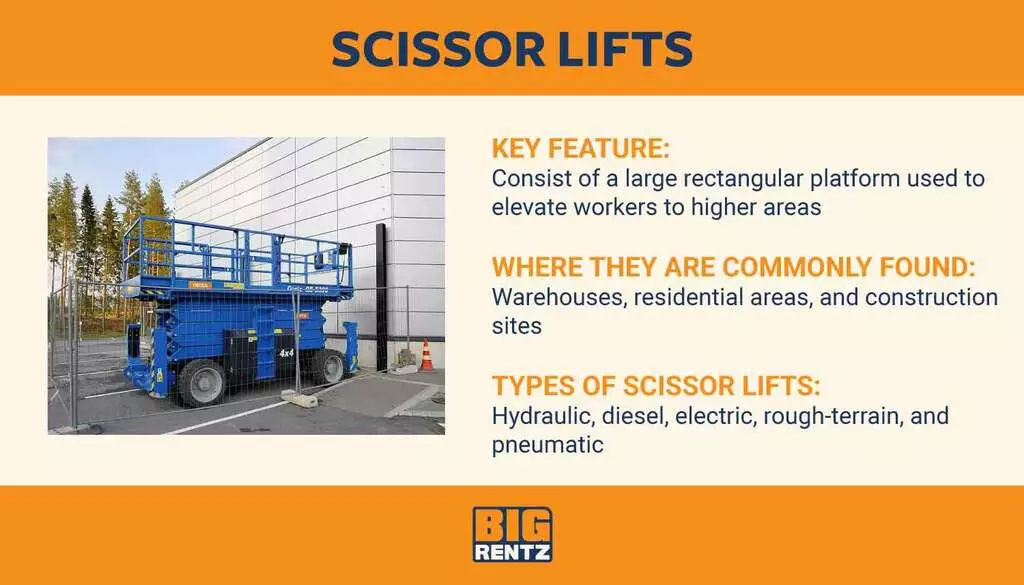
Scissor lifts give you straight-up vertical access with a larger, steadier platform than a single-person lift. They’re a strong fit when multiple workers need to work at the same height, tools and materials need to come up with them, and the task requires a stable base for precise work.
Since they don’t provide horizontal outreach, scissor lifts work best when positioned directly under the work area.
| Job-Site Area | Task | What the Scissor Lift Helps You Do |
|---|---|---|
| Interior Buildouts and High-Ceiling Spaces | Overhead Installation and Finishing | Raise crews and materials for ceiling work, lighting, ducting, sprinklers, and detailed installs. |
| Warehouses and Distribution Facilities | Rack, Lighting, and Maintenance Work | Provide stable access for work along long aisles where repeated elevation changes are required. |
| Window, Signage, and Façade Support Zones | Vertical Access for Exterior Tasks | Position workers for installs and repairs when outreach is not required and the ground setup is straightforward. |
| Mechanical and Electrical Run Areas | Consistent Height Access Along Runs | Support precise work along conduits, cable trays, and piping where a stable platform improves quality. |
| Flat Outdoor Slabs and Paved Areas | Elevated Work With Larger Platforms | Handle outdoor tasks like exterior lighting or canopy work where a wide deck improves efficiency. |
Key Feature: Scissor lifts feature a larger aerial platform and a criss-cross design that can enhance stability, allowing workers to complete precise tasks at elevated heights.
Types of Scissor Lifts:
- Hydraulic: Hand-operated or engine-driven hydraulic systems power this type of scissor lift. Relatively easy to operate, hydraulic scissor lifts don’t require a high level of user training, making them a simple solution for your lifting needs.
- Diesel: Among the most commonly used lifts on construction sites, diesel lifts can reach maximum heights of 30 to 60 feet. However, because they emit noise and fumes, they are better suited to outdoor rather than indoor use.
- Electric: Quieter, cleaner, and smaller than diesel lifts, electric scissor lifts make a great choice for enclosed spaces.
- Rough-Terrain: Designed exclusively for outdoor conditions, rough-terrain scissor lifts feature a high weight capacity, heavy-duty tires, and additional safety mechanisms, like fall restraints. This makes them ideal for outdoor work sites that may have uneven ground surfaces and inclement weather.
- Pneumatic: A more eco-friendly option than traditional lifts, pneumatic scissor lifts require only air and do not emit fumes or other hazardous materials into the environment.
19. Skidders
Skidders move logs from the felling area to a landing, where they can be processed, sorted, and loaded for haul-out. Their role is simple: grab logs where they drop and pull them to a collection point efficiently.
The tradeoff is ground contact, so skidders are typically used where the site can support repeated passes without creating unacceptable rutting or disturbance.

| Job-Site Area | Task | What the Skidder Helps You Do |
|---|---|---|
| Felling Areas and Cut Blocks | Extract Logs From the Stump Area | Pull cut trees away from the work zone so felling and processing can continue without congestion. |
| Skid Trails and Extraction Routes | Drag Logs to the Landing | Move logs along established trails to keep travel predictable and reduce random ground disturbance. |
| Landings and Log Collection Points | Build Piles for Processing | Deliver logs to a central location where they can be sorted, delimbed, processed, or loaded. |
| Dense Timber and Obstacle Areas | Navigate Around Standing Trees | Use articulated steering (on many wheeled models) to maneuver through tighter stands. |
| Sloped or Variable Terrain | Maintain Pulling Control | Use tracked or purpose-built configurations to handle traction demands while moving heavy loads. |
Key Feature: This important piece of logging equipment pulls cut trees out of a forest.
Types of Skidders:
- Cable Skidders: Pull logs with steel cables and chokers, allowing the machine to stay on established trails and limit ground disturbance.
- Grapple Skidders: Grab logs by the end to move groups faster, improving speed and maneuverability.
20. Skid Steer Loaders
Skid steer loaders are compact machines designed to operate where space is limited and tasks change constantly. Their real strength is versatility. With the right attachment, a skid steer can dig, carry, grade, trench, sweep, break, drill, or lift pallets, making it valuable for tight urban sites, interior work, and fast-paced jobs that need one machine to cover multiple roles.

| Job-Site Area | Task | What the Skid Steer Loader Helps You Do |
|---|---|---|
| Tight Work Zones and Constrained Access Areas | Dig and Move Material in Limited Space | Excavate, carry, and dump material where larger equipment can’t maneuver efficiently. |
| Interior Demolition and Renovation Areas | Cleanup and Debris Handling | Move debris, load out waste, and keep pathways clear without over-sizing the equipment. |
| Base Prep and Grading Areas | Grade and Spread Material | Distribute stone, soil, or base material across smaller footprints and touch up grade. |
| Sidewalks, Paths, and Trench Lines | Trenching and Utility Support | Use trenching attachments to cut narrow trenches and support backfill and material placement. |
| Warehouses and Material Yards | Pallet and Material Handling | Move palletized materials with forks and handle staging when a forklift isn’t practical. |
| Snow and Seasonal Maintenance Areas | Clear Snow and Debris | Run snow and broom attachments to keep site access and work areas open. |
Key Feature: The skid steer loader’s attachments allow this compact vehicle to perform a variety of construction, landscaping, warehouse, and residential tasks.
Types of Skid Steers:
- Small-Frame: Lighter and more maneuverable, small-frame skid steers perform well in tight spaces.
- Medium Frame: Better for heavier work in small spaces, with more horsepower than small-frame units.
- Large Frame: Built for more demanding excavation and demolition work while still staying maneuverable.
21. Telehandlers
Telehandlers combine the lift-and-carry role of a forklift with the reach and placement flexibility of a boom. The telescopic boom lets you place loads farther out and higher up, which is useful when materials need to clear obstacles or land on elevated decks.
With attachment options, the same machine can shift between pallet handling, bucket work, lifting with a hook, or even lifting a worker on a platform.

| Job-Site Area | Task | What the Telehandler Helps You Do |
|---|---|---|
| Laydown Yards and Delivery Zones | Offload and Stage Palletized Materials | Unload pallets and bundles from trucks, then place them where crews need them without repeated handling. |
| Elevated Decks and Upper Floors | Place Materials at Height | Lift and set materials onto slabs, mezzanines, or platforms where ground-level forklifts can’t reach. |
| Obstructed Work Zones and Setback Areas | Reach Over Obstacles | Extend the boom over rough terrain, curbs, or site obstructions to place loads without moving the base as close. |
| Framing and Structural Build Areas | Support Material Placement for Crews | Place trusses, bundles, and job materials into position so crews spend less time carrying and repositioning. |
| Material Yard and Bulk Handling Areas | Move Loose Material With Attachments | Use bucket attachments to move bulk materials when a wheel loader isn’t necessary or practical. |
| Access and Work Platform Zones | Lift Workers With Approved Platforms | Raise a work platform to support tasks where boom lift access is limited and positioning matters. |
Key Feature: Telehandlers offer an unmatched combination of heavy-duty lifting power, flexibility, maneuverability, and stability on uneven surfaces, enabling them to carry materials more effectively.
Types of Attachments:
- Buckets: When the work shifts from pallets to piles, a bucket turns the telehandler into a capable scooping and carrying machine for sand, soil, gravel, and other loose material.
- Pallet Forks: For deliveries that arrive banded or palletized, forks handle the day-to-day lifting, transporting, and staging that keep crews supplied.
- Crane Jibs: If the pick needs a hook instead of forks, a jib gives you a lifting point for rigged loads and helps with placement where extra reach or clearance is tight.
- Work Cages: In the right setup, a work cage creates a small elevated platform that allows you to position a worker and tools at height when the job calls for it.
22. Tractors
Tractors are built to deliver steady pulling power and run a wide range of implements, which makes them useful when the work is spread out across a property or changes throughout the day. With different construction tractor types available, they can be used to move materials, prepare the ground, maintain access routes, and support site upkeep.

| Job-Site Area | Task | What the Tractor Helps You Do |
|---|---|---|
| Site Prep and Clearing Areas | Pull and Run Ground-Engaging Implements | Handle tasks like light grading, scraping, and ground prep using rear or front-mounted implements. |
| Long Access Routes and Open Properties | Move Materials and Equipment | Tow trailers, reposition tools, and move supplies across larger areas without dedicating a truck. |
| Landscaping and Finish Areas | Prep Soil and Maintain Surfaces | Support finish work like leveling, smoothing, and light material spreading where a smaller footprint helps. |
| Snow and Seasonal Maintenance Areas | Clear Snow and Maintain Access | Use blades, blowers, or brooms to keep access roads and work areas passable. |
| Material Handling and Yard Areas | Lift and Carry With Attachments | Use forks or buckets to move pallets and bulk materials for staging and cleanup. |
Key Feature: Tractors make hard jobs easier by delivering high power at low speeds.
Types of Tractors:
- Utility Tractors: These versatile vehicles can get the job done, whether you want to clear snow, bale hay, or work livestock.
- Compact Tractors: Small farmers, landscapers, and DIY homeowners may find these small units just their size.
- Row Crop Tractors: Row crop tractors perform the work of growing and harvesting specific types of crops.
23. Trenchers
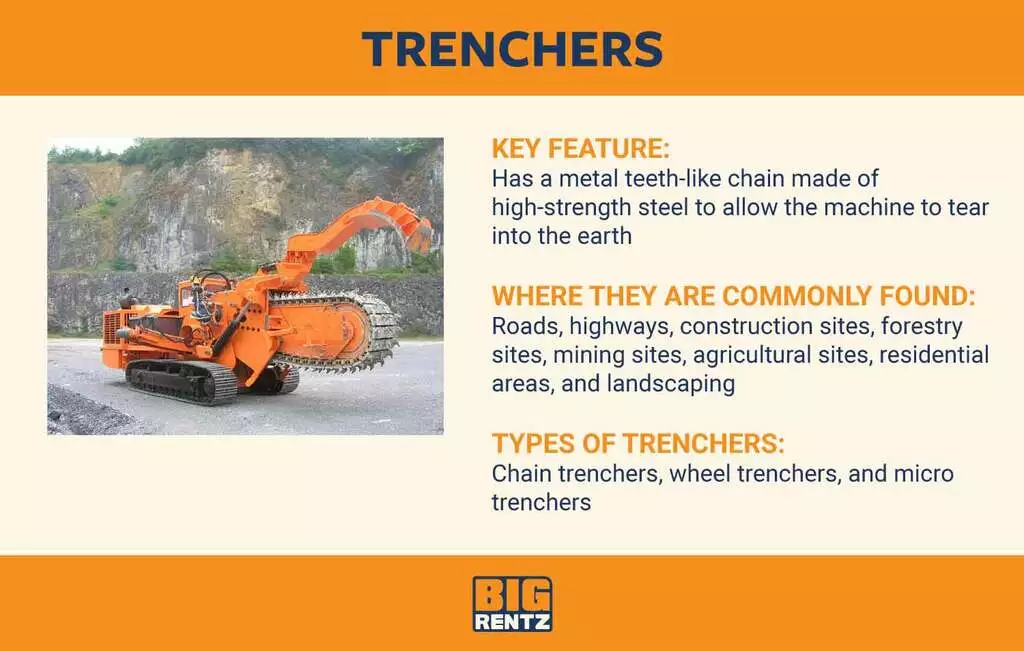
Trenchers dig narrow, consistent trenches with clean sidewalls and a flatter bottom than many general excavation methods. That matters when you’re placing pipe, conduit, or cable and need predictable depth and alignment with less cleanup.
| Job-Site Area | Task | What the Trencher Helps You Do |
|---|---|---|
| Utility Corridors and Right-of-Way Routes | Cut Long, Straight Utility Trenches | Dig consistent trenches for water, sewer, electrical, and telecom runs with cleaner lines and less rework. |
| Road Crossings and Shoulder Areas | Install Conduit and Pipe With Controlled Depth | Maintain depth and alignment where utilities pass through roadway sections and shoulder zones. |
| Paved Surfaces and Hardscape Areas | Cut Through Asphalt or Concrete for Utility Work | Create narrower, cleaner trench paths to reduce surface removal and simplify restoration. |
| Drainage and Irrigation Zones | Create Channels for Drainage Lines | Cut trenches for drainage pipe and irrigation runs with predictable slope and bedding space. |
| Root-Heavy or Compact Soils | Break Through Tough Ground Conditions | Cut through dense soil and roots more efficiently than hand digging or smaller tools. |
Key Feature: Trenchers move massive amounts of earth while leaving behind clean trenches with flat bottoms and smooth sides.
Types of Trenchers:
- Chain Trenchers: With a chainsaw-like digging chain, these models are a strong fit for deep, narrow trenches commonly used for utility installations.
- Wheel Trenchers: Also known as rockwheels, these machines use a toothed wheel and perform well in hard ground and rocky conditions.
- Micro Trenchers: These units cut very narrow trenches, often used for shallow telecom and fiber runs where minimal surface disruption matters.
24. Wheel Tractor Scrapers
Wheel tractor scrapers are designed for fast cut-and-carry earthmoving. They cut material from the ground, load it into the bowl, haul it to a fill area, then spread or dump it in controlled layers. This makes these types of heavy machinery especially effective when moving large volumes of soil over medium distances, as it reduces reliance on separate digging and hauling machines.

| Job-Site Area | Task | What the Wheel Tractor Scraper Helps You Do |
|---|---|---|
| Large Cut Areas and Borrow Zones | Cut and Load Material Efficiently | Slice material from the surface and load the bowl quickly for high-volume earthmoving. |
| Haul Routes Across Open Sites | Haul Soil Without Extra Handling | Carry material directly from cut to fill without transferring between multiple machines. |
| Fill Areas and Pad Builds | Place and Spread Fill in Layers | Dump and spread material in lifts that can be shaped and compacted with fewer steps. |
| Road Building and Subgrade Areas | Build Up and Shape Subgrade | Move and place material to establish roadbed elevations and prepare for fine grading. |
| Site Development and Mass Grading Zones | Support Cut-and-Fill Balancing | Shift material around the site to balance grades and reduce import/export needs. |
Key Feature: A tractor scraper combines a tractor with a scraper, allowing you to efficiently move and remove material from the ground surface.
Types of Scrapers:
- Single-Engine Wheeled Scrapers: These common scrapers often need a dozer assist to help load the bowl in tougher material.
- Dual-Engine Wheeled Scrapers: With power in both the tractor and the scraper, these units are more capable of self-loading and handling heavier cuts.
- Elevating Scrapers: An onboard elevator helps load, mix, and spread material, providing more controlled placement and finishing work.
- Pull-Type Scrapers: Pulled behind a tractor, these scrapers can be a practical option when you already have a tractor set up to run multiple implements.
Build Smarter With BigRentz
Choosing the right construction vehicle types comes down to two things: the work in front of you and the conditions on site. When your equipment fits the workflow, you reduce bottlenecks, keep crews moving, and avoid costly rework or schedule slips.
BigRentz helps you source equipment that meets your project’s real demands. With an extensive fleet and hands-on experience across job-site applications, our team can help you align the right machines to your scope and timeline.
Explore our equipment rentals and find the right solutions for your next project.